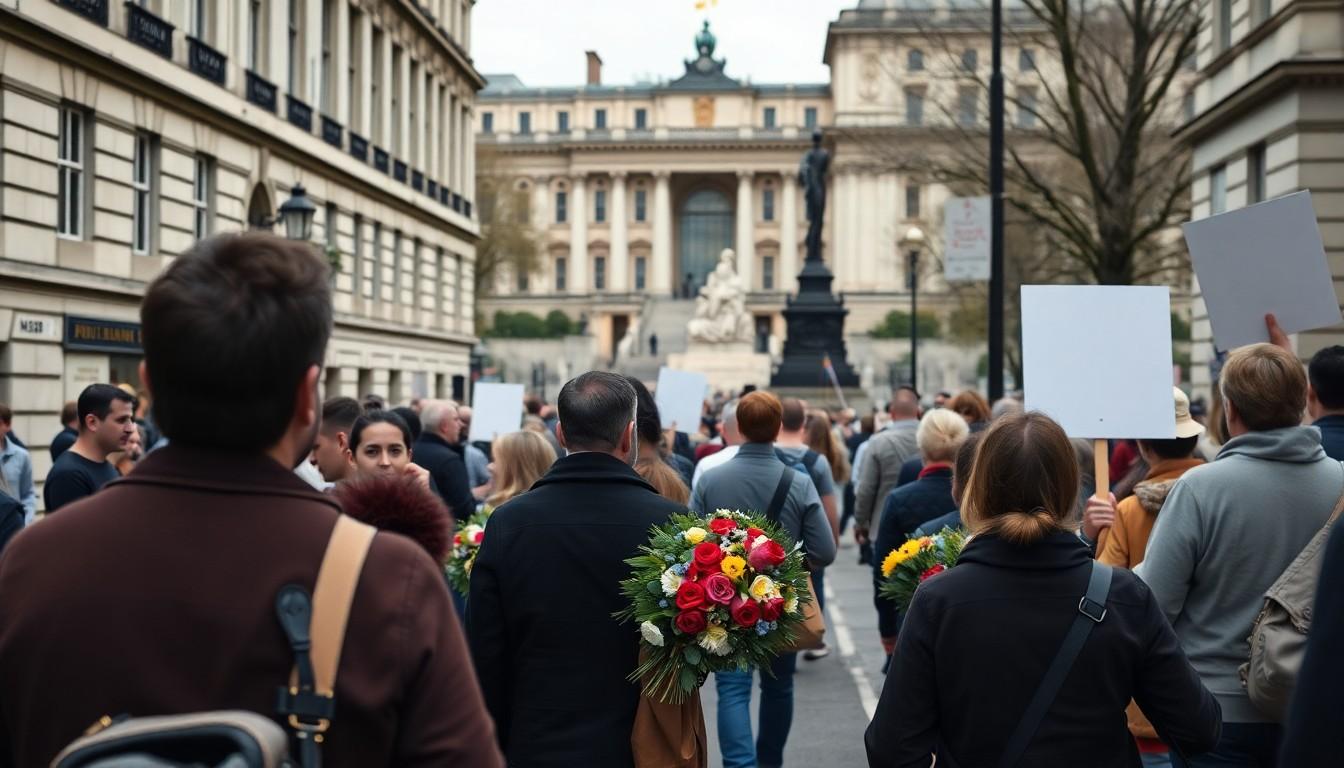
A rain-soaked day in Whitehall brought two acts of remembrance into sharp focus: a ceremony for people who died seeking refuge, and a funeral march against state violence in Chile. The events linked lives lost far apart, while asking Londoners to look closely at the human cost of displacement and protest.
Essential Takeaways
- Two events, one day: On 9 November 2019, campaigners held a migrant remembrance ceremony and a march against violence in Chile.
- A solemn tribute: Participants carried orange wreaths to the Cenotaph for refugees who had died while seeking safety.
- Names made visible: Posters honoured the 39 Vietnamese people found dead in a lorry trailer in Grays, Essex.
- A protest over policing: The Chile march highlighted deaths, injuries and allegations of excessive force during demonstrations.
- A lasting symbol: Injuries to protesters' eyes became a powerful emblem of the Chilean protests.
Whitehall's orange wreaths carried a quiet weight
There was something striking about the contrast: orange wreaths against the familiar stone of the Cenotaph, carried in silence for people who had died searching for refuge. Lesbians and Gays Support the Migrants organised the ceremony in Whitehall on 9 November 2019, alongside other groups, on the eve of Remembrance Sunday.
The event began outside the Ministry of Defence with speeches and a short silence. Participants held up the names of the 39 Vietnamese people found dead in a lorry trailer in Grays, Essex, on 23 October 2019. Essex Police later reported that men involved in the deaths received sentences totalling 92 years. [6]
Those carrying the names covered their faces with purple gauze before walking to the Cenotaph to lay the wreaths. It was a simple gesture, but one that made absence visible: each name stood for a person, not a statistic.
Chile's funeral march brought protest into view
Later, a funeral march travelled from the Chilean Embassy towards Parliament Square, opposing state violence against protesters. Chile's social unrest began in October 2019 amid anger over metro fare rises and the cost of living, then grew into wider demonstrations and clashes.
The marchers wore gauze over one eye, while three people at the front carried black coffins. The image reflected the serious injuries reported during the protests, including people hit in the eye by projectiles fired by security forces. Human Rights Watch called for police reforms in the wake of the demonstrations, while Amnesty International later documented police violence and alleged human rights violations. [3] [7]
Why injured eyes became a symbol
The bandaged eye was more than a visual shorthand. It pointed to a particular pattern of injury that became widely associated with the protests, and to the fear and anger surrounding the use of force. The Inter-American Commission on Human Rights also voiced concern about the response to events in Chile. [4]
At Parliament Square, women in black staged a performance against sexual abuse and violence. They smeared fake blood on white underwear, then held the garments aloft. It was confronting, deliberately so; the performance gave public form to allegations that human rights groups said required serious investigation. [2] [5]
Two acts of remembrance, with different demands
The Whitehall ceremony asked people to remember those who had died seeking sanctuary. The Chile march, meanwhile, demanded accountability for the treatment of people taking to the streets. They were distinct events, but both resisted the easy disappearance of individual lives into headlines and totals.
That connection still matters. Remembrance can be quiet, with wreaths and names; protest can be loud, visual and uncomfortable. Both can ask the same question: whose suffering is noticed, and what follows once it has been seen?
The practical value of bearing witness
For anyone documenting a public demonstration, context matters as much as the photograph. Identify the event and its organisers, distinguish allegations from established findings, and check reporting from human rights bodies before repeating claims. That care helps preserve the meaning of protest without flattening complex events into a single image.
The scenes in Whitehall and Parliament Square were also a reminder that public memorials aren't only about the past. They can make room for people whose losses are recent, contested or still demanding answers.
It's worth taking a moment to remember the names behind the numbers.
Source Reference Map
Story idea inspired by: [1]
Sources by paragraph: