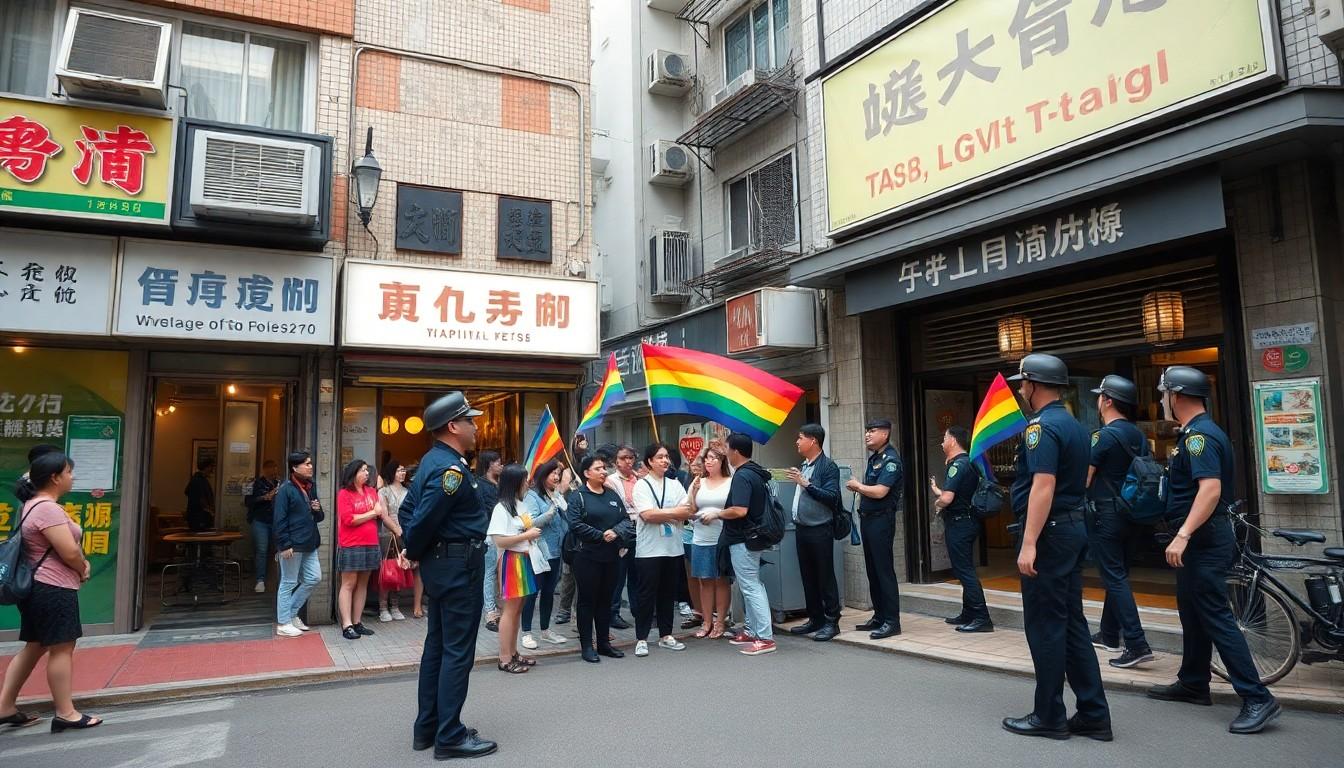
Protesters in Taipei have challenged a rare police raid on a gay bar, raising questions about LGBTQ+ rights and public-decency laws in a city that has long promoted itself as queer-friendly. The incident came just weeks before Taiwan's major Pride parade, making the response from police and city leaders especially important to the community.
Essential Takeaways
- Police action: Officers raided Commander D in Taipei's Wanhua district and took 51 people in for questioning.
- Legal grounds: Police said the operation followed a search warrant related to suspected public-morality offences.
- Protest response: Around 100 people gathered outside a police station the following day to object to the raid.
- Wider context: Taiwan legalised same-sex marriage in 2019, the first jurisdiction in Asia to do so.
A raid that unsettled Taipei's LGBTQ+ community
The raid on Commander D, a gay bar in Taipei's Wanhua district, prompted an unusually swift show of anger. Around 100 people protested outside a local police station the next day, shortly before the city's annual Pride parade, Reuters reported.
Police took 51 people in for questioning and arrested the bar's owner. A precinct spokesman said officers had a search warrant and were investigating suspected offences against public morality. (Reuters; SABC News)
What police said about the investigation
Police cited a law against exposing one's naked body or taking a lascivious pose in a public or publicly accessible place. The city government referred Reuters to a police statement saying officers had received a complaint alleging the bar might be breaching public-decency rules.
One person who was detained, identified only by his family name, Wen, told Reuters the raid felt frightening and forceful. The contrast between the legal language and the protesters' account of the experience is part of why the operation has drawn such strong attention. (Reuters; Taipei Times)
Why the timing matters before Pride
Taipei's main Pride event is one of the largest in East Asia, and the raid landed just before the annual gathering. For protesters, the timing sharpened concerns about whether LGBTQ+ people could feel secure in a city that has often presented itself as welcoming. (Reuters; SABC News)
Taiwan's record has changed markedly over time. Same-sex relationships were largely taboo during the period of martial law, which ended in 1987; in 2019, Taiwan became the first place in Asia to legalise same-sex marriage. (Library of Congress; Reuters)
A complicated picture of support
Taipei Mayor Chiang Wan-an has previously attended Pride and voiced support for the LGBTQ+ community. During the protest, the precinct chief told demonstrators that police respected a pluralistic society and would protect every citizen's rights, though protesters made clear they were not satisfied. (Reuters; Taipei Times)
That gap between official reassurance and public trust can be hard to close. A city can celebrate Pride while still leaving residents asking whether everyday spaces are treated fairly when complaints and enforcement collide. (SABC News; Taipei Times)
What happens next?
The raid has put scrutiny on how public-decency laws are applied, as well as how police communicate with LGBTQ+ communities. The available reports describe the stated grounds for the operation and the protest that followed; they don't establish the outcome of the investigation.
For residents and visitors, the immediate takeaway is to follow reliable local reporting as the case develops, rather than assume that a city's reputation tells the whole story. Pride is a celebration, but trust is built in quieter moments too. (Reuters; Taipei Times)
It's a reminder that public support means most when it holds up beyond the parade.
Source Reference Map
Story idea inspired by: [1]
Sources by paragraph: