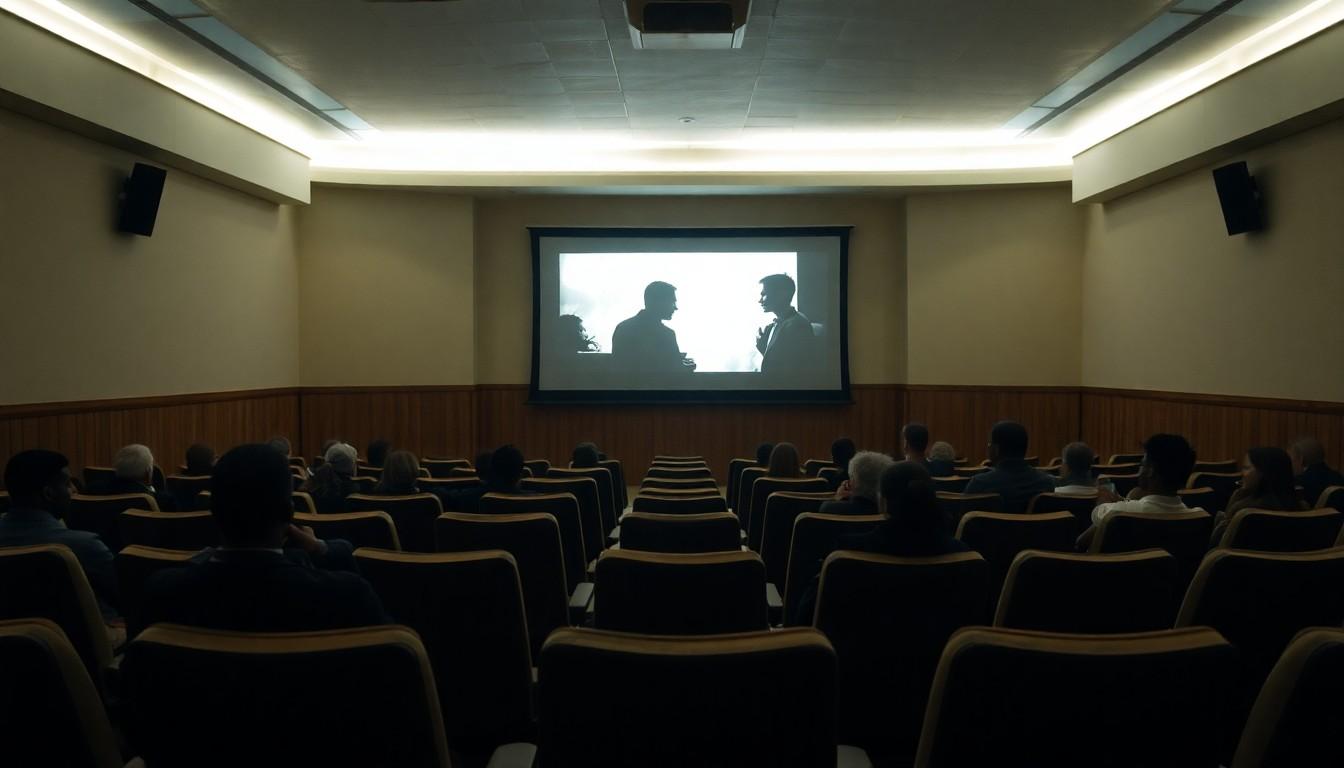
Five intimate films follow queer lives in Kenya, from first love and friendship to the threat of eviction and violence. Made by Nairobi’s Nest Collective, Stories of Our Lives uses a stark black-and-white style to explore the human cost of prejudice, and the courage it takes to imagine a safer future.
Essential Takeaways
- Five connected stories: The anthology explores queer relationships and everyday life in Kenya through five separate dramas.
- A collective effort: Nairobi-based art and activist group The Nest Collective created the film.
- A striking look: Shot in black and white, the work makes expressive use of limited resources.
- A difficult backdrop: The stories confront discrimination and the danger faced by people suspected of being gay.
- A film with a journey: It screened at international festivals, including the International Film Festival Rotterdam.
Five stories, one urgent question
Stories of Our Lives begins with private moments that can feel familiar: a school romance, a close friendship, a night out, a hotel-room conversation. But each story sits within a society where being open about queer identity can carry serious risks. The film’s monochrome images give these encounters a spare, intimate feel. [3], [4]
The anthology was made by The Nest Collective, a Nairobi-based arts and activist group. The collective’s work brings queer Kenyan experiences into view, while its members’ need for discretion reflects the real pressures surrounding the subject. The stories are personal, but their setting gives each small decision a larger weight. [2], [6]
From first love to a fearful escape
In Ask Me Nicely, schoolmates Kate and Faith begin a secret relationship, only for the school principal to intervene. Run follows Patrick, whose visit to a gay bar with a homophobic friend turns into a frightening confrontation. These plots move quickly, but their tension comes from the familiar places where privacy can suddenly disappear: school corridors, neighbourhood streets and a night out. [3], [4]
Other chapters take quieter routes into desire and loss. In Athman, Ray struggles with his feelings for a close friend who is drawn to someone else, while Duet centres on a meeting between two men and a conversation about race before intimacy. The final story, Each Night I Dream, turns towards a neighbourhood under threat, as Liz imagines ways to escape with her partner Achi. [3], [7]
Why the black-and-white style matters
The film was made with limited resources, and its black-and-white photography gives the stories a cohesive, stripped-back look. That choice suits a work built around faces, rooms and uneasy silences rather than spectacle. Some chapters may feel slight, and a few performances can come across as stiff, but the restrained style also keeps attention on the characters’ vulnerability. [4], [5]
The Nest Collective has described its approach to storytelling as do-it-yourself, making creative work in response to the realities around it. That spirit is visible in the anthology’s directness: the films don’t need elaborate sets to make danger feel close. A quiet room or an ordinary street can become charged when the characters know they may not be safe. [5], [6]
A Kenyan LGBTQ film with a wider reach
Stories of Our Lives premiered in 2014 and went on to screen internationally, including at the International Film Festival Rotterdam. The festival’s presentation places the film within a broader conversation about whose lives reach the screen, and who gets to tell those stories. Its focus remains distinctly Kenyan, yet its themes of love, secrecy and belonging travel easily. [3], [7]
The film also drew attention to the risks surrounding queer expression in Kenya, where laws and social hostility have created a climate of fear. Its creators’ use of discretion is part of that context, not a side note. For viewers, this makes the anthology more than a collection of relationship dramas: it’s also an act of visibility, made under difficult conditions. [2], [6]
What to expect as a viewer
This is a compact, issue-led anthology rather than a polished feature-length drama. The five stories offer different moods and situations, so some may land more strongly than others. If you’re drawn to independent cinema, socially engaged filmmaking or intimate stories about relationships under pressure, its direct, handmade quality is part of the appeal. [3], [4]
The strongest impression is the contrast between the tenderness of ordinary connection and the threat pressing in around it. The film doesn’t pretend that hope erases danger, but it makes room for affection, humour and choice all the same. That balance gives the anthology its lasting force. [4], [6]
Stories of Our Lives is a small, brave film about making space for love when the world tries to close it down.
Source Reference Map
Story idea inspired by: [1]
Sources by paragraph: