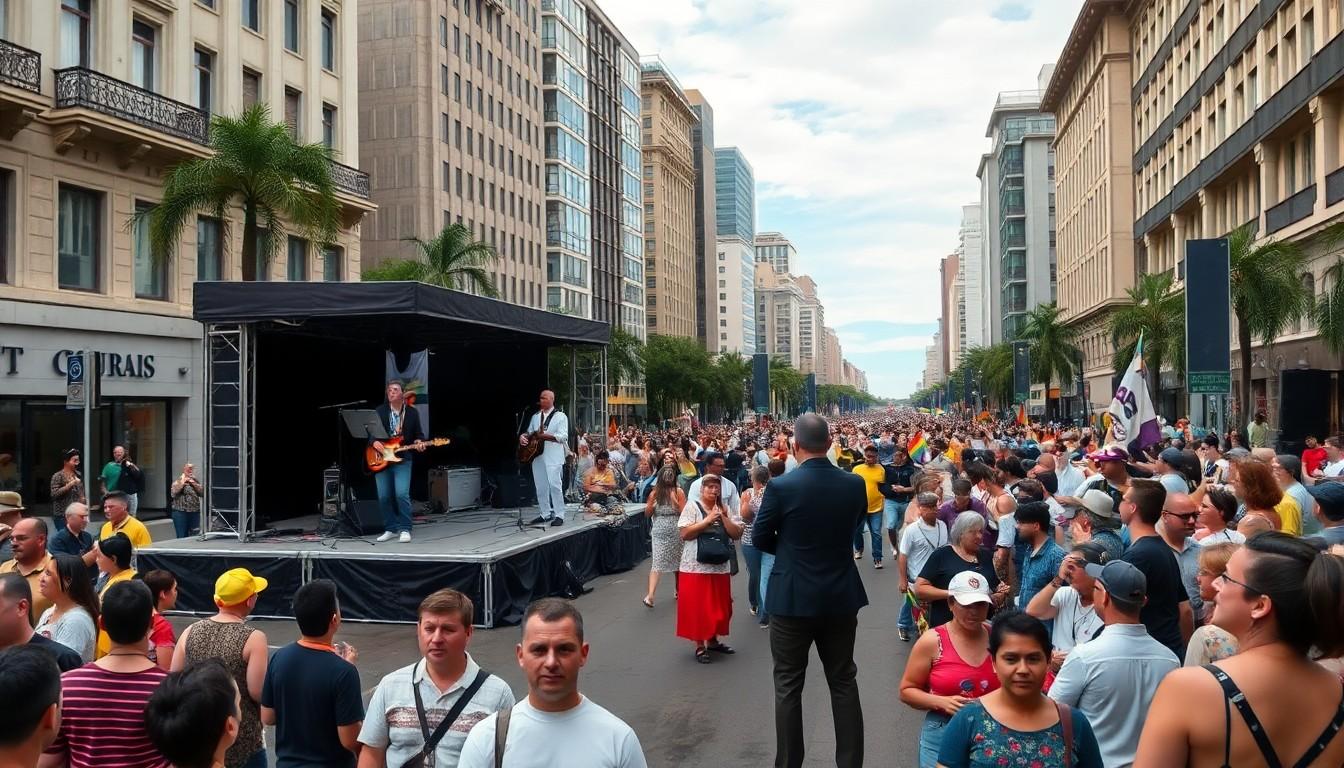
Roze brought cumbia, colour and a clear message of acceptance to Buenos Aires’ 35th Pride March. For the Argentine duo, the performance was more than a festival booking: it was a chance to stand with LGBTQ+ people, challenge hate and remind young fans they deserve to live openly and without fear.
Essential Takeaways
- A first for the duo: Rocco Canataro and Ezequiel Gutiérrez performed at a Pride march for the first time.
- A statement through clothing: One wore a top reading “Protect the Dolls”, while the other carried the march’s resistance message.
- A mix of sounds: Their set combined Roze hits with familiar Argentine cumbia classics.
- Acceptance was the point: The musicians said they wanted LGBTQ+ fans to know they’re respected and welcome.
Roze brought cumbia and a message of belonging
A cumbia set can get a crowd moving, but Roze’s appearance at Buenos Aires’ 35th Pride March carried a deeper message. The duo, Rocco Canataro and Ezequiel Gutiérrez, took to the stage with music, bright outfits and a public show of support for LGBTQ+ people.
The march brought huge crowds into the city under a slogan about pride in the streets as resistance to hate. Roze joined a bill featuring artists including La Joaqui and María Becerra, adding a popular cumbia sound to a day that was both celebratory and political. (Infobae; El Tribuno)
For the duo, it was their first time performing at a Pride march. Rocco said taking part mattered because it let them show support in person and encourage their followers to do the same. (Clarín; La Gaceta)
Their outfits made the solidarity visible
The clothing was simple, but the messages were hard to miss. Ezequiel wore an oversized blue top printed with “Protect the Dolls”, a phrase used to express solidarity with trans people. Rocco chose a white top carrying the march’s resistance slogan. (Clarín)
Rocco explained that Ezequiel’s choice reflected a recent attack on trans women in Buenos Aires’ Palermo woods. The pair said they wanted their outfits to show support as well as their words could. (Clarín; La Gaceta)
That’s a useful reminder of how public events communicate beyond the stage. A slogan on a shirt can’t solve the problems it points to, but it can make solidarity visible to people who may rarely see it around them. (El Tribuno; La Gaceta)
A set built for dancing, with familiar favourites
The performance was scheduled for the afternoon and began around 25 minutes late. The wait didn’t seem to dampen the duo’s mood: they spent time greeting fans, taking selfies and chatting with people backstage. (Clarín)
Once on stage, Roze mixed its own songs with well-known cumbia tracks, including “Jurabas Tú” by Los del Fuego and “La cumbia de los trapos” by Yerba Brava. The familiar tunes gave the crowd something to sing and dance along to, while the duo’s own hits kept the set rooted in their rising career. (Clarín; Clarín’s report on the march performances)
That balance feels especially fitting for a Pride crowd: a chance to celebrate together, without losing sight of why people are there. Cumbia isn’t just a soundtrack here; it’s a popular genre being given a place on a major public stage. (Clarín; El Tribuno)
Why the duo’s message matters to young fans
Rocco said he hoped anyone who looked to the musicians as role models would understand they were accepted and could choose how to live. He also noted that some people still don’t feel free to express themselves at home, even as others have the support to do so. (Clarín)
Ezequiel described the performance as an act of support rather than simply a chance to promote their music. The distinction matters: visibility means more when it’s backed by a clear commitment to stand alongside the people being represented. (Clarín; La Gaceta)
Roze also welcomed seeing artists from popular and urban genres on the march’s bill. Bringing cumbia into that setting can help widen the event’s appeal and push back against narrow ideas about which artists or audiences belong there. (Clarín; El Tribuno)
A lively performance, and a wider invitation
The duo’s appearance sat within a packed day of music and public messages, with other performers including La Joaqui and María Becerra also drawing attention. Reports from the march described a large, colourful gathering where entertainment and calls for equality shared the same streets. (Infobae; La Gaceta; El Tribuno)
Roze’s most lasting contribution may be the straightforwardness of its message: fans should be able to be themselves without fear. It’s a small thing to say, perhaps, but hearing it from artists people admire can make it feel a little less abstract. (Clarín; La Gaceta)
Sometimes a good cumbia set does more than fill a dance floor; it helps people feel they belong.
Source Reference Map
Story idea inspired by: [1]
Sources by paragraph: