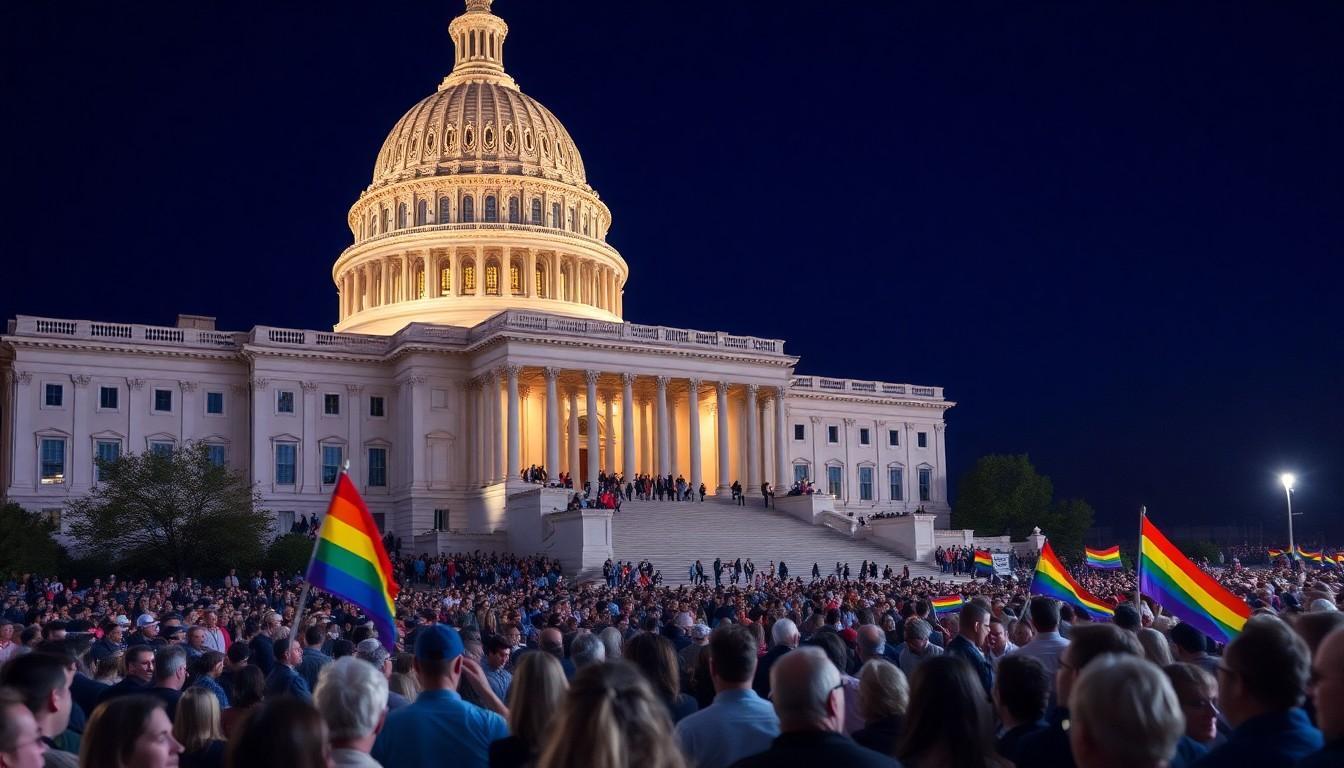
Voters have sent a record number of openly LGBTQ lawmakers to Congress, according to a PinkNews tally cited in coverage of the midterm results. The incoming class includes at least 17 members, a net increase on the current Congress, and features a first for the US Senate. Here’s what the numbers mean, and how they fit into a broader shift in representation.
Essential Takeaways
- At least 17 members: PinkNews counted at least 17 openly LGBTQ lawmakers set to serve in the 120th Congress.
- A net increase: The tally represents a gain of at least three compared with the current Congress.
- A Senate milestone: Chris Pappas won New Hampshire’s open Senate seat and is set to become the first openly gay man elected to the chamber.
- A wider representation story: The same election also brought a record number of Muslim lawmakers to Congress, according to CAIR.
A record class takes shape
The headline figure is striking: at least 17 openly LGBTQ members are expected in the next Congress. The PinkNews tally, reported by the Associated Press and the Washington Blade, points to a net gain of at least three, with new arrivals outnumbering departing members.
That number is more than a statistic. It reflects a changing picture of who gets elected to national office, while also drawing attention to the different experiences and priorities lawmakers bring with them. The Congressional Equality Caucus welcomed the results, according to the election coverage.
Pappas makes Senate history
New Hampshire’s open Senate race produced one of the election’s clearest milestones. Democrat Chris Pappas defeated former Republican senator John Sununu, setting him up to become the first openly gay man elected to the US Senate, the Associated Press reported.
The distinction matters in a chamber where LGBTQ representation has been limited. Tammy Baldwin, the first openly lesbian senator, wasn’t on the ballot this year, so Pappas’s victory marks a separate step in the Senate’s history rather than a change in her status.
New faces, returning members
The incoming group includes both newcomers and familiar names. Delaware representative Sarah McBride won re-election, as did Kansas representative Sharice Davids and New York representative Ritchie Torres, according to the Washington Blade.
Elsewhere, the election brought new lawmakers into the mix, including Jeremy Moss, who is set to succeed Michigan representative Haley Stevens. Roll Call’s results coverage also tracked the contests shaping control and membership across Congress, showing how individual races fed into a broader electoral picture.
Representation is changing on several fronts
LGBTQ representation wasn’t the only milestone reported after the election. CAIR said a record 97 Muslim candidates had been elected nationwide, a figure that includes federal and other offices, while the election reporting highlighted a historic number of Muslim members entering Congress.
Those figures shouldn’t be treated as interchangeable: one is a nationwide count and the other concerns congressional representation. Together, though, they show how election nights can reshape several aspects of representation at once, even as each lawmaker’s work will be judged by their decisions in office.
What the numbers can - and can’t - tell us
The LGBTQ count is attributed to PinkNews, but a tally can’t capture every detail of how representation changes, or what policies lawmakers will pursue. As the new Congress begins, votes, committee work and public statements will offer a fuller picture than a headline figure alone.
For voters, it’s worth watching both the numbers and the practical record that follows. Representation marks who has a seat at the table; what happens around that table is the next story.
A milestone is a beginning, not a verdict on what comes next.
Source Reference Map
Story idea inspired by: [1]
Sources by paragraph: