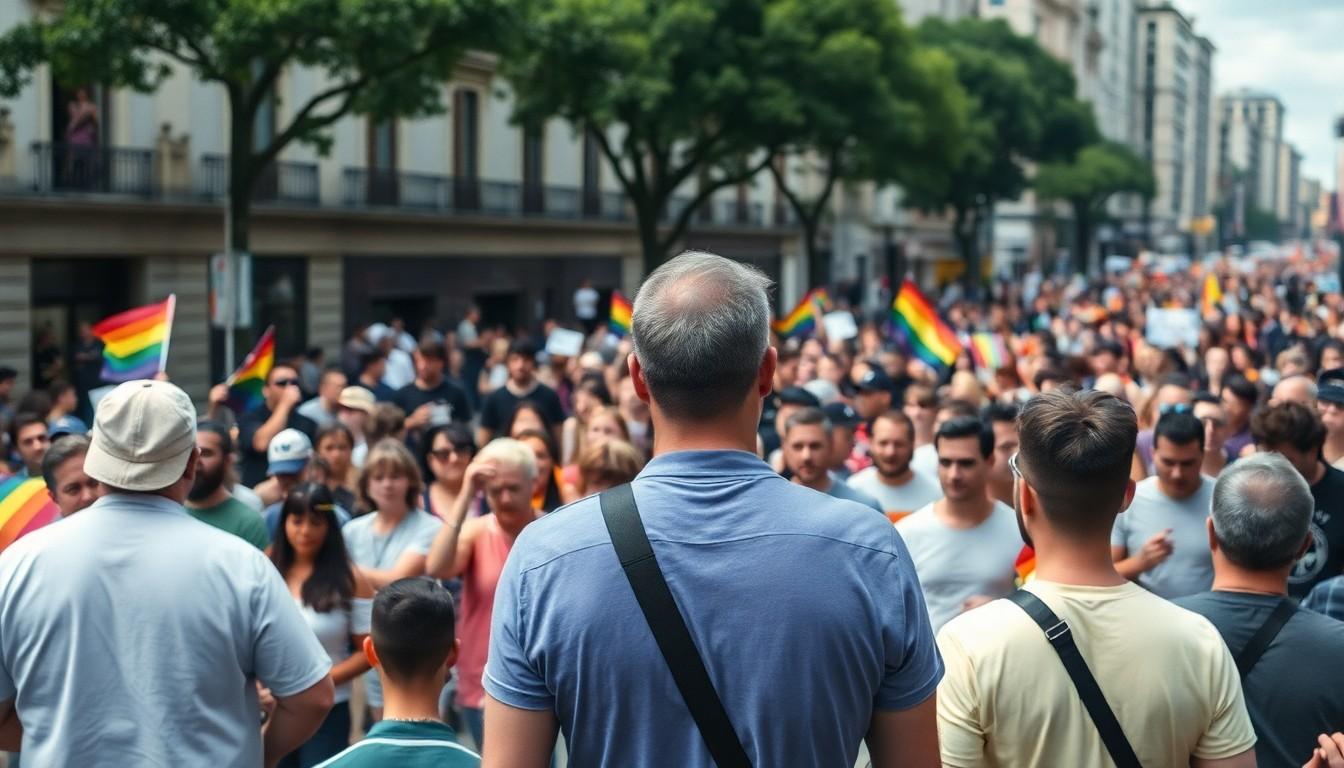
Thousands took to the streets for Argentina’s 35th Pride March, where music and celebration sat alongside urgent calls to defend LGBTQ+ rights. Singer La Joaqui drew a loud response with a pointed reflection on the prejudice faced by gay people, asking why that can provoke more fear than the prospect of raising a violent son.
Essential Takeaways
- A major street gathering: Argentina’s 35th Pride March brought thousands together to celebrate diversity and demand rights.
- A sharp message: La Joaqui challenged the contrast between anxiety about having a gay child and concern about raising someone who abuses others.
- More than a celebration: Calls included demands for public policies and comprehensive trans legislation.
- A tense backdrop: The march followed an attack on trans women in Palermo.
La Joaqui’s words brought the crowd to its feet
The moment that cut through the music at Argentina’s 35th Pride March was La Joaqui’s reflection on prejudice and violence. She asked why having a gay child can seem more frightening to some people than having a son who beats others. The crowd responded with an ovation, according to Telefe Noticias. [2], [7]
Her words landed amid a gathering shaped by both celebration and resistance. The march’s organising slogan was “When hate advances, Pride in the streets is resistance”, a message that made the day’s political urgency hard to miss. [3], [4]
A party with a serious purpose
The march brought thousands into the streets to celebrate LGBTQ+ identities while pressing for the protection of rights. Music and performances helped give the gathering its buoyant energy, but the demands were firmly in view too. [2], [3], [6]
Organisers and participants called for stronger public policies and progress on comprehensive trans legislation. The mix of dancing, flags and political calls is part of what makes Pride distinctive: joy here isn’t separate from the fight for equal treatment. [3], [4]
The events behind the call for resistance
The march took place days after trans women were verbally and physically attacked in Palermo. That incident added a stark local context to calls against hate and exclusion, turning a broad slogan into something immediate and personal. [4], [5]
Argentina’s Pride gathering also sat within a wider conversation about discrimination and the security of LGBTQ+ people. Swissinfo reported that the march featured demands against hate and exclusion, while the event’s own central message put resistance at its heart. [4], [6]
Why the message resonated beyond the stage
La Joaqui’s line challenged a familiar double standard: fear and stigma directed at sexual orientation, while violence can be treated as less alarming or even overlooked. It was brief, but its force came from asking people to reconsider what society chooses to condemn. [4], [7]
The response also showed how a moment on stage can travel beyond the crowd. Her words circulated on social media and became one of the day’s most discussed interventions, alongside performances and the march’s wider demands. [2], [7]
What to take from Argentina’s Pride March
For anyone following LGBTQ+ rights in Argentina, the march offered a clear picture of a movement holding celebration and protest together. Its calls for public action, trans rights and safety are a reminder that visibility matters, but so do practical protections. [3], [4], [6]
And perhaps that’s why La Joaqui’s remark struck such a chord: it turned a complicated social issue into a plain question about the values people want to pass on. [4], [7]
Pride can be joyful, but it also asks society to look honestly at what it still needs to change.
Source Reference Map
Story idea inspired by: [1]
Sources by paragraph: