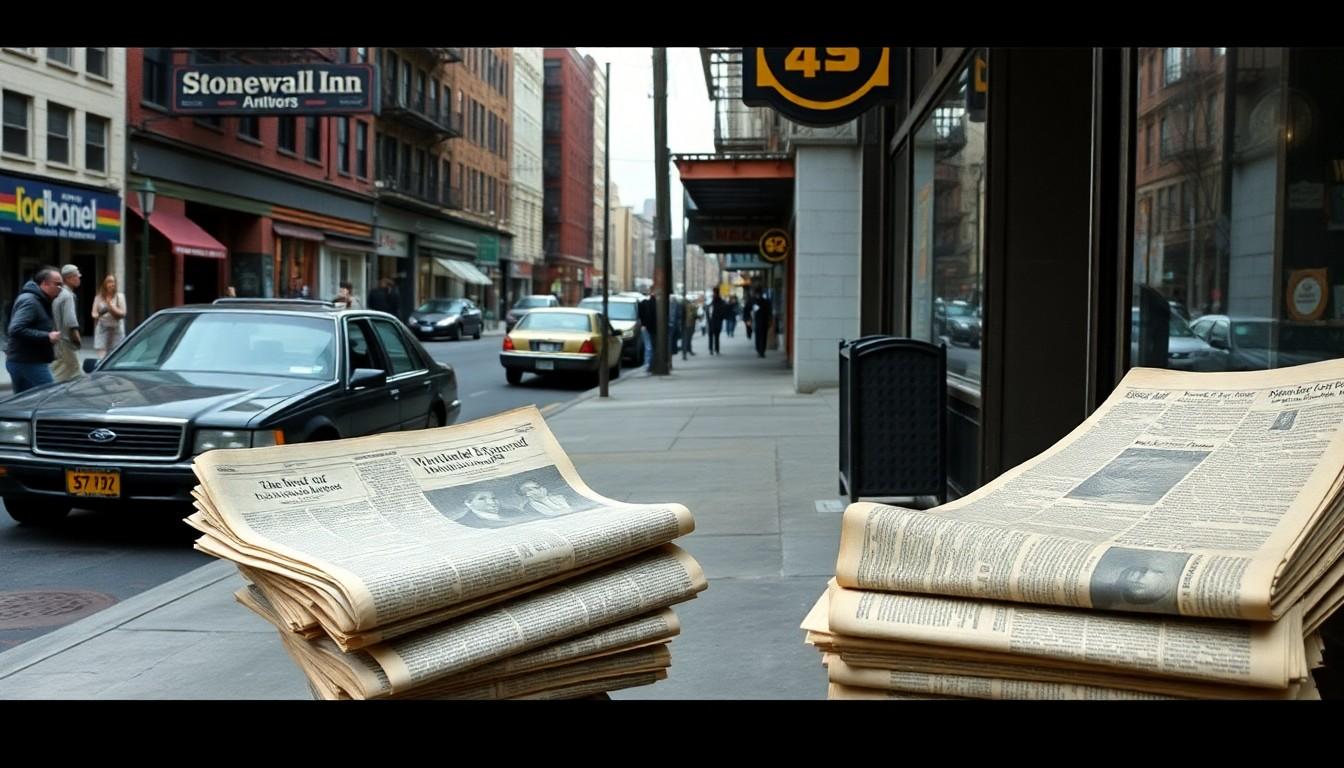
A look back at Stonewall newspaper coverage shows how queer people were mocked, overlooked and occasionally heard in 1969. The contrast between sensational headlines and more detailed accounts offers a vivid record of the era’s assumptions, as well as a reminder that who gets to tell a story can shape how it’s remembered.
Stonewall made headlines, but not on equal terms
The first newspaper accounts of the Stonewall uprising could be startlingly different in tone. One New York Daily News headline framed the raid as a spectacle, while a short New York Times report described a clash through the police account. Even at a glance, the language tells its own story. [2], [5]
Coverage mattered partly because queer people rarely received sustained attention in mainstream newspapers. The Library of Congress’s retrospective on Stonewall’s 50th anniversary describes the press as an important record of how the uprising entered public view, even when the reporting reflected the prejudices of its time. [2], [4]
A headline built for shock
The Daily News report by Jerry Lisker leaned heavily on flamboyant imagery and ridicule. Its language treated the bar’s patrons as characters in a comic scene, rather than people responding to a police raid. It also used descriptions of gender expression that read as demeaning today. [5], [6]
That theatrical style is part of why the article remains striking. But its colourful details should be approached with care: the account used dramatic storytelling, and Lisker was not an eyewitness to the events he described. The result is less a neutral record than a revealing example of how a journalist could turn queer people into a punchline. [5], [6]
The Village Voice offered a closer view
Lucian K. Truscott IV’s Village Voice report took a different approach, following events over several nights and describing the streets around the Stonewall Inn. Its account gives readers a stronger sense of the crowd, the police response and the way the protest developed beyond the initial raid. [3], [4]
But closer observation didn’t mean modern standards of respect. The article also used slurs and language that treated queer identity as spectacle. Its value today lies in the detail it preserves, alongside the uncomfortable reminder that even reporting sympathetic to the uprising could carry the era’s prejudices. [3], [4]
A newspaper record is not the whole story
The short New York Times article was more restrained, but relied on police sources and focused on arrests, injuries and property damage. It gave little space to the perspective of the people who gathered outside the bar, or to what the confrontation meant to them. [2], [4]
Read together, these reports show why archives need context. A newspaper clipping can preserve names, dates and descriptions, but it can also leave out voices or distort events through bias. The National Park Service’s teaching materials offer one way to place Stonewall within a broader historical account, rather than treating any single article as the definitive version. [2], [7]
What Stonewall coverage says about journalism now
The language has changed, and journalism guidance from organisations such as GLAAD and NLGJA has helped reporters approach LGBTQ+ stories with greater care. Yet the old clippings still raise useful questions: who is quoted, whose account is treated as authoritative, and whether people are described as full human beings or reduced to a label. [2], [6]
That’s why Stonewall’s newspaper coverage is more than a historical curiosity. It captures both the limits of mainstream recognition in 1969 and the determination of people who made their presence impossible to ignore. A humane account doesn’t just record a turning point; it lets the people at its centre speak. [3], [4]
The old headlines are worth reading, but the voices behind them deserve to be read with care.
Source Reference Map
Story idea inspired by: [1]
Sources by paragraph: