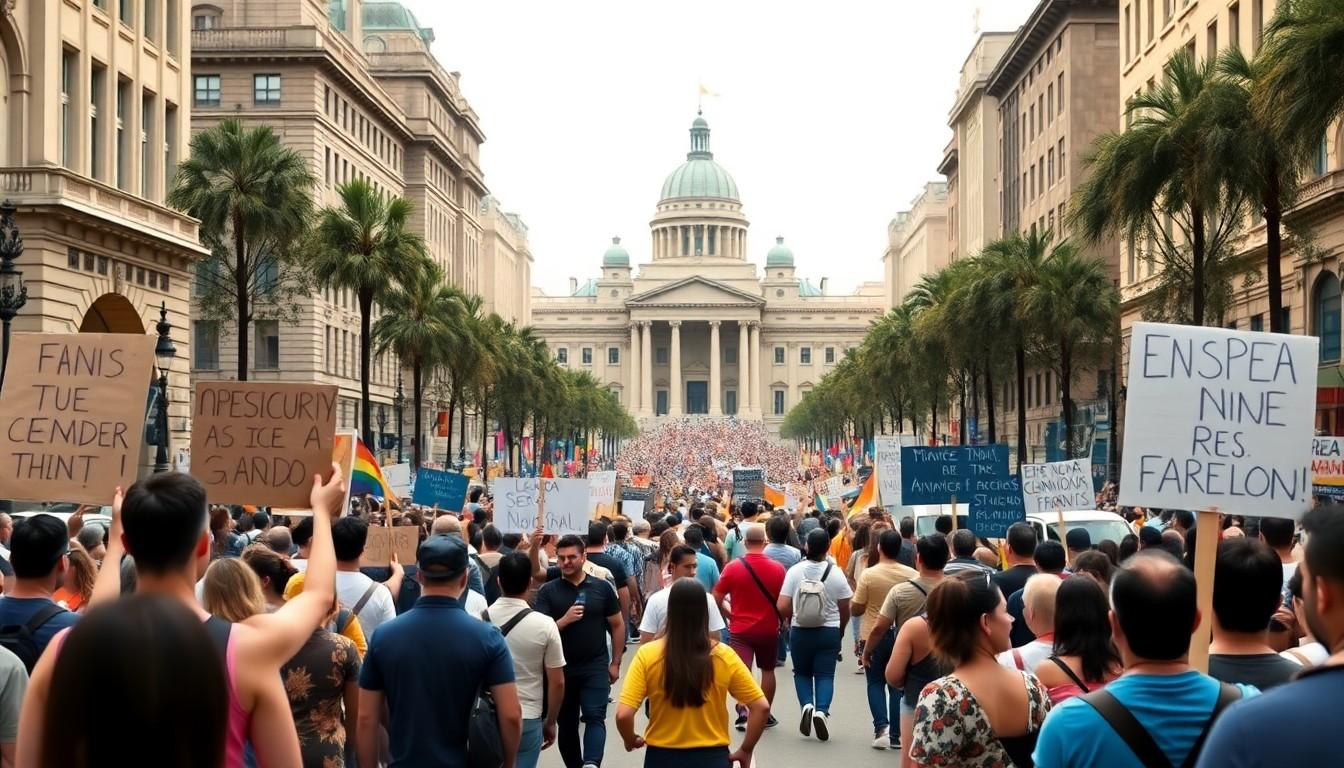
Bright flags and music filled central Buenos Aires as thousands joined the 35th Pride March, turning a lively gathering into a platform for urgent demands. Organisers and participants called for stronger protections, better access to services and action against discrimination, while a recent attack on trans women added weight to the march’s message.
Essential Takeaways
- A changed route: The march began near Lima and Avenida de Mayo and headed towards Congress, with the route altered because of security arrangements ahead of Pope Leo XIV’s visit.
- More than a celebration: Participants raised issues including equal access to healthcare, education, employment and housing.
- Calls for legal protections: Organisers highlighted demands for a Comprehensive Trans Law, updated anti-discrimination legislation and historical reparations.
- A recent attack sharpened the focus: An assault on trans women in Palermo Woods days earlier prompted renewed calls for protection and accountability.
A colourful march with a serious purpose
The 35th Pride March brought a sea of rainbow flags, music and banners to Buenos Aires, but the atmosphere carried more than festive energy. Families, human rights groups, activists and social organisations gathered to celebrate diversity while pressing for action on discrimination and violence.
The march set off from the junction of Lima and Avenida de Mayo, moving towards Argentina’s National Congress. The route differed from the usual one because of security planning for Pope Leo XIV’s scheduled visit to the country the following day. Coverage by Página/12 and C5N outlined the route and event arrangements.
Why the route changed this year
For visitors planning around the event, the altered route was one of the most practical details. The march’s starting point and destination kept it firmly in central Buenos Aires, while the security operation linked to the papal visit shaped how participants moved through the city.
Schedules, road closures and stage locations can affect travel even for people who aren’t joining the march. C5N’s event guide focused on those logistics, while Página/12 reported on the route towards Congress. Checking local updates before setting out is sensible during any large city demonstration.
The demands behind the rainbow flags
One of the organisers’ central messages was that pride can also be resistance, particularly amid concern about discriminatory rhetoric. Participants called for a Comprehensive Trans Law intended to broaden access to healthcare, education, work and housing, alongside new anti-discrimination rules and reparations for trans and travesti people who have experienced persecution and violence.
The march also called for public policies to prevent attacks motivated by sexual orientation or gender identity, and for reliable access to healthcare programmes and inclusion initiatives. Noticias Argentinas covered the event’s political edge, while the event listing from Eventos con Impacto highlighted its place in Buenos Aires’ public calendar.
A recent attack brought safety into focus
The demands for protection took on added urgency after a group of trans women was attacked in Palermo Woods shortly before the march. El País reported on the assault, and La Nación followed questions about the people accused and the investigation.
For many participants, the incident made clear why calls for safety and accountability sit alongside broader demands for equality. The march offered space for remembrance and visibility, too, bringing personal concerns into a public setting rather than leaving them unheard.
Pride in the streets, and what comes next
Pride marches can be both joyful and politically pointed, and Buenos Aires’ gathering brought those qualities together. The music and colour made the city feel celebratory, while the calls for legislation, services and protection kept attention on what participants say still needs to change.
The march’s route and the latest assault gave this year’s event a particular local context, but its message reached beyond one afternoon in the capital. Turning public visibility into lasting protections is the harder work that follows.
It’s a celebration worth seeing, and a reminder to listen to the demands behind it.
Source Reference Map
Story idea inspired by: [1]
Sources by paragraph: