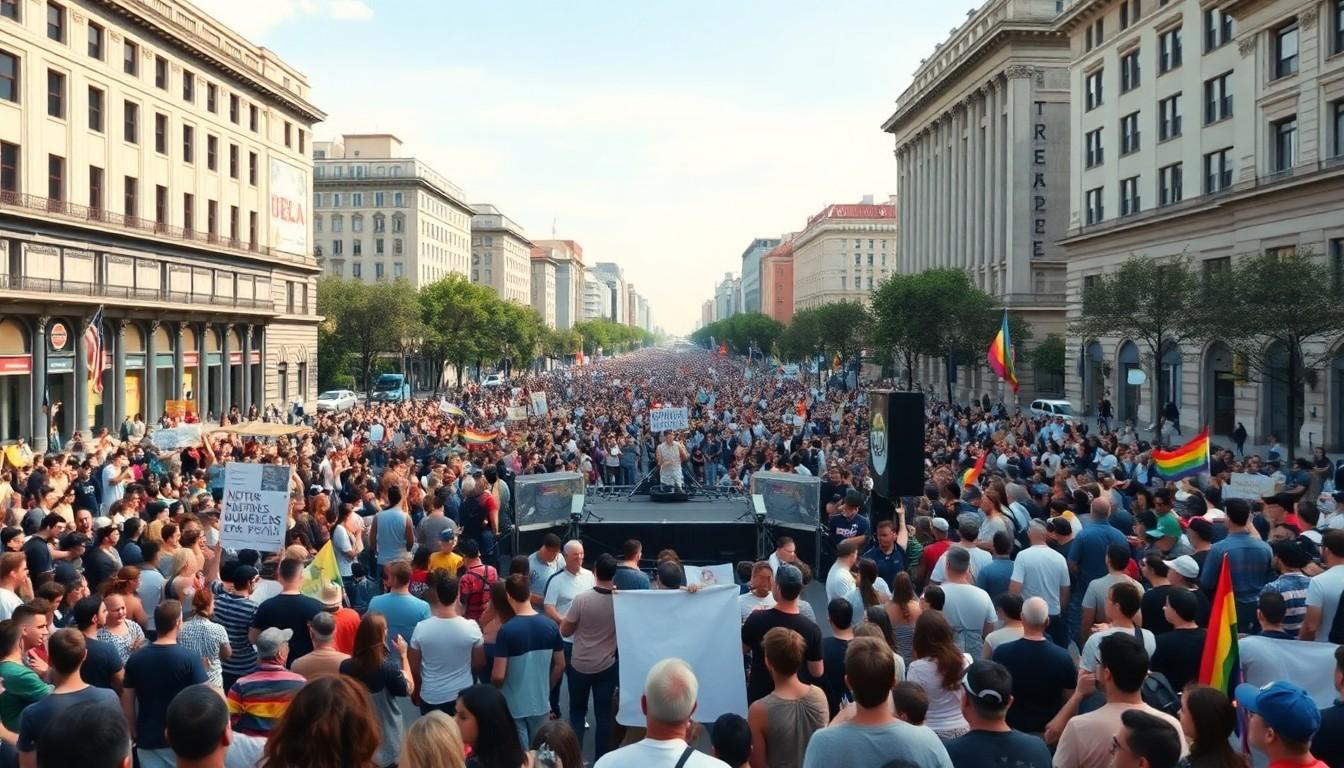
Crowds filled Buenos Aires for the 35th Pride March, where Maria Becerra, La Joaqui, ROZE and Nicki Nicole joined a day of performances and calls for equality. From a closing concert outside Congress to a party float supporting trans and non-binary people, the music brought celebration and protest together.
Essential takeaways
- A huge turnout: Reports put the crowd at more than 2.5 million people.
- A headline-making close: Maria Becerra performed outside Congress and spoke about the need to defend LGBTQ+ rights.
- Artists added their voices: La Joaqui used her set to challenge prejudice, while ROZE mixed pop with tango and folk references.
- Support beyond the stage: Nicki Nicole joined a float organised by Polenta and Mocha Celis.
Pride in Buenos Aires was a celebration with a purpose
The 35th Buenos Aires Pride March brought music, dancing and a powerful sense of solidarity to the streets. But the day was more than a festival: performers and marchers also drew attention to discrimination and violence still faced by LGBTQ+ people. (Clarín; Filo)
Reports described a turnout of more than 2.5 million, with the march moving towards Congress as artists took part in concerts and other events. The scale was striking, but the message was personal: visibility matters when people still face fear simply for being themselves. (La Nación; Filo)
Maria Becerra closed the march with a call for rights
Maria Becerra brought the day to a close with a performance in front of Congress. Before singing, she spoke about hate crimes and the importance of defending rights already won, reminding the crowd that behind every statistic is a person and a life. (ANDigital; Clarín)
Her set included songs such as "Dime Cómo Hago", "La Reina" and "Discoteka". The combination of familiar hits and a direct message gave the closing show a clear emotional arc: a celebration, certainly, but one that didn't look away from the reason Pride still matters. (Clarín; La Nación)
La Joaqui and ROZE made the stage a place for protest
La Joaqui offered one of the day's most pointed remarks, challenging the double standards behind anti-gay prejudice. Her words put the focus on discrimination and violence, rather than treating Pride as a party detached from everyday life. (Clarín; Infobae)
ROZE, the duo of Rocco and Treze, brought a different kind of spectacle to the Nadia Echazú stage. Their performance blended dance with Argentine folk and tango touches, while slogans on their clothing carried messages of pride and resistance. A kiss between the pair during "QUIERO SER" became one of the night's standout moments. (Clarín; ANDigital)
Nicki Nicole joined a float supporting trans and non-binary people
Nicki Nicole took part from the Polenta and Mocha Celis float, alongside a group of artists and public figures. Mocha Celis is an organisation that supports travesti, trans and non-binary people, giving the appearance a community focus beyond the main stage. (TN; Infobae)
The float was part of a wider programme of music and events connected with the march. For anyone following Pride through its performances, it was a reminder that showing up can take many forms: a song, a speech, or simply sharing space with a community. (TN; Filo)
Why the music mattered as much as the message
The performances helped bring a large, diverse crowd together, but they also gave artists room to speak plainly about inclusion and safety. That balance between joy and protest is part of what makes Pride distinctive: celebration isn't a distraction from the cause, but one way people claim visibility and belonging. (Filo; La Nación)
The artists' appearances also showed how pop culture can help make public conversations feel immediate. A memorable chorus may stay with you, but so can a sentence about who deserves to live without fear. (Clarín; Infobae)
It's a powerful reminder that Pride is both a celebration and a call to keep moving forward.
Source Reference Map
Story idea inspired by: [1]
Sources by paragraph: