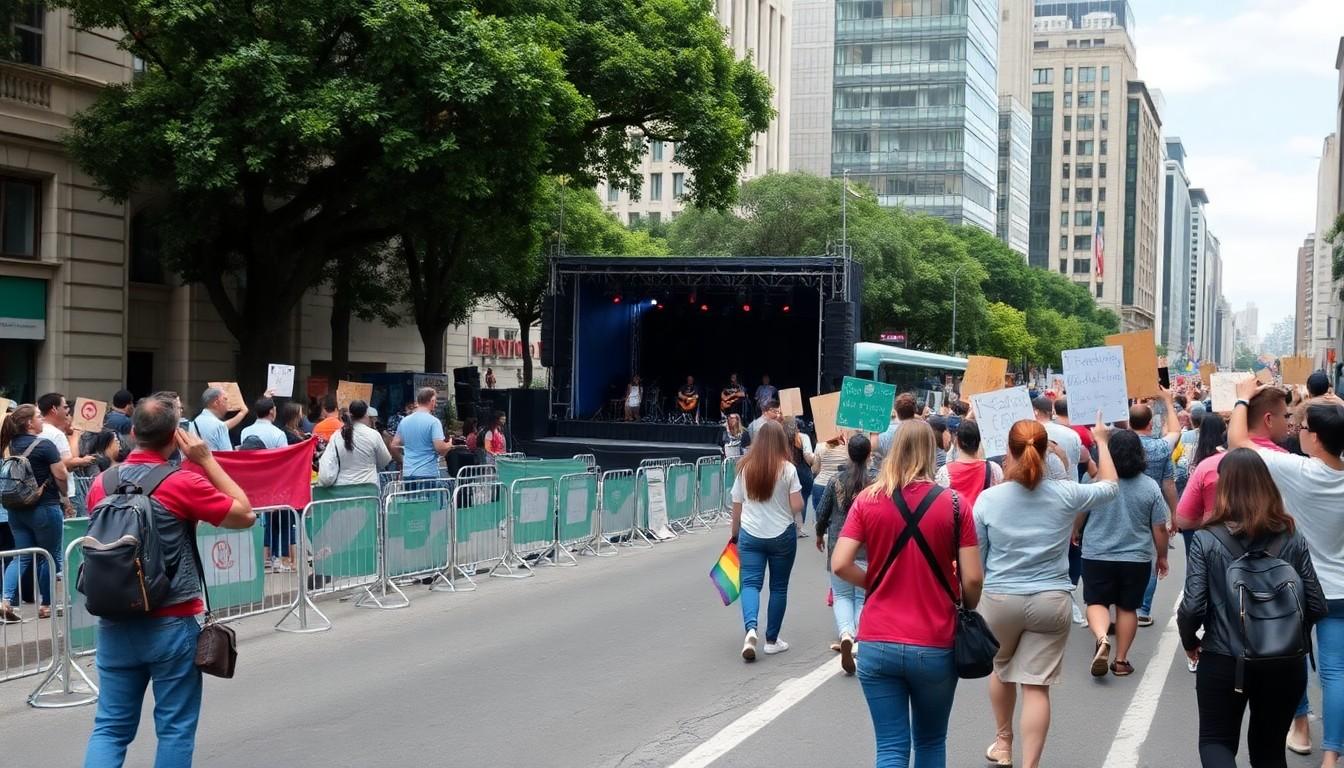
Thousands joined Buenos Aires Pride in November 2026, marching towards Congress the day before Pope Leo XIV arrived in the city. The event kept its date after a dispute with city officials, but took a shorter route, as organisers put attacks on trans women and rising anti-LGBTQ+ hostility at the centre of the day. [3], [5]
Essential Takeaways
- The march went ahead on 7 November: Organisers reached an agreement with the city after officials proposed moving Pride to a later date. [3], [5]
- The route was changed: Marchers headed towards Congress, skipping the customary stretch through Plaza de Mayo. [3], [5]
- The attack on trans women shaped the demands: At least six women were reportedly injured in an assault in Bosques de Palermo less than a week earlier. [4], [7]
- Music brought a celebratory note: María Becerra and La Joaqui performed, while Becerra called inclusion a right. [3], [7]
Buenos Aires Pride went ahead, despite the row over its date
Thousands gathered for Buenos Aires Pride, or Marcha del Orgullo, on 7 November, filling the streets with flags, chants and the steady rumble of floats. The timing mattered: the march took place the day before Pope Leo XIV arrived in Argentina, putting LGBTQ+ visibility firmly in the city's spotlight. [3], [5]
The date had been uncertain after the city government announced restrictions on public events during the period of the papal visit and proposed holding Pride later in November. Organisers argued the march had been planned for months, and a deal with the city allowed it to keep its original date. [3], [5]
But the compromise came with a change of route. The march skipped its customary passage through Plaza de Mayo and instead made its way towards Congress, a shorter journey that still carried a clear message. [3], [5]
An attack on trans women put safety at the heart of the march
The assault on trans women working in Bosques de Palermo, reported less than a week before Pride, gave the day's calls for justice a sharper urgency. Reports said a group attacked the women with sticks, stones and traffic cones, leaving at least six injured. [4], [7]
The incident was under investigation, and city officials publicly condemned the violence. At the march, speakers and participants connected the attack to the everyday risks faced by trans women, turning a festive gathering into a space for grief, solidarity and demands for action. [4], [7]
That mix was hard to miss. Pride can be joyful, but the bright colours and music don't cancel out the reasons people still need to take to the streets. [3], [7]
What Pride organisers wanted the government to hear
Organisers called for justice for the women attacked and raised wider concerns about anti-trans discrimination and public hostility. Their message linked political rhetoric to the treatment of LGBTQ+ people in everyday life, while marchers chanted against transphobia. [3], [7]
The demands also included support for a bill proposing a pension for older travesti and trans women, as well as repeal of a national decree restricting access to gender-affirming care for under-18s. A federal appeals court had temporarily suspended the restriction, while leaving its constitutionality unresolved. [3], [7]
For readers following Argentina's LGBTQ+ rights debate, the key point is that Pride wasn't just a celebration or a response to one attack. It brought together immediate calls for safety and longer-running demands around recognition, healthcare and discrimination. [3], [7]
María Becerra and La Joaqui brought music to the march
The stages gave the crowd room to celebrate as well as protest. La Joaqui performed on a stage named for activist Nadia Echazú, while María Becerra closed the night in front of Congress with songs including "Automático" and "Discoteka". [3], [7]
Becerra told the crowd that people were living through a time when showing their identity could mean living in fear. Her T-shirt carried a plain-spoken message: inclusion isn't an option, it's a right. It's a line that sounds especially direct amid the day's calls for protection and equality. [3], [7]
The papal visit added a striking backdrop
Pope Leo XIV arrived in Buenos Aires the following day, with President Javier Milei receiving him at Jorge Newbery Airport before welcoming him to the Casa Rosada. The timing placed two very different public events close together: a Pride march pressing for LGBTQ+ rights, and a high-profile visit by the leader of the Catholic Church. [5], [6]
That juxtaposition doesn't mean the march was about the pope alone. Its route, demands and performances had their own history and purpose, while the weekend's packed schedule made Buenos Aires a focus for conversations about faith, identity and public life. [3], [5]
Pride's blend of celebration and protest can be the point: people can dance, remember, and demand change in the same afternoon. [3], [7]
The march's message was unmistakable: visibility matters, and so does the work of making people safer. [3], [7]
Source Reference Map
Story idea inspired by: [1]
Sources by paragraph:
- Paragraph 1: [3], [5]
- Paragraph 2: [3], [5]
- Paragraph 3: [3], [5]
- Paragraph 4: [3], [5]
- Paragraph 5: [3], [5]
- Paragraph 6: [4], [7]
- Paragraph 7: [4], [7]
- Paragraph 8: [3], [7]
- Paragraph 9: [3], [7]
- Paragraph 10: [3], [7]
- Paragraph 11: [3], [7]
- Paragraph 12: [3], [7]
- Paragraph 13: [3], [7]
- Paragraph 14: [5], [6]
- Paragraph 15: [3], [5]
- Paragraph 16: [3], [7]
- Paragraph 17: [3], [7]