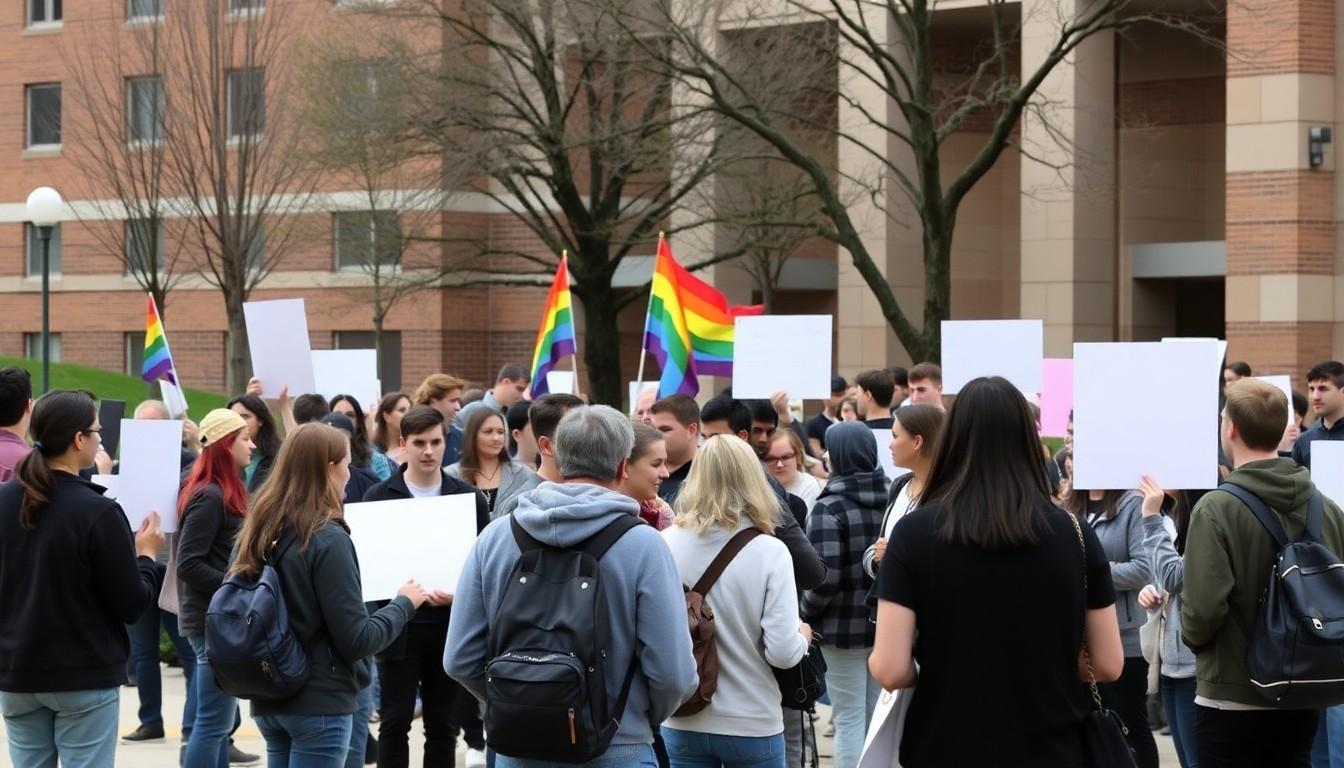
LGBTQ students and allies rallied at the University of Utah in Salt Lake City after student Amber Grace said she was followed and harassed by College Republicans. The protest put campus safety, political speech and a pending misdemeanor citation in sharp focus, while organisers urged the local prosecutor to drop the charge against her.
Essential Takeaways
- The rally: Dozens gathered on the University of Utah's President's Circle on November 4, according to Fight Back News.
- What prompted it: Grace said a College Republican followed and filmed her, and that she was later assaulted; news coverage describes a physical altercation.
- The citation: Grace was cited for misdemeanor assault, and rally organisers called for the charge to be dropped.
- A wider dispute: The case has drawn competing attention from local and national media, as well as campus and community advocates.
A campus protest brings a tense dispute into public view
Chants and protest signs filled the University of Utah's President's Circle on November 4, as dozens of LGBTQ students, young people and allies called for what organisers described as a safer campus. The rally followed an incident involving Grace and members of the university's College Republicans, a dispute that has since received local and national coverage.
Fight Back News reported that protesters accused the College Republicans of transphobic harassment and intimidation. Coverage by FOX 13 described the incident as a fight linked to a gender-related whiteboard dispute, while Fox News reported that footage captured a physical altercation. Those accounts offer different framings, but agree that Grace was cited after the confrontation.
What is known about the incident and citation?
According to Fight Back News, Grace said she had been followed, filmed without consent and subjected to transphobic language before the altercation. The outlet reported that her glasses were knocked off and that she faced a misdemeanor assault citation. FOX 13 also reported that she was cited after a fight with College Republicans.
Fox News covered video of the physical confrontation, bringing the dispute to a much wider audience. But a clip rarely tells the whole story: what happened before and after the recorded moments, and how officials assess each person's actions, matter too. The available reports should be read with that distinction in mind.
Why protesters are calling for the charge to be dropped
At the rally, demonstrators carried signs supporting Grace and urging Salt Lake County District Attorney Sim Gill to drop the charge ahead of her first court appearance. The county district attorney's office identifies Gill as the elected prosecutor, but its public-facing information does not itself resolve the facts of this case.
The Utah Anti-War Committee also issued a statement in support of Grace, framing the incident as part of a broader concern about harassment of LGBTQ students. That's an advocacy position, rather than an independent finding. Keeping that difference clear matters when a case is both politically charged and still working its way through the legal process.
Campus speech, student safety and a wider climate
The rally highlighted a difficult campus question: how should a university protect students from harassment while also navigating political speech and public demonstrations? Fight Back News reported that College Republicans heckled protesters and filmed them during the gathering, while university police were present. The article also described the protest as the first political rally on campus in more than a year.
A separate report by KSL covered a College GOP leader deleting a social media post about deporting children, accompanied by an image referencing a Star Wars massacre. It doesn't establish anything about Grace's case, but it adds context to the broader scrutiny facing campus political groups and their online activity. For students, though, the everyday concern is simpler: getting to class without feeling targeted.
What happens next?
The immediate next step is the legal process around Grace's citation. The district attorney's office is the relevant public authority for charging decisions, while campaign statements and media reports offer different perspectives on the dispute. Anyone following developments should distinguish confirmed procedural details from allegations made by either side.
For universities, the harder work may be ongoing: clear reporting routes, consistent responses to alleged harassment and practical support for students who feel unsafe. A rally can make a campus dispute visible in a single afternoon; building trust takes longer.
The debate now reaches beyond one campus, but fairness and student safety remain the essential tests.
Source Reference Map
Story idea inspired by: [1]
Sources by paragraph: