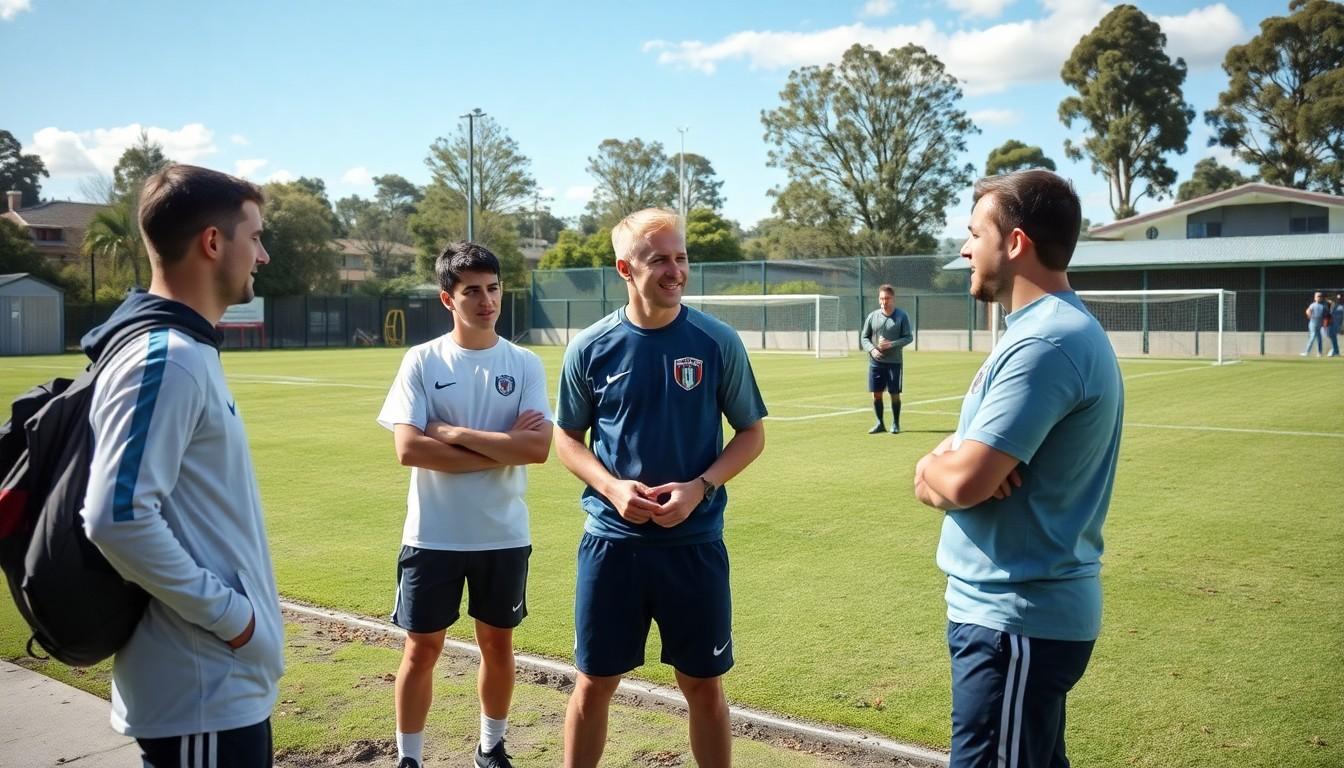
A welcoming football club can offer more than a place to play. At Melbourne Rovers, LGBTQIA+ players have found friendship, confidence and a space where they don’t have to hide who they are. The club’s story also points to a wider challenge: making community sport feel safe, inclusive and genuinely competitive for everyone. [3], [4]
Essential Takeaways
- Belonging matters: Research has found that discrimination remains a barrier to participation for LGBTQIA+ people in community sport. [3], [4]
- Sport can bring people together: Melbourne Rovers says its club welcomes LGBTQIA+ players and allies. [5]
- Inclusion and ambition can go hand in hand: The Rovers compete in Football Victoria’s Metro leagues, with a women’s team planned for 2027. [2]
- Small signals make a difference: Clear inclusion policies and respectful behaviour can help people feel safer joining a team. [5], [7]
A football club can change how sport feels
For some players, walking onto a pitch means concentrating on the ball, the next pass and the people beside them, rather than how they’re being perceived. That sense of ease is central to the story of Melbourne Rovers, an LGBTQIA+-inclusive football club where members have found friendship and a place to play without disguising who they are. [2], [5]
The club’s president, Stuart Bonner, has described football as a vital source of support in his life. He grew up in Glasgow feeling that the sport’s strongly masculine culture left little room for him to be openly gay; joining the Rovers later helped him find a community where he felt accepted. [2], [6]
It’s a reminder that access to sport isn’t only about having a team nearby. People also need to feel they can turn up, take part and be themselves. [3], [7]
Why inclusion matters in community sport
Research and advocacy work point to discrimination as a real obstacle for LGBTQIA+ people in sport. A study reported by Swinburne University highlights ongoing homophobia and discrimination, while Australian research has found that many LGBTQIA+ participants have witnessed or experienced discrimination in community sport. [3], [4]
Football’s history and culture can make this especially challenging for some players. Scotland’s Football v Homophobia strategy sets out work to address exclusion in the game, reflecting a wider effort to make football safer and more welcoming. [6]
But the answer isn’t simply to tell people to be more confident. Clubs can help by setting clear expectations, responding to discriminatory behaviour and making it obvious that LGBTQIA+ players are welcome. [5], [7]
Inclusion doesn’t mean lowering the competitive stakes
There’s a tired assumption that an inclusive team is focused on belonging instead of performance. The Rovers’ story challenges that idea: the club competes in Football Victoria’s Metro leagues and is serious about what happens on the pitch as well as the friendships built off it. [2]
That distinction matters. A supportive environment and a competitive spirit aren’t opposites; players can feel safe with their teammates and still care deeply about training, results and improvement. [2], [5]
The club’s FAQ offers a practical starting point for anyone considering joining: look for clear information about who’s welcome, how the club operates and what support it provides. If those details aren’t easy to find, asking directly can help you understand whether the team feels like a good fit. [5]
More pathways can help players find their place
Joining a team can feel daunting, especially after a difficult experience of sport or a long break from playing. An inclusive club can lower that first hurdle by giving newcomers a chance to meet people, learn the game and take part without feeling they have to explain or defend their identity. [2], [5]
Melbourne Rovers has two men’s teams in Football Victoria’s Metro leagues and plans to add a women’s team in 2027. That expansion could offer another route into the game for players who want a team that feels right for them. [2]
For anyone choosing a community football club, it’s worth checking its inclusion policy, asking how it handles discrimination and seeing whether the atmosphere feels welcoming at a training session. A warm hello can be just as telling as the club’s paperwork. [5], [7]
A stronger game starts with feeling welcome
The Rovers’ experience suggests that inclusion isn’t a sideline issue. When players feel respected, they’re more able to focus on the sport, build friendships and keep coming back. [2], [3]
That’s a win for the people involved, and for community football itself. The more clubs make belonging part of everyday practice, the more players can enjoy the game on their own terms. [5], [7]
A good team should make room for both the person and the player. [5], [7]
Source Reference Map
Story idea inspired by: [1]
Sources by paragraph:
- Paragraph 1: [3], [4]
- Paragraph 2: [2], [5]
- Paragraph 3: [2], [6]
- Paragraph 4: [3], [7]
- Paragraph 5: [3], [4]
- Paragraph 6: [6]
- Paragraph 7: [5], [7]
- Paragraph 8: [2], [5]
- Paragraph 9: [2], [5]
- Paragraph 10: [5]
- Paragraph 11: [2], [5]
- Paragraph 12: [2]
- Paragraph 13: [5], [7]
- Paragraph 14: [2], [3]
- Paragraph 15: [5], [7]
- Paragraph 16: [5], [7]