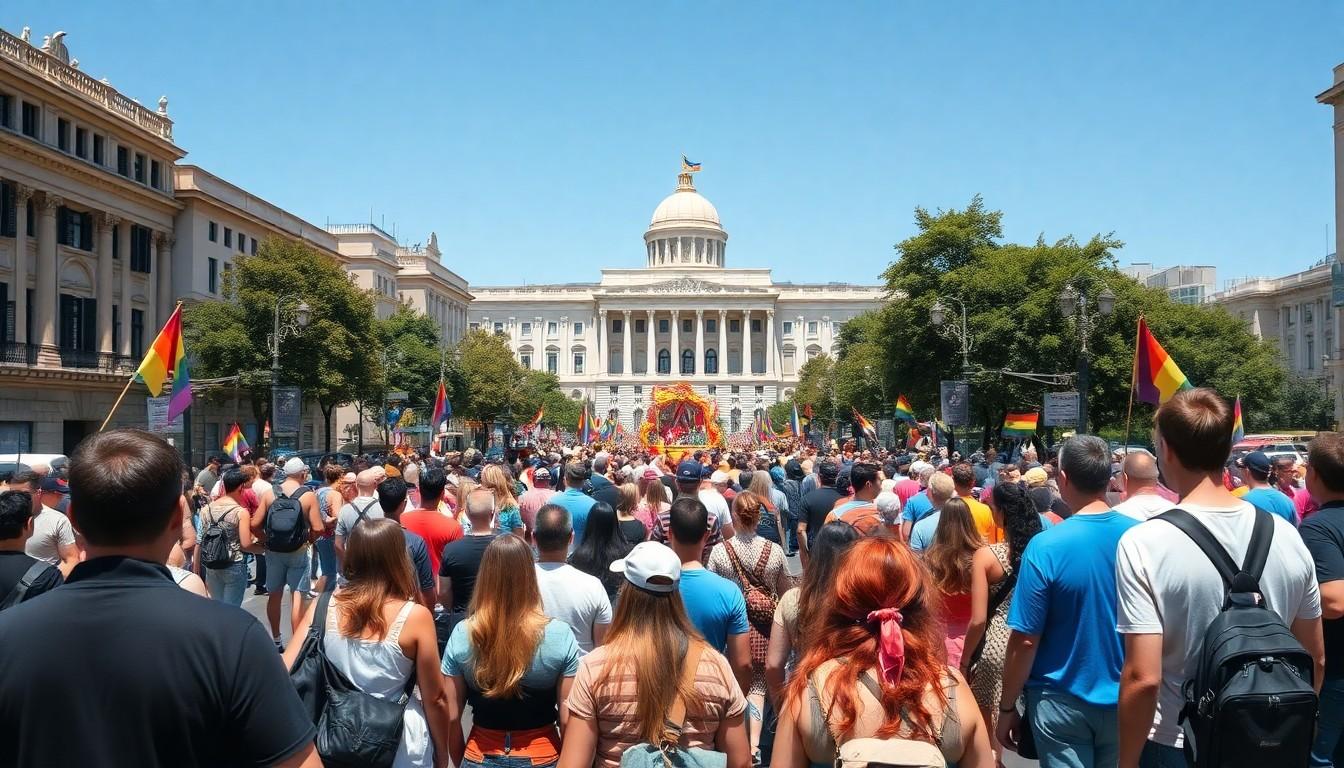
Buenos Aires filled with colour on 7 November as thousands joined the 35th Pride March, with Nicki Nicole, La Joaqui, María Becerra and other familiar faces among them. The city-centre gathering combined a lively street celebration with calls for respect, safety and equality, giving the day a significance that reached well beyond its eye-catching outfits and performances.
Essential Takeaways
- A major city-centre gathering: The 35th Pride March took place in Buenos Aires on Saturday 7 November, drawing thousands of participants.
- Artists joined the crowds: Nicki Nicole, Leticia Siciliani, La Joaqui, María Becerra and Cazzu were among the public figures at the event.
- Music was part of the programme: María Becerra performed at the closing show, while La Joaqui appeared on the Nadia Echazú stage.
- The message was about resistance: The march's slogan connected Pride with standing up to hatred and discrimination.
- Activist demands remained central: Organisers called for measures including historical reparations for trans people and stronger tools against discrimination.
A colourful march with a serious message
Buenos Aires was bright with flags, signs and celebratory outfits as the 35th Pride March made its way towards the National Congress. But beneath the colour and music was a pointed message: this was also a public demonstration for safety, dignity and equal treatment.
The event's slogan, "When hate advances, pride in the streets is resistance", reflected a tense backdrop that included recent attacks against trans women in Palermo. Pride can be joyful, but the march made clear why being visible together still matters. [3], [5], [6]
The stars who joined the crowds
Nicki Nicole took part on the Fiesta Polenta float alongside Nacho Elizalde, while Leticia Siciliani shared a message online about pride as a response and meeting people in the streets. La Joaqui announced she was heading to the march, bringing a black lace corset to a day where personal style was part of the spectacle.
Cazzu also joined the mobilisation. The celebrity presence helped draw attention to the gathering, while photos and posts offered followers a glimpse of its many moods, from polished stage looks to relaxed moments among the crowds. [2], [5]
Music, performances and a packed programme
María Becerra closed the musical programme with several songs, bringing a high-profile finish to a day that mixed performances with the wider march. La Joaqui also appeared on the Nadia Echazú stage along Avenida 9 de Julio, where she spoke against discrimination and in favour of respect for different identities and sexual orientations.
The mix of artists, street activity and public advocacy gave the event an unmistakably festive feel without softening its message. A strong performance can bring people together, but the demands voiced from the stage are what give the celebration its lasting weight. [3], [4], [7]
What the march asked for
Alongside cultural activities, organisations called for historical reparations for trans people and new measures to tackle discrimination. Those demands were part of the day's purpose, not an afterthought to the music and photographs.
For visitors, the simplest way to take part respectfully is to listen as well as celebrate. Pay attention to the messages on banners and from speakers, and remember that Pride is both a gathering of community and a call for change. [3], [5], [6]
A day that made room for joy and protest
The march brought together artists, activists and thousands of residents in a shared public space. Its vivid outfits and lively stages made for striking scenes, but the appeal of the event went deeper: people showed up to celebrate who they are and to insist that everyone deserves safety and respect.
That balance is what makes Pride so powerful. The party matters, and so does the reason for it. [3], [5], [6]
It's a celebration worth enjoying, and a message worth carrying beyond the streets.
Source Reference Map
Story idea inspired by: [1]
Sources by paragraph: