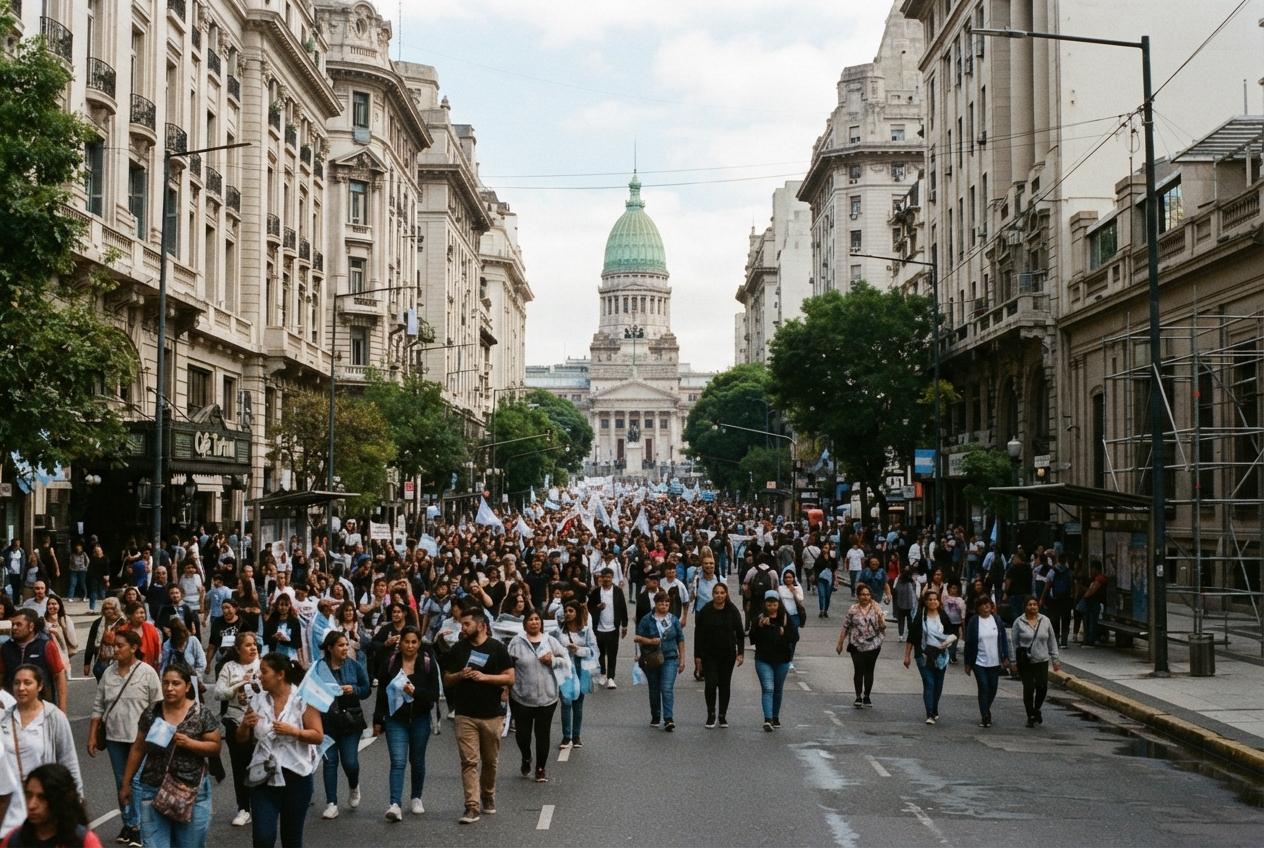
Buenos Aires Pride marchers brought a message of resistance to the streets on Saturday, 7 November, with Mayra Mendoza calling for Cristina Kirchner’s release as the procession passed San José 1111. The event combined celebration with demands on equality, public services and justice, giving the city’s annual gathering a distinctly political edge.
Essential Takeaways
- A prominent political message: Mayra Mendoza called for Cristina Kirchner’s release and defended her innocence as the march passed San José 1111.
- A changed route: The procession was due to move from Lima and Avenida de Mayo towards Congress, rather than setting off from Plaza de Mayo.
- A packed programme: Organisers planned market stalls, a first LGBTQ+ book fair, performances and free, confidential HIV testing.
- A broad set of demands: Campaigners called for stronger anti-discrimination and trans rights protections, alongside action on sexual health and public services.
Buenos Aires Pride mixed celebration with protest
The striking feature of this year’s Buenos Aires Pride march was how openly it linked celebration to political protest. As the procession passed San José 1111, Mayra Mendoza called for Cristina Kirchner’s release and said she believed the former president was innocent. The message landed amid a day that organisers framed as a defence of rights and a response to hostility and exclusion.
According to Página/12, marchers stopped at the address to recognise rights gained during the Kirchner governments. That political backdrop sat alongside the gathering’s wider purpose: keeping LGBTQ+ people visible, organised and heard. Pride can be joyful, but in a tense climate, turning out together is also a statement.
Why the march took a different route
The day’s route was adjusted because Plaza de Mayo was expected to be cordoned off during Pope Leo XIV’s visit. Instead, participants were due to assemble from 10am at Lima and Avenida de Mayo, with the march towards Congress planned for 4pm, according to Clarín and C5N.
The change shifted the procession’s starting point, not its momentum. The organisers’ slogan, “When hate advances, pride in the streets is resistance”, put that resolve in plain terms. It also made the march’s purpose hard to mistake: public space was both a celebration venue and a place to press for change.
A Pride programme with practical support
There was more to the day than the march itself. Organisers planned the Paseo del Orgullo, with stalls on Lima and Cerrito, a market of around 450 independent ventures, and the first LGBTQ+ book fair on Lima. Stages and performances were also part of the programme, as C5N and Clarín reported.
Practical support had a place too. AHF Argentina was due to offer free, confidential rapid HIV tests between 10am and 2pm, while around 200 first-aiders were expected near the stages. Those details matter: a large public event is more welcoming when care is visible and easy to find.
What campaigners want next
The organisations behind the march called for an Integral Trans Law and stronger anti-discrimination legislation, as well as an emergency response to sexual health concerns. Their agenda also included defending public education, comprehensive sex education, reproductive healthcare, HIV protections and trans employment quotas.
Campaigners also objected to Decree 62/2025, which bars under-18s from accessing treatments covered by Article 11 of Argentina’s Gender Identity Law. The decree’s wording is set out in the national legal register. Other demands touched on migrant rights, protest, cultural funding and the relationship between religion and the state, showing just how broad the coalition’s concerns have become.
Pride’s message reaches beyond one march
The programme also included calls to keep searching for Tehuel de la Torre and to pursue historical reparations for the travesti-trans community. With the march taking place in the year marking 50 years since Argentina’s 1976 coup, organisers planned tributes to human rights groups and renewed calls for memory, truth and justice.
That mix of celebration and remembrance can feel weighty, but it reflects the stakes many participants see in the day. A march can’t settle every argument or deliver every law; it can make demands visible, connect people and keep pressure on decision-makers. For many, that’s reason enough to return to the streets.
Explore the programme and route details before heading out, and look for the support services on offer.
Source Reference Map
Story idea inspired by: [1]
Sources by paragraph: