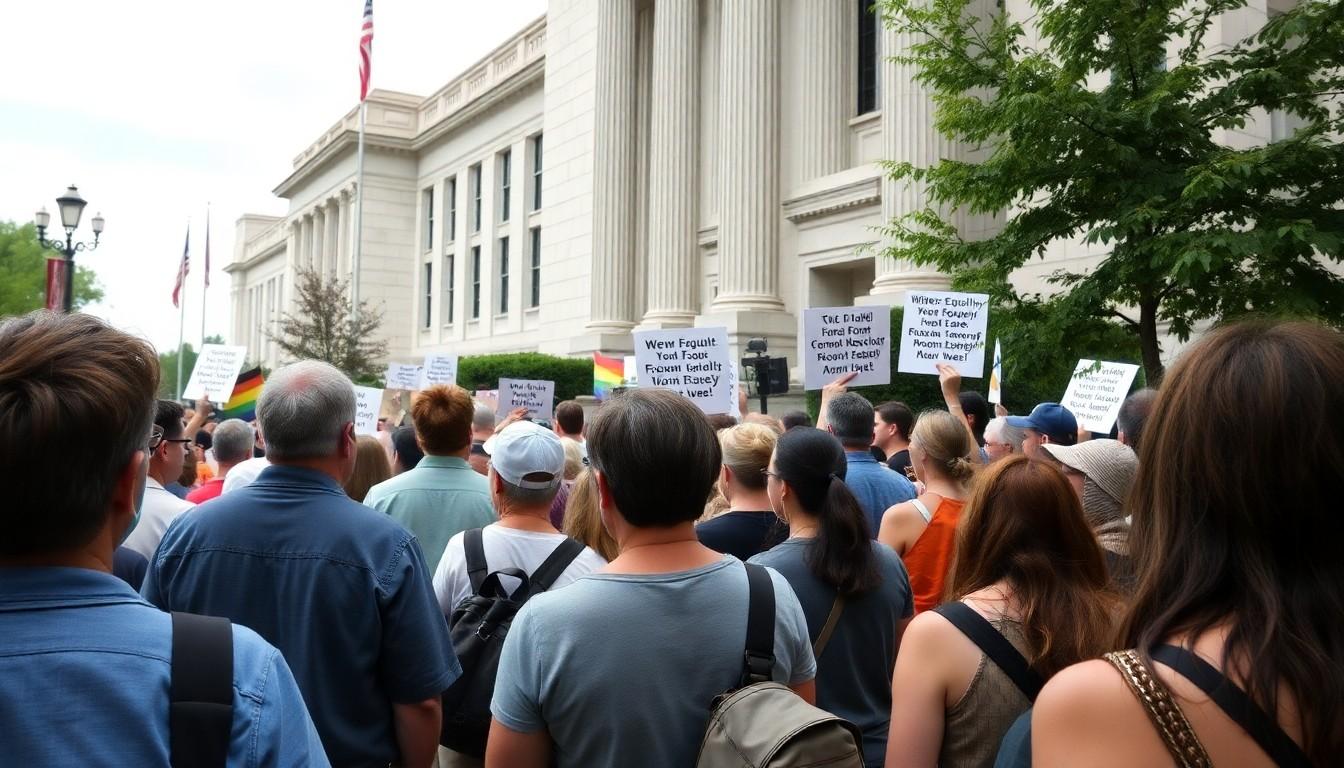
Communities are showing what democracy looks like by turning up, speaking out and standing beside one another. From local meetings to street protests, grassroots action matters as LGBTQ+ rights face pressure in the United States and around the world. It can’t fix everything overnight, but it can make people feel less alone and remind those in power that citizens are watching.
Democracy is more than an election-day ritual
Democracy can look less like a grand speech and more like a handwritten sign held above a crowd. Across the United States, people have been gathering at school board meetings, town halls and protests to challenge decisions they believe threaten their neighbours’ rights and safety. The message is simple, but it takes persistence to keep saying it. (AP News; The Washington Post)
That kind of participation matters between elections, too. Local meetings give residents a chance to question officials and make their concerns visible, while peaceful demonstrations can bring attention to issues that might otherwise be ignored. It’s not glamorous work, but democracy has always depended on people being willing to show up. (AP News)
LGBTQ+ rights remain under pressure
The scale of the challenge is stark. The American Civil Liberties Union’s 2026 tracker records hundreds of anti-LGBTQ+ bills introduced across the United States, with many measures targeting transgender people. The proposals vary, but together they show why communities continue to organise and keep a close eye on state politics. (ACLU)
Beyond the US, laws criminalising consensual same-sex activity remain in force in multiple countries, according to the International Lesbian, Gay, Bisexual, Trans and Intersex Association’s global database. That legal picture is a sobering reminder that safety and equality can’t be taken for granted, even as public debate changes. (ILGA World)
Authoritarian politics can leave a long shadow
Political change rarely erases prejudice at a stroke. Human Rights Watch’s reporting on Germany documents continuing concerns about far-right activity, illustrating how difficult it can be for societies to confront the legacy of extremism and prevent its return. Progress is real, but it’s not a tidy, one-way journey. (Human Rights Watch)
Serbia offers another example of the pressures facing democratic institutions. Freedom House’s 2026 country assessment describes concerns around political rights and civil liberties, while large-scale protests in different countries have shown how citizens can still mobilise when they believe democratic standards are at risk. (Freedom House; AP News)
Small acts of participation add up
If you’re wondering where to start, keep it practical. Find out when your local council or school board meets, check which proposals are on the agenda, and go with a neighbour if that makes speaking up feel easier. You can also follow reliable local reporting and support community groups already doing the steady work. (AP News; The Washington Post)
And remember that visibility can be quiet as well as loud. Listening to people directly affected, sharing trustworthy information and checking in on neighbours all help build the connections that make communities more resilient. No single action carries the whole burden, but a lot of small acts can shift what feels possible. (ACLU; AP News)
The work continues after the crowds go home
Protests and public meetings can offer a powerful sense of solidarity, but the deeper test is what happens afterwards: whether people keep organising, stay informed and return when the next decision comes around. That patient follow-through can feel less exhilarating than a packed march, yet it’s often where lasting change takes root. (The Washington Post; Freedom House)
There’s comfort, too, in seeing other people refuse to look away. Democracy isn’t only a promise made by politicians; it’s a practice shaped by the people who keep asking for accountability and defending one another’s rights. (AP News; ACLU)
Keep showing up in the ways you can; even a small voice can help make a community stronger.
Source Reference Map
Story idea inspired by: [1]
Sources by paragraph: