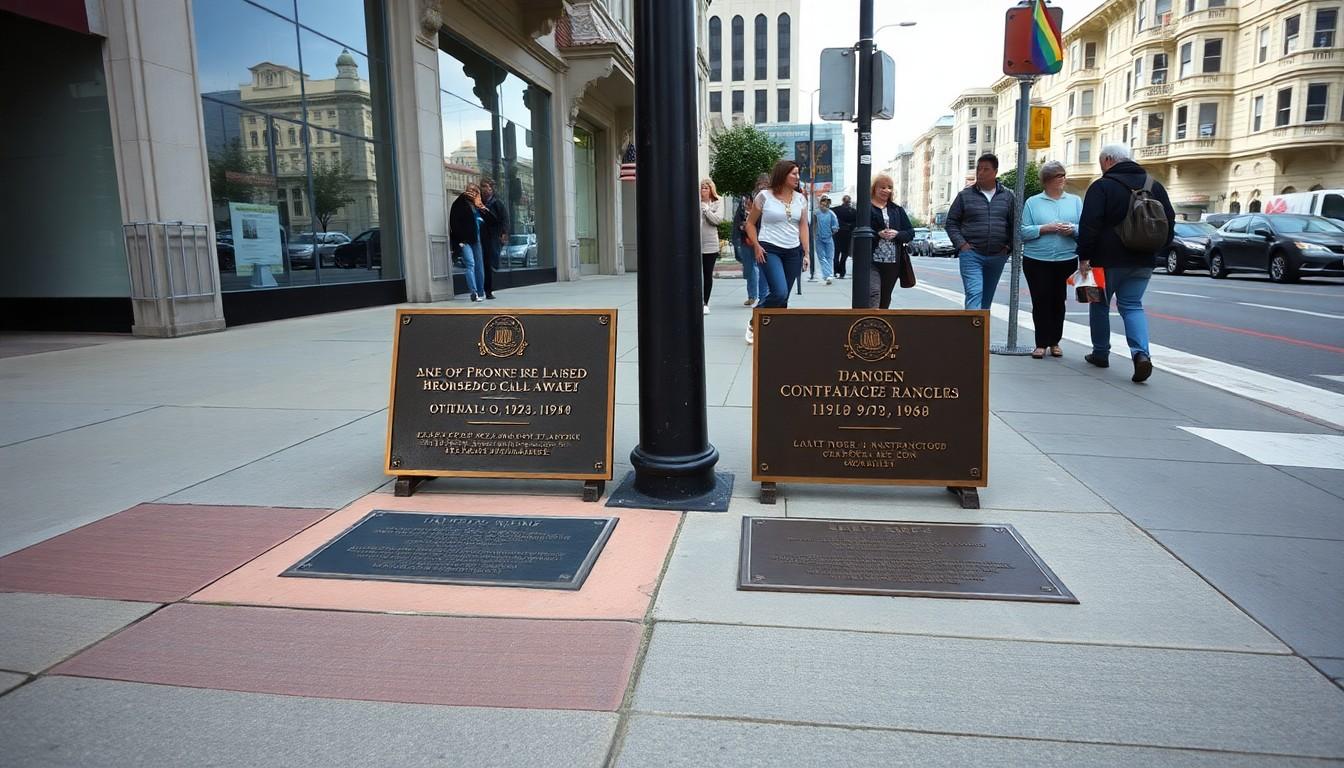
San Francisco’s Rainbow Honor Walk is set to honour lesbian rights pioneer Phyllis Lyon with a bronze plaque beside that of her longtime partner, Del Martin. The corner-to-corner placement makes a simple but striking tribute to a partnership that helped shape LGBTQ+ activism, from founding the Daughters of Bilitis to campaigning for marriage equality.
A plaque that keeps two legacies together
The new Phyllis Lyon plaque will be unveiled on 19th Street at 2 pm on Sunday, 15 November. Its corner will touch the existing plaque for Del Martin, giving the pair a shared place on the Rainbow Honor Walk in the Castro. It’s a small physical detail with a generous meaning: their work, and their lives, were closely connected. (The Rainbow Honor Walk)
A short public programme is due to include LGBTQ+ rights advocate Kate Kendell, local civic leaders and community members. The bronze tribute adds Lyon to a public memorial route celebrating LGBTQ+ figures, while recognising that her story is difficult to separate from Martin’s. (The Rainbow Honor Walk)
How Lyon and Martin changed lesbian visibility
Lyon and Martin co-founded the Daughters of Bilitis in 1955, described by the California Museum as the first lesbian civil and political rights organisation in the United States. At a time when queer women often had few safe ways to connect, the group offered community as well as a platform for organising. (California Museum; GLBT Historical Society)
They also launched The Ladder, a magazine that helped bring lesbian voices and experiences into public view. Its pages offered connection and representation to readers who could otherwise feel isolated. That may sound modest in print, but visibility can be a powerful form of solidarity. (GLBT Historical Society; KQED)
A shared history, from activism to marriage equality
Their advocacy stretched across decades and overlapped with wider movements for women’s rights and civil rights. The California Museum’s account of the pair places their work within a broader history of social change, while LGBTQ+ historical records preserve the organisations and publications they helped build. (California Museum; GLBT Historical Society)
In 2004, Martin and Lyon became the first same-sex couple to marry legally in San Francisco. They were also the first couple to marry in the city after California’s Supreme Court ruling opened the way for same-sex marriage in 2008. Their place in that history gives the adjoining plaques an extra resonance: this is a tribute to two organisers, partners and pioneers, not simply two names on a pavement. (KQED; San Francisco Bay Times)
What the Rainbow Honor Walk represents
The Rainbow Honor Walk recognises LGBTQ+ people whose contributions have shaped history and culture. Set in San Francisco’s Castro neighbourhood, it offers a public way to encounter that history as part of an ordinary walk through the city. (Rainbow Honor Walk)
Putting Lyon’s plaque beside Martin’s makes the memorial feel particularly personal. Many public tributes celebrate individual achievement; this one also acknowledges the partnership that helped sustain a lifetime of activism. (Rainbow Honor Walk; KQED)
A practical invitation to remember
Visitors planning to attend can check the Rainbow Honor Walk’s website for event details and updates before setting out. The unveiling is scheduled for 2 pm on 15 November, on 19th Street in the Castro. (Rainbow Honor Walk)
Even for those who can’t make the ceremony, the plaques offer a reason to pause on a neighbourhood walk and learn more about the women behind them. Their legacy isn’t just carved in bronze; it lives in the communities and rights their work helped make possible. (Rainbow Honor Walk; California Museum)
A shared corner makes a fitting tribute to a partnership that helped change history.
Source Reference Map
Story idea inspired by: [1]
Sources by paragraph: