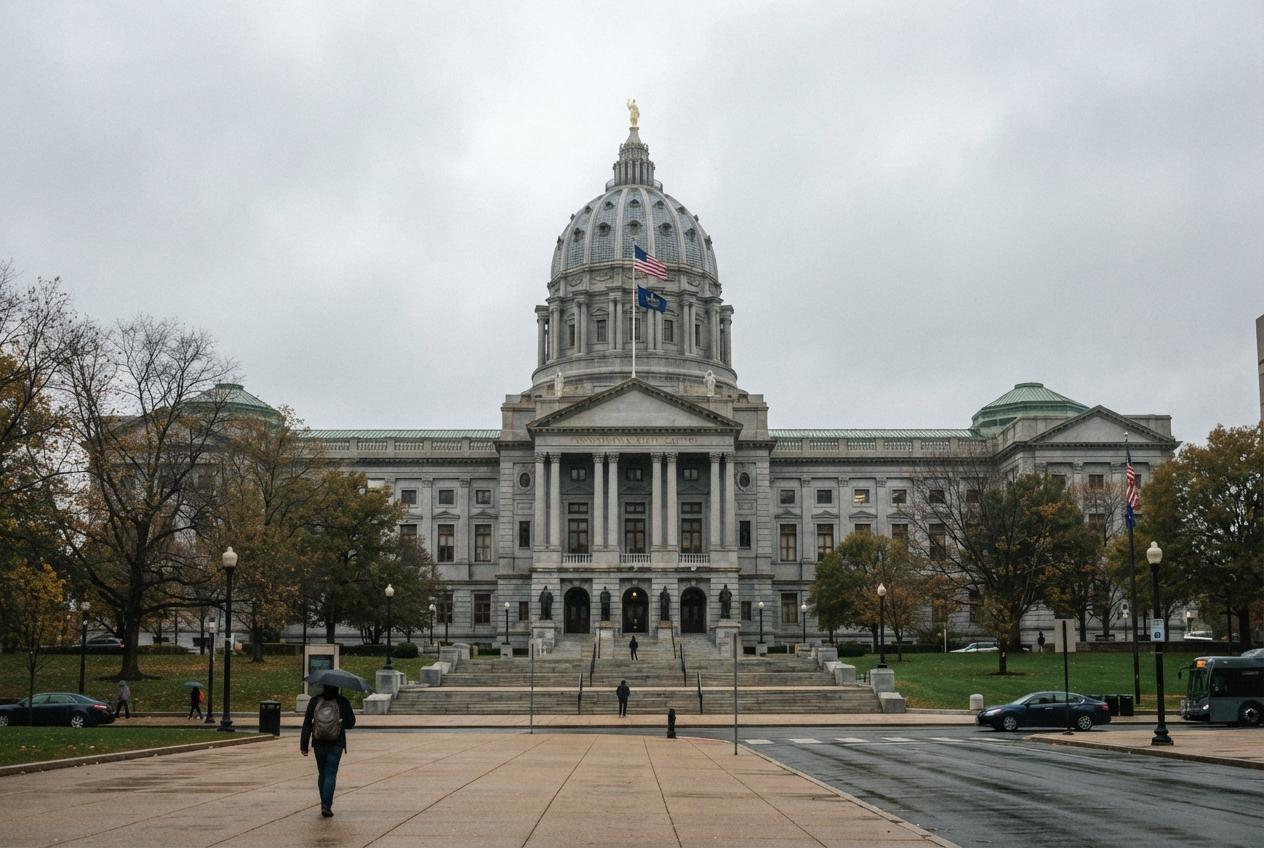
Pennsylvania's election results have renewed hopes for statewide LGBTQ+ anti-discrimination protections after decades of campaigning. The shift in political control could open a route to legislation, while a wider national debate over campaign spending and anti-transgender advertising raises a pointed question: will lawmakers turn election promises into lasting rights?
Essential Takeaways
- A possible opening in Pennsylvania: Democrats' gains, including control of the state Senate, could improve the prospects for LGBTQ+ protections.
- A long-running campaign: Pennsylvania's governor has marked 50 years since an early state measure protecting LGBTQ+ people from discrimination.
- Ads drew scrutiny: The Associated Press reported that Republican campaigns made transgender issues a prominent feature of some midterm advertising.
- Election results have many causes: Political outcomes reflect a mix of concerns, and advertising alone can't explain them.
A political opening, after decades of waiting
Pennsylvania's election results have revived the prospect of statewide LGBTQ+ civil rights protections. Democrats' gains in the legislature could make it easier to advance legislation that previously faced a Republican-controlled Senate, CBS Philadelphia reported.
That shift matters, but it isn't the same as a bill passing. Lawmakers still need to agree on timing and terms, and political momentum can fade quickly once a campaign ends. For people who've spent years pressing for equal treatment, the prospect feels hopeful, but the hard work is still ahead.
The history behind Pennsylvania's equality push
The campaign reaches back decades. Pennsylvania Governor's Office materials marking 50 years of protection from discrimination for LGBTQ+ state employees point to a much longer struggle to secure equal treatment across public life.
An archive photograph of Governor Milton Shapp and activist Mark Segal discussing early civil-rights efforts in 1975 offers a glimpse of that history in human terms. The table, the papers and the people around it make the point more vividly than any campaign slogan: today's debate rests on years of organising, advocacy and persistence.
What the election says about anti-transgender ads
Across the country, political campaigns put transgender issues into the spotlight, often through advertising designed to make voters uneasy. The Associated Press reported that such messages competed with concerns including household costs and the economy, leaving candidates to navigate a noisy mix of cultural and practical issues.
Still, it's worth resisting the neat conclusion that one kind of advert explains an election result. The Associated Press's post-election analysis described a broader picture of shifting political fortunes, while its reporting on campaign messaging showed how sharply transgender issues were used as a talking point. Voters have varied priorities, and a single result rarely has just one cause.
From campaign promises to practical protections
For Pennsylvania residents, the next useful thing to watch is the legislative timetable. Check the state legislature's bill updates and committee schedules, and look for the precise protections proposed, including who would be covered and in which settings.
The governor's office has already recognised the 50-year history of state-level LGBTQ+ protections, but a milestone isn't a substitute for comprehensive law. The Pennsylvania experience also sits within a longer national debate about equality legislation, as legal scholarship continues to examine the scope and future of federal protections.
The next test is whether lawmakers act
Election victories can create room for change, but they don't guarantee it. The Associated Press's wider election takeaways underline how much political control can shift; the question now is whether new leaders will spend that influence on durable protections rather than simply celebrating the result.
For campaigners, the measure of progress won't be a warm speech or a strong headline. It'll be whether people can live, work and access services without discrimination. That's a less dramatic test than election night, but it's the one that matters day to day.
It's a moment of possibility; now the policy work has to match it.
Source Reference Map
Story idea inspired by: [1]
Sources by paragraph: