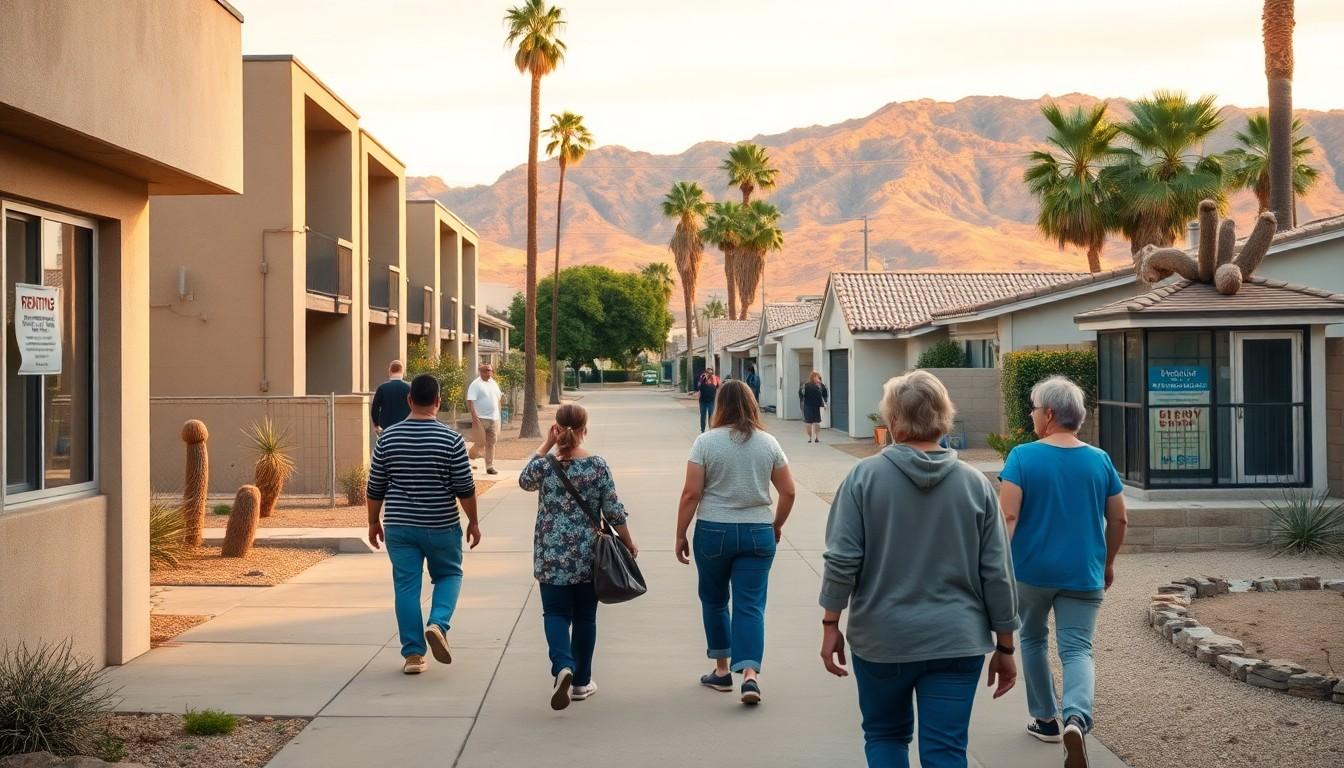
A new Palm Springs LGBTQ+ community study finds strong bonds between neighbours and friends, alongside real pressure from housing costs, mental health needs and worries about everyday bills. Drawing on responses from 542 local residents, the research offers a clearer picture of what helps people feel supported - and where that support still needs to stretch further.
Key takeaways
- Strong community ties: Residents described a supportive network of friends and neighbours.
- Mental health concerns: 43% of respondents said they had been diagnosed with anxiety or depression.
- Housing pressure: About one-third spent at least 30% of their income on housing.
- Basic costs remain a worry: 36% reported moderate or greater concern about affording essentials.
- Older residents were well represented: 73% of Palm Springs respondents were aged 55 or older.
Strong ties, but a harder day-to-day reality
Palm Springs' LGBTQ+ community has a powerful social asset: people who look out for one another. But the latest quality-of-life study also points to a tougher reality, with mental health, housing affordability and financial security all emerging as concerns.
The study was presented by the LGBTQ Community Center of the Desert and Health Assessment and Research for Communities, or HARC. NBC Palm Springs reported that 43% of respondents had been diagnosed with anxiety or depression, a figure that may surprise people who associate the city chiefly with community and connection. [2]
The research included 542 Palm Springs respondents, drawn from a wider survey of 1,356 people across the Coachella Valley. It suggests that having a strong social network doesn't necessarily make the bills, or the strain behind them, disappear. [2], [3]
Housing costs are pressing on household budgets
Housing was among the clearest pressure points. NBC Palm Springs reported that 33% of respondents spent more than 30% of their income on housing; The Palm Springs Post described the share as spending 30% or more. Either way, roughly one in three reported a substantial housing burden. [2], [3]
The concern sits within a wider regional squeeze. The Los Angeles Times reported that the Coachella Valley has a higher share of rent-burdened households than Riverside County, California or the US, based on American Community Survey data compiled by Lift to Rise. [5]
There are efforts to add affordable homes, although the pipeline isn't the same as homes ready to move into. Lift to Rise counted 9,300 affordable housing units across completed and in-progress projects in the valley as of April, including Aloe Palm Canyon, a planned 71-unit development for lower-income adults aged 55 and older. [5]
The survey captures an older community's needs
The Palm Springs respondents were largely established local residents: 93% were full-time Coachella Valley residents, while 73% were aged 55 or older. The study also gathered perspectives through 16 stakeholder interviews and 13 focus groups involving 68 residents, giving it more depth than a questionnaire alone. [3]
Access to care was another concern. Fourteen per cent of respondents said they needed health care but couldn't get it because of the cost, while 36% reported moderate or greater worries about having enough money for basic needs. Those numbers bring the survey's findings down to earth: affordability affects more than rent. [3]
Mental health concerns have a longer history
The latest findings echo issues identified in an earlier HARC and LGBTQ Community Center assessment. In that 2019 report, the share of participants who said they'd experienced an emotional, mental or behavioural problem in the previous 12 months rose from 42.6% in 2013 to 64.8% in 2019. [4]
That earlier assessment also found that 91.9% of participants considered low-cost counselling specifically for the LGBT community very important. HARC's ongoing Community Health Survey is designed to track local health trends over time and compare them with wider benchmarks where possible. [4], [7]
A separate needs assessment of older LGBTQ+ adults in South Texas identified affirming affordable senior housing, health justice and social programmes as priorities. It's a different community and region, but the overlap is a reminder that housing, health and belonging are often closely connected for older LGBTQ+ people. [6]
What the findings mean for Palm Springs
The survey describes a community with meaningful social support, alongside challenges that friendship alone can't solve. It also offers useful context for local conversations about affordable housing, access to care and mental health services, especially for older residents.
Regional housing figures and the Palm Springs survey measure different populations, so they shouldn't be treated as one combined data set. Still, taken together, they help explain why housing costs loom so large in a city where community ties can be strong and budgets can remain painfully tight. [2], [3], [5]
A supportive community matters - and so does making everyday life more affordable.
Source Reference Map
Story idea inspired by: [1]
Sources by paragraph: