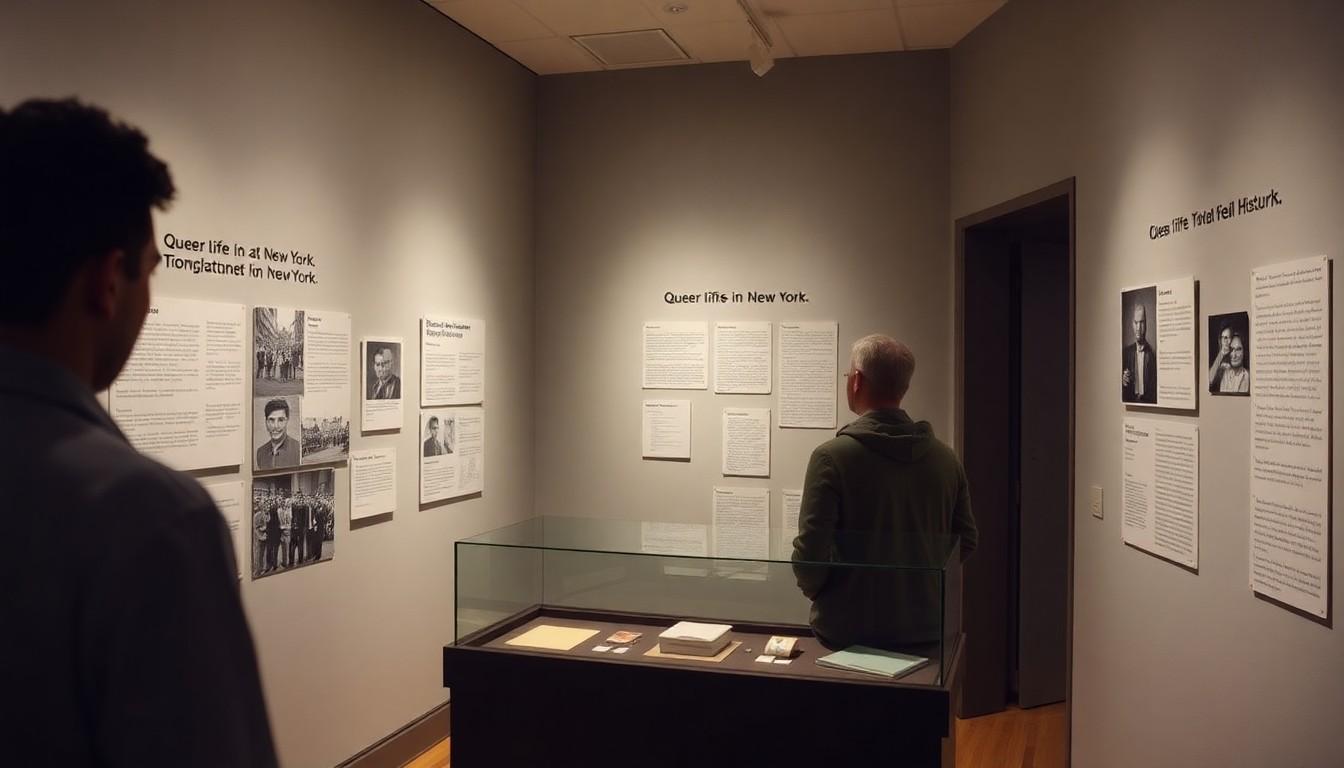
A teenager in 1990s New York found room to explore identity online, then grew into one of the country’s leading LGBTQ+ historians. Hugh Ryan’s memoir, My Bad: A Personal History of the Queer Nineties and Beyond, revisits a vivid, unsettled era before social media, tracing how private discoveries and public change shaped a life - and a community’s history.
Essential Takeaways
- A memoir of a shifting era: My Bad centres on the years between the Cold War and 9/11, with a brief look at the decades that followed.
- Identity beyond easy labels: Ryan recounts exploring sexuality and gender before settling on “queer” as a term broad enough to feel like home.
- Online life offered a door: Usenet boards and early internet anonymity gave a young Ryan new ways to connect and question.
- History grew from personal experience: Ryan founded the Pop-Up Museum of Queer History and later wrote acclaimed books on queer Brooklyn and a Manhattan women’s prison.
- A wider question lingers: The memoir considers what queer communities gained and lost as activism and institutions changed.
Before social media, a blinking cursor could open a world
The internet of the early 1990s was hardly sleek, but for Hugh Ryan it offered something more valuable than speed: possibility. At 14, he found online spaces where a young person could explore identity away from the watchful eyes of school and family. A screen, a string of text and a blinking cursor could feel like a door.
In My Bad, Ryan returns to that decade as both participant and historian. The memoir moves through the years after the Cold War and before 9/11, when queer life was becoming more visible but old fears, especially around AIDS, still pressed hard. It’s a personal account, but the backdrop is a community navigating change in real time. [3], [4]
Finding a name that felt roomy enough
Ryan’s account doesn’t treat identity as a tidy checklist. At college, he considered a range of possibilities around sexuality and gender, describing the exhaustion of trying to live in translation. Eventually, “queer” offered the breadth he needed: less a final answer than a place to stand.
That uncertainty is part of the book’s appeal. Readers aren’t asked to admire a perfectly mapped journey, but to follow someone working things out as he goes. Ryan has said that his generation grew up in an analogue world and had to adjust to digital life as young adults, a shift that lends the memoir its particular, slightly surreal texture. [3], [4], [7]
A personal history becomes public history
Ryan’s path into history wasn’t a straight line from school to museum. He worked in community settings, including a rape crisis centre and a queer youth programme, while moving between different kinds of work and creative life. Later, he founded the Pop-Up Museum of Queer History, turning scattered stories into exhibits people could encounter together.
The project’s first exhibition opened in 2011, according to the museum’s history. Ryan went on to write When Brooklyn Was Queer, which follows the borough’s LGBTQ+ past, and The Women’s House of Detention, about queer women caught up in a Manhattan prison. His work makes a persuasive case that history isn’t only what happens in government buildings; it’s also what people make, lose and remember in their neighbourhoods. [5], [6], [8]
The 1990s weren’t just a prelude to today
It’s tempting to look back at the pre-smartphone era as a quieter, simpler time. Ryan’s memoir suggests otherwise. He writes about fear, unsafe sex, family estrangement, friendship and love, alongside the searching freedom of a world where different identities could be imagined, even when acceptance outside the screen was less certain.
The later chapters widen the lens to the years after 9/11 and the intense campaign for same-sex marriage. Ryan asks what queer communities may have left behind as energy flowed towards legal recognition and mainstream institutions. That’s a complicated question, and a useful one: progress matters, but so does noticing which stories and spaces risk being overlooked along the way. [3], [4]
Why Hugh Ryan’s memoir matters now
Ryan’s career brings the personal and the historical into close focus. His work at the American LGBTQ+ Museum in Manhattan continues the project that began with collecting and sharing stories, while My Bad looks back at the experiences that helped shape that vocation.
The memoir also offers a reminder that LGBTQ+ history is not a single, seamless narrative. It’s made of individual lives, imperfect choices and small moments of recognition. For anyone curious about queer life in the 1990s, Ryan’s recollections provide both a human account and a thoughtful invitation to ask what gets preserved. [4], [5]
A good history doesn’t just tell us what happened; it helps us see whose stories are still waiting to be heard.
Source Reference Map
Story idea inspired by: [1]
Sources by paragraph: