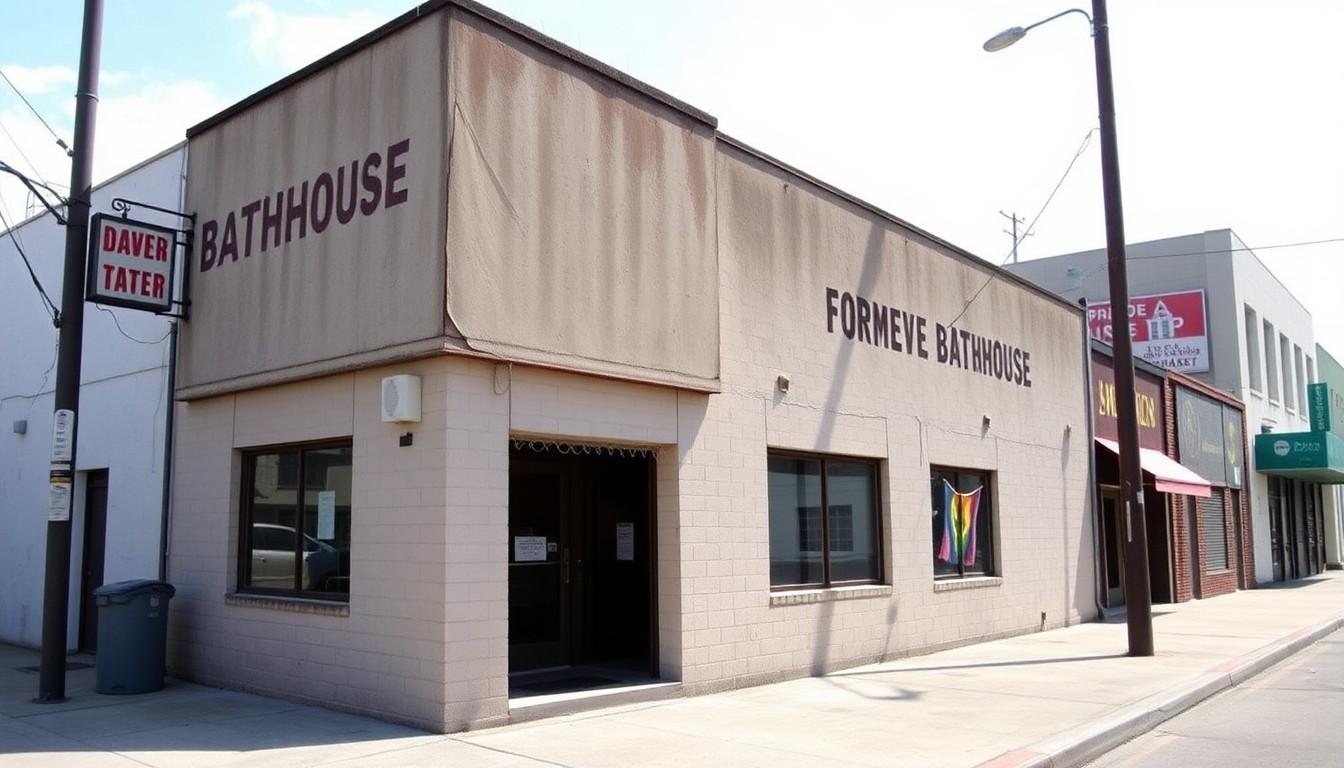
Step inside the remembered world of Hollywood Spa, where bold newspaper ads promised more than a night out. For gay men in pre-app Los Angeles, the bathhouse offered privacy, community and a place to meet on their own terms. Its story, from a landmark legal fight to its eventual closure, still resonates today.
Hollywood Spa offered more than a night out
In its late 1970s and early 1980s heyday, Hollywood Spa served up a distinctly vivid mix: DJ sets, adult films, vintage posters, strobe lights and fresh-squeezed orange juice. But its biggest draw may have been something less flashy: privacy.
The Los Angeles bathhouse opened in 1974 and gave patrons access to more than 100 private rooms. Before dating apps made introductions a swipe away, places like this offered gay men a rare chance to meet away from public view. Its eye-catching ads captured the glamour, but the setting also answered a very real need. (Sources: WeHo Online; University of California, Berkeley)
A legal fight put the bathhouse in the spotlight
That privacy came under pressure in 1988, when new county rules sought to restrict sexual activity and require private rooms to be used by just one person at a time. Hollywood Spa's owner, Scott D.R. Goulet, challenged the measures, arguing that the county had already lost a similar case.
The dispute placed public health and gay rights in direct conflict. The Los Angeles Times reported on the legal battle and the arguments over whether the restrictions were a genuine health measure or a politically charged attempt to target gay bathhouses. (Sources: Los Angeles Times, 14 January 1988; Los Angeles Times, 31 August 1988; Los Angeles Times, 13 September 1988)
Why those old Hollywood Spa ads still resonate
The ads are more than a colourful snapshot of nightlife. They evoke a time when queer spaces could offer both pleasure and a degree of safety, particularly while gay sex remained criminalised in many parts of the United States. In California, that changed in 1975, but social stigma and public scrutiny didn't simply disappear.
And the spa's appeal wasn't only about the rooms or the entertainment. Its owner was gay, giving the business a personal connection to the community it served. That detail helps explain why people still recall the venue with affection, even if they never got the chance to visit. (Sources: University of California, Berkeley; Los Angeles Times, 14 January 1988)
Rising rents eventually shut the doors
Hollywood Spa survived its legal clash, but the economics became harder to beat. By its final year, the business was reportedly behind on six months of rent, with monthly payments of $30,000 and a steep increase looming. The venue closed in 2014, after four decades in Hollywood.
The sprawling layout that made the spa distinctive may also have made it difficult to keep running as costs climbed. Today, Los Angeles still has bathhouses and spas with gay clientele, including Russian-style banyas, but they offer a different atmosphere from the DJ-and-strobe-light mix of Hollywood Spa. (Sources: WeHo Online; Los Angeles Times, 27 October 2026)
What remains of the bathhouse spirit?
Modern apps have changed how people meet, but they haven't made every kind of gathering place obsolete. A bathhouse can offer a shared, offline experience that a phone screen can't quite replicate, whether that's conversation, relaxation or simply being among others without having to explain yourself.
Traditional banyas tend to be quieter and less nightlife-focused than Hollywood Spa was. Still, their communal feel carries a trace of what made the old venue matter: people gathering in a space where the usual social signals soften. The strobe lights may be gone, but the desire for welcoming queer spaces hasn't vanished. (Sources: Los Angeles Times, 27 October 2026; University of California, Berkeley)
Hollywood Spa's story is a reminder that a nightlife landmark can be both a good time and a piece of community history.
Source Reference Map
Story idea inspired by: [1]
Sources by paragraph: