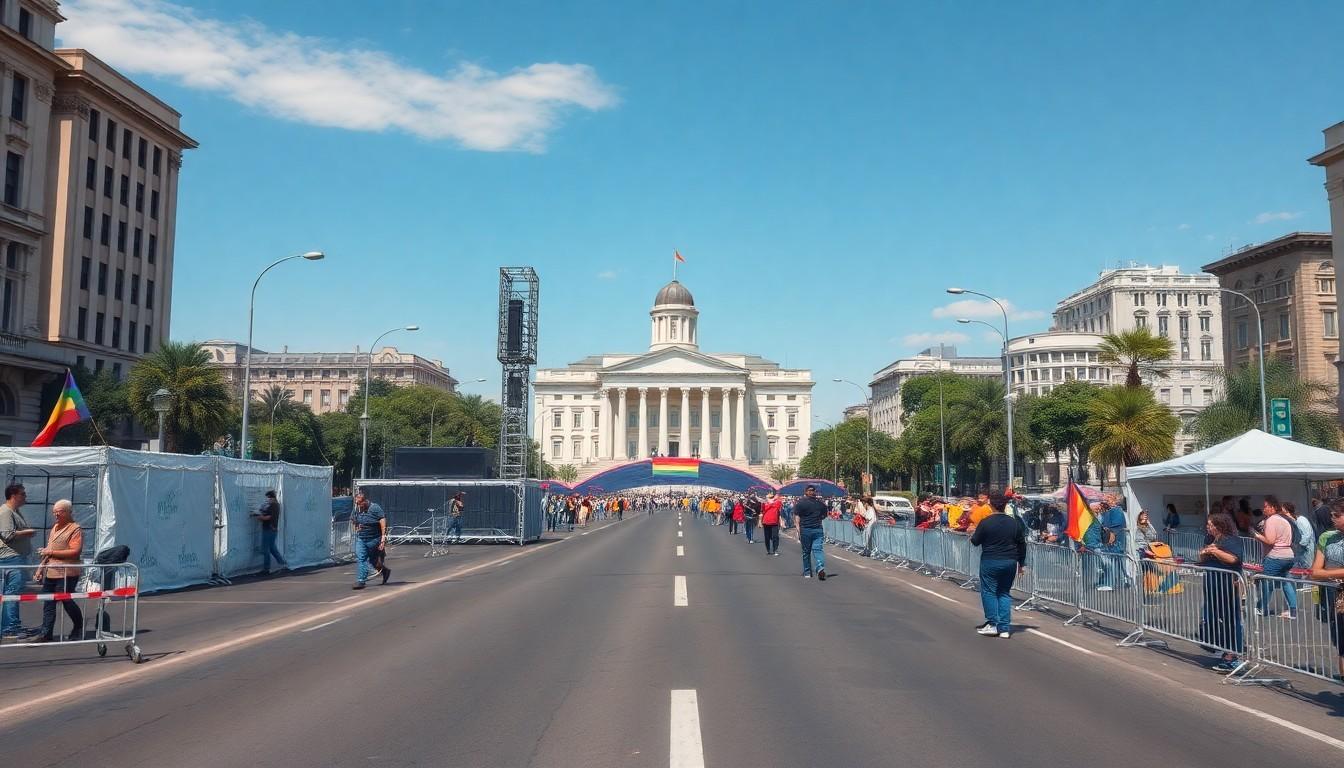
Buenos Aires is preparing for its 35th Pride March, with María Becerra set to lead the musical finale and La Joaqui among the headline acts. The day combines performances and a community fair with a march ending at Congress, while organisers call for stronger protections and action against discrimination. Here’s what to know before the celebration takes to the streets.
Essential Takeaways
- The route: The march will set off from Avenida 9 de Julio and Avenida de Mayo at about 4pm, finishing at the National Congress.
- A changed finish: Security arrangements linked to Pope Leo XIV’s arrival mean the route won’t continue to Plaza de Mayo.
- Music all day: The fair opens at 10am, with performances beginning at 11am and continuing throughout the day.
- Headline names: María Becerra is due to close the Congress stage; La Joaqui is among the performers at the first stage.
- Organisers’ demands: Calls include an Integral Trans Law, updated anti-discrimination rules and measures to prevent violence.
A shorter route, with Congress as the final stop
The 35th Buenos Aires Pride March will take a different route this year, ending at the National Congress rather than Plaza de Mayo. The gathering is scheduled to begin at the junction of Avenida 9 de Julio and Avenida de Mayo, with marchers expected to set off towards Congress at around 4pm. The change is tied to security arrangements for Pope Leo XIV’s arrival in the city, according to C5N and El Intransigente.
That makes the final stop especially visible: Congress will also host one of the main stages, bringing the march and the closing performance together. For anyone planning to attend, it’s worth checking local transport and street-closure updates before setting out, as the shorter route doesn’t necessarily mean an easier journey through central Buenos Aires. C5N’s event guide outlines the route and stage locations.
María Becerra and La Joaqui lead the music line-up
The day starts early, with the fair and Paseo de la Diversidad opening at 10am. Live performances are due to begin an hour later, keeping the programme moving well before the march itself sets off. María Becerra is scheduled to headline the closing set at the Congress stage, while La Joaqui is among the artists appearing at the first stage, El Día reported.
The wider line-up includes Six Sex, K4OS, Roze and Tita Print, who is set to pay tribute to Gilda. The programme also features performers and figures from the music and electronic scenes, alongside selections from the Tocá en la Marcha call for artists. It’s a broad bill, designed to make the event feel like a full day out, not just a march followed by a concert.
The celebration carries a clear political message
Organisers’ programme pairs music and community activities with demands for legal and policy change. These include an Integral Trans Law, a new anti-discrimination framework, an emergency declaration for sexual health and a clearer separation between church and state, according to C5N and Página/12.
The call also includes demands for answers over attacks and practical steps to prevent further violence. Organisers have linked the march to a recent anti-trans attack on sex workers in Palermo’s Bosques, reported by Agencia Presentes. That context gives the day’s celebratory atmosphere a sharper edge: the music matters, but so does the reason people are gathering.
A shared float brings community work into the spotlight
Among the other planned features is a joint float from Fiesta Polenta and Asociación Civil Mocha Celis. The collaboration brings together a Buenos Aires nightlife fixture and an organisation focused on improving education, work and social opportunities for travesti, trans and non-binary people, Ciudad reported.
It’s a useful reminder that Pride events can connect nightlife and public advocacy in the same space. For visitors, the fair and the range of performances offer plenty to explore; for organisers and community groups, visibility and access remain central to the day. C5N’s coverage also highlights the event’s political demands and commemorative elements.
What to know before you go
If you’re attending, arrive early if you want time for the fair and Paseo de la Diversidad before the performances start. Keep the revised route in mind, especially if you’re used to the march ending at Plaza de Mayo, and check transport information on the day because security measures may affect movement around the centre. C5N has published practical details on timings, road closures and stages.
The programme is expected to run throughout the day, so comfortable shoes and a plan for meeting friends can make the experience less chaotic. And with the closing stage at Congress, staying near the end point could be appealing if María Becerra’s set is your priority. The event’s organisers are asking people to bring both their celebratory spirit and attention to the demands at its heart, as reported by El Intransigente and Página/12.
A joyful day in the streets can also be a reminder of the work still to be done.
Source Reference Map
Story idea inspired by: [1]
Sources by paragraph: