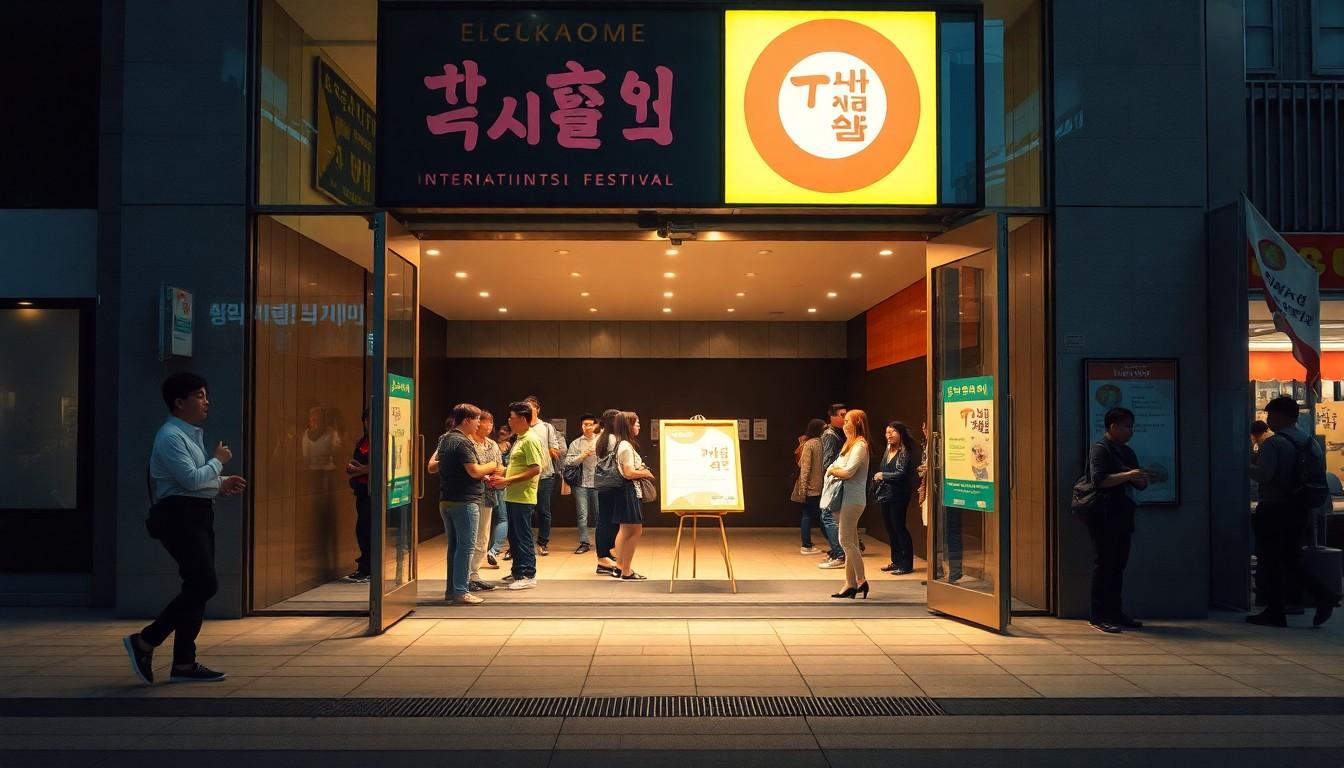
Film fans in Seoul can explore 116 films from 34 countries as the Seoul International Pride Film Festival returns for seven days. Opening with a Spanish film about three gay men living in different eras, the programme ranges from Korean queer cinema to international shorts, offering a lively snapshot of stories and perspectives from around the world.
The Seoul festival opens with a story spanning generations
The 16th Seoul International Pride Film Festival opens on 5 November at CGV Piccadilly 1958 in Jongno, with a programme of 116 films from 34 countries running until 11 November. Its opening film, Black Ball, brings together the lives of three gay men in 1932, 1937 and 2017 through a story involving an unfinished manuscript by Spanish poet Federico García Lorca. [2], [5]
The festival says the Spanish film is directed by Javier Ambrossi and Javier Calvo, and has won the Best Director award at the 79th Cannes Film Festival. That mix of literary history and lives across different periods gives the opening a suitably ambitious tone. [2], [6]
Six programme strands make choosing easier
Rather than asking audiences to navigate a long list of titles unaided, the festival groups films into themed strands. Korea Pride spotlights new Korean queer films, while New Pride focuses on emerging directors; Asia Pride and World Pride widen the lens to stories from across the region and beyond. [3], [4]
There are more specialised routes, too. Special Pride includes restored works from the Korean Film Archive and a Community Voice selection, while Open Pride explores the theme “Transgender, Becoming the Protagonist”. It’s a thoughtful way to make room for both cinema history and newer voices. [3], [4]
French shorts and free-to-watch films add variety
The programme also marks the 140th anniversary of diplomatic relations between France and Korea with a French short-film collection. Meanwhile, Five Films for Freedom, presented with the British Council and BFI Flare, gives audiences another international perspective through short-form storytelling. [2], [4]
That breadth matters in a festival setting: a feature can invite you to settle in, while a run of shorts can offer several distinct points of view in one sitting. Check the official programme for screening times and any event details before heading out. [2], [3]
Opening-night performances bring the festival to life
The opening ceremony will be hosted by broadcaster Oh Je-hyung, who has returned to the festival stage after previously hosting in 2017 and last year. Three ballroom dancers are scheduled to perform at the ceremony, with two more set to appear at the post-screening reception. [5], [6]
The same dance crew is due to take part in the festival’s Pride Ball on 8 November. It’s a reminder that the event extends beyond the cinema screen, bringing performance and community into the week’s programme. [3], [6]
Plan ahead for a week of queer cinema in Seoul
With films spanning countries, eras and formats, the easiest way to build a festival visit is to start with a strand that interests you, then check the full schedule for individual titles and screening times. The festival says updates on its programme and accompanying events are available through its official website and social media channels. [2], [3]
For anyone keen to discover queer cinema in Seoul, this year’s line-up offers a broad starting point, whether you’re drawn to restored classics, emerging filmmakers or a story with a little literary history. [4], [5]
Explore the schedule and choose the films that speak to you.
Source Reference Map
Story idea inspired by: [1]
Sources by paragraph: