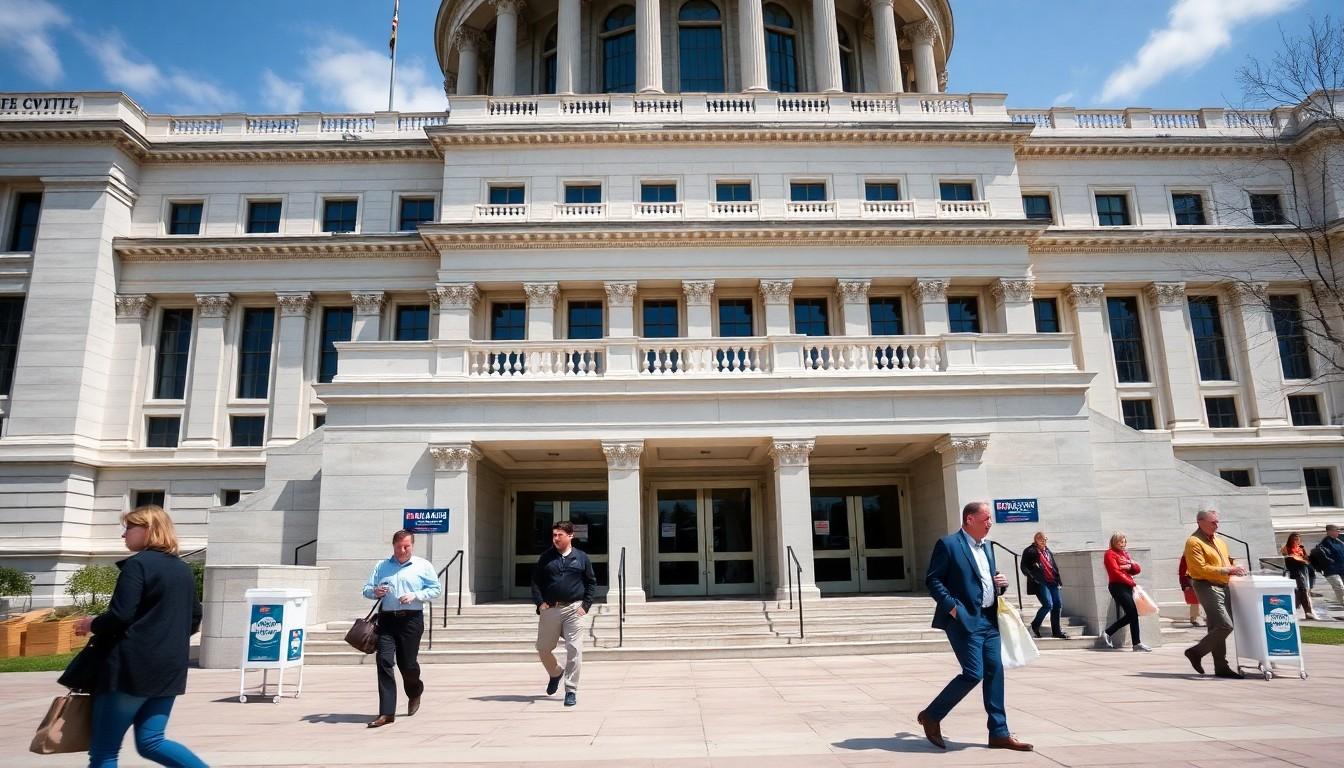
Voters across the United States have returned LGBTQ+ candidates to office and sent new trailblazers to Congress and state legislatures. The 2026 midterms brought high-profile wins from Delaware to Alabama, including landmark representation for trans, non-binary and queer communities. Here’s what the results mean, and why the names on the ballot matter beyond election night.
The 2026 midterms delivered landmark LGBTQ+ wins
The results brought a remarkable range of firsts. Sarah McBride won re-election in Delaware, continuing her place in history as the first openly transgender member of the US Congress, while Chris Pappas became the first openly gay man elected to the Senate. The new Congress will also include a record number of LGBTQ+ lawmakers, according to the Washington Blade.
The breakthroughs reached well beyond Washington. Allison Montgomery became Alabama’s first transgender state legislator, and Bentley Hudgins made history in Georgia as the state’s first openly transgender and non-binary state lawmaker. In Florida, Quinnie Pérez became the state’s first openly transgender elected official, winning a place on a local conservation board.
Those victories carry particular weight in places where LGBTQ+ representation has been rare. They also show that progress isn't confined to a single region or level of government. ([2], [3], [4])
Representation stretches from Congress to state houses
Several incumbents held on to seats, including Sharice Davids in Kansas, Emily Randall in Washington and Becca Balint in Vermont. In the states, Jessica Benham and Malcolm Kenyatta were among Pennsylvania’s LGBTQ+ representatives returning to office, while Leigh Finke won another term in Minnesota.
Governorships were part of the story, too. Massachusetts Governor Maura Healey and Oregon Governor Tina Kotek both secured re-election, maintaining two prominent LGBTQ+ voices in state leadership. The victories offer continuity as well as visibility, particularly for voters who see local and state policy affecting their everyday lives.
The Advocate’s election coverage and the Associated Press’s results reporting provide a broader picture of the contests and winners. ([2], [4])
Why these wins matter beyond the history books
Representation doesn't automatically settle policy debates, but it can change who gets heard when decisions are made. GLAAD and the National LGBTQ Task Force both responded to the results, emphasising the stakes for LGBTQ+ communities and the importance of political participation.
Several winners have publicly championed issues including healthcare access, reproductive rights and protections for transgender people. Their election victories give them a platform to pursue those priorities, though the path from campaign promise to legislation can be long and contested.
That distinction matters: a historic first is worth recognising, but it isn't a guarantee of swift change. The practical test will be what lawmakers can achieve once they take office. ([6], [7])
A closer look at the 2026 LGBTQ+ election results
The winners came from varied backgrounds and communities. Among them are openly bisexual California representative Marni von Wilpert, openly lesbian Texas representative Ann Johnson, and openly gay New York representative Ritchie Torres, who won another term.
There were also candidates whose wins connect representation with wider experience: Jessica Benham is an autistic disability rights advocate, while JoAnna Mendoza is a Marine veteran. That variety is a useful reminder that LGBTQ+ voters and elected officials aren't a single bloc with a single set of concerns.
Axios described the wider midterm landscape as a consequential moment in US politics. For LGBTQ+ candidates, the results combine individual breakthroughs with a larger question: how will greater representation shape the debates ahead? ([2], [5])
What comes next for LGBTQ+ lawmakers?
Election night is the headline; the work begins after it. Newly elected officials must build coalitions, respond to constituents and turn priorities into legislation or local action. For Pérez, for example, the next step is joining a volunteer conservation board, a very different arena from Congress but one with direct community responsibilities.
For voters, it’s worth following what representatives do once the celebrations fade: check their official updates, attend local meetings where possible, and pay attention to votes on issues that affect your community. And for anyone watching from afar, these results offer a reason for optimism without pretending that representation solves everything.
The 2026 midterms delivered a broad set of LGBTQ+ milestones, and the next measure will be what those newly elected and re-elected leaders do with their mandate. ([2], [4], [6], [7])
Historic wins are a beginning; the work of representation carries on.
Source Reference Map
Story idea inspired by: [1]
Sources by paragraph: