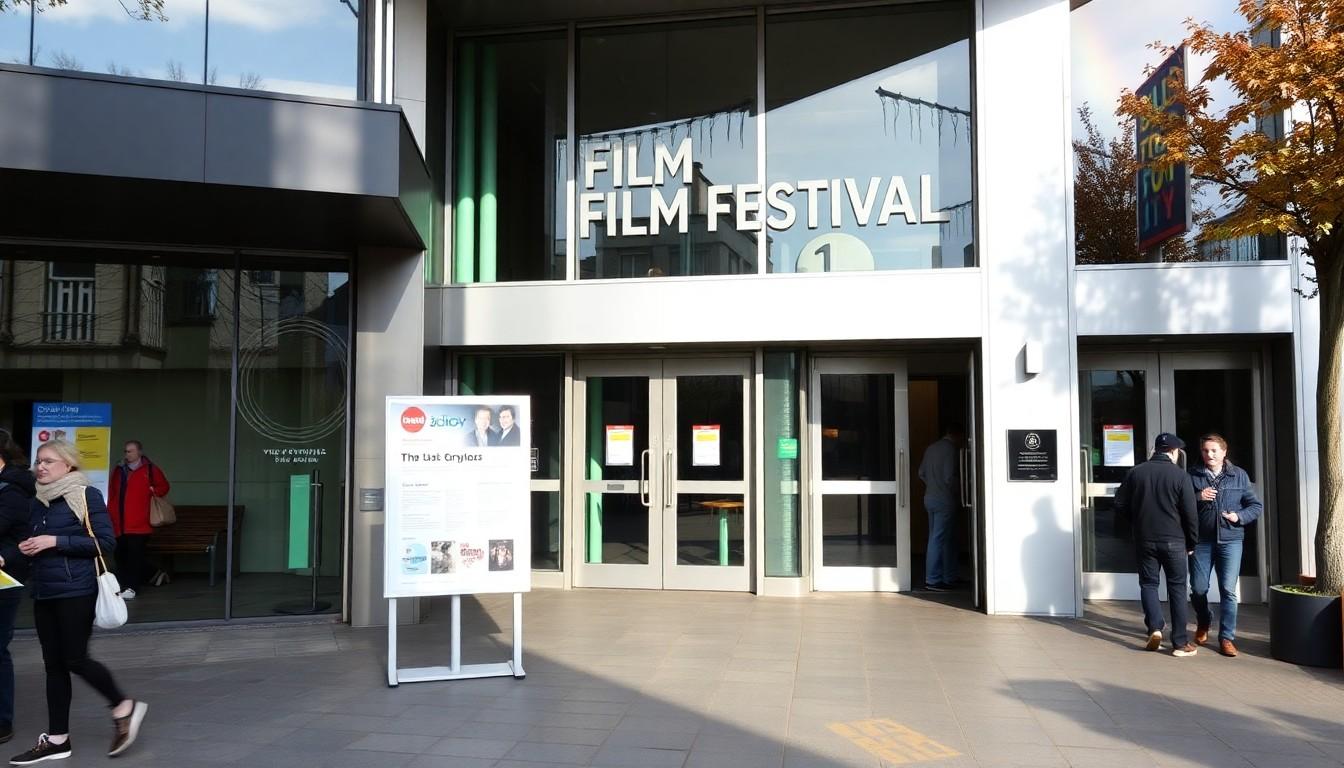
Cardiff welcomed the Iris Prize back to its original cinema home for a milestone week of queer film, Welsh creativity and international storytelling. From a record 672 submissions to returning classics and a new portrait series, the 2026 festival showed how a three-day event has grown into one of the UK’s major celebrations of LGBTQ+ cinema.
Essential Takeaways
- A landmark edition: The Iris Prize ran from 12 to 18 October 2026, marking its 20th year.
- Record interest: Organisers received 672 submissions, with 35 shorts from 22 countries competing for the £40,000 prize.
- A Cardiff homecoming: The anniversary programme returned to Cineworld Cardiff, where the festival began in 2007, alongside events at Chapter and St David’s Dewi Sant.
- A Welsh opening night: Four new Welsh shorts screened, and Pink Portraits 2026 featured 19 LGBTQ+ BBC Wales staff.
- More to explore: The programme included 16 features, plus anniversary screenings of Weekend and Desert Hearts.
Cardiff’s queer film festival comes home
There’s something fitting about a birthday party returning to the place where it all began. For its 20th edition, the Iris Prize brought part of its programme back to Cineworld Cardiff, its original home in 2007, while also using Chapter and St David’s Dewi Sant as venues across the city.
The festival ran for a full week, from 12 to 18 October 2026. What started as a three-day event has grown into a BAFTA- and BIFA-qualifying festival, a change that reflects its increasing reach as well as Cardiff’s place in the UK’s queer cinema scene. (Sources: [2], [3])
Record entries, with stories from 22 countries
The scale of this year’s programme was hard to miss: organisers received 672 submissions, a record for the festival. Thirty-five short films from 22 countries competed for the £40,000 Iris Prize, supported by the Michael Bishop Foundation.
There was also a high-water mark for feature films, with 16 in the programme. That mix gives audiences more than one way into the festival, from compact shorts with a sharp point of view to longer stories that have room to linger. (Sources: [2], [3])
Welsh voices took the opening-night spotlight
The opening belonged to Wales. S4C’s Llinos Lee hosted the evening, which included four new Welsh shorts and the launch of Pink Portraits 2026, a series featuring 19 LGBTQ+ BBC Wales staff photographed by Harrison Williams.
The portraits offered a personal counterpoint to the films: a celebration of LGBTQ+ people working behind the scenes as well as those whose stories reach the screen. After the screenings, the festivities carried on in Cineworld’s top-floor bar. (Sources: [4], [7])
Classics and a Welsh premiere gave the week range
The programme paired new work with familiar favourites. Andrew Haigh’s Weekend returned 15 years after its release, while Donna Deitch’s Desert Hearts marked 40 years since its debut. Anniversary screenings can do more than stir nostalgia; they let audiences see how queer stories travel across generations.
The week closed with the Welsh premiere of Black Church Bay, followed by a question-and-answer session with Tom Cullen and Joe Locke. For anyone choosing what to see at a festival, that combination of premieres, classics and filmmaker conversations is a useful reminder to leave room for the unexpected. (Sources: [2], [5])
Twenty years on, the festival keeps widening its lens
The Iris Prize’s growth is visible in the numbers, but its character comes through in the range of people and work gathered in Cardiff. A record field of entries, international competition and a strong Welsh opening all sat alongside an anniversary return to the festival’s first venue.
And that may be the most appealing part of a milestone year: it looks back without getting stuck there. With films, portraits and conversations sharing the same week, the festival made space for both the history of queer cinema and the stories still taking shape. (Sources: [3], [4], [6])
Explore the programme, and let a story you didn’t expect to find become the one you remember.
Source Reference Map
Story idea inspired by: [1]
Sources by paragraph: