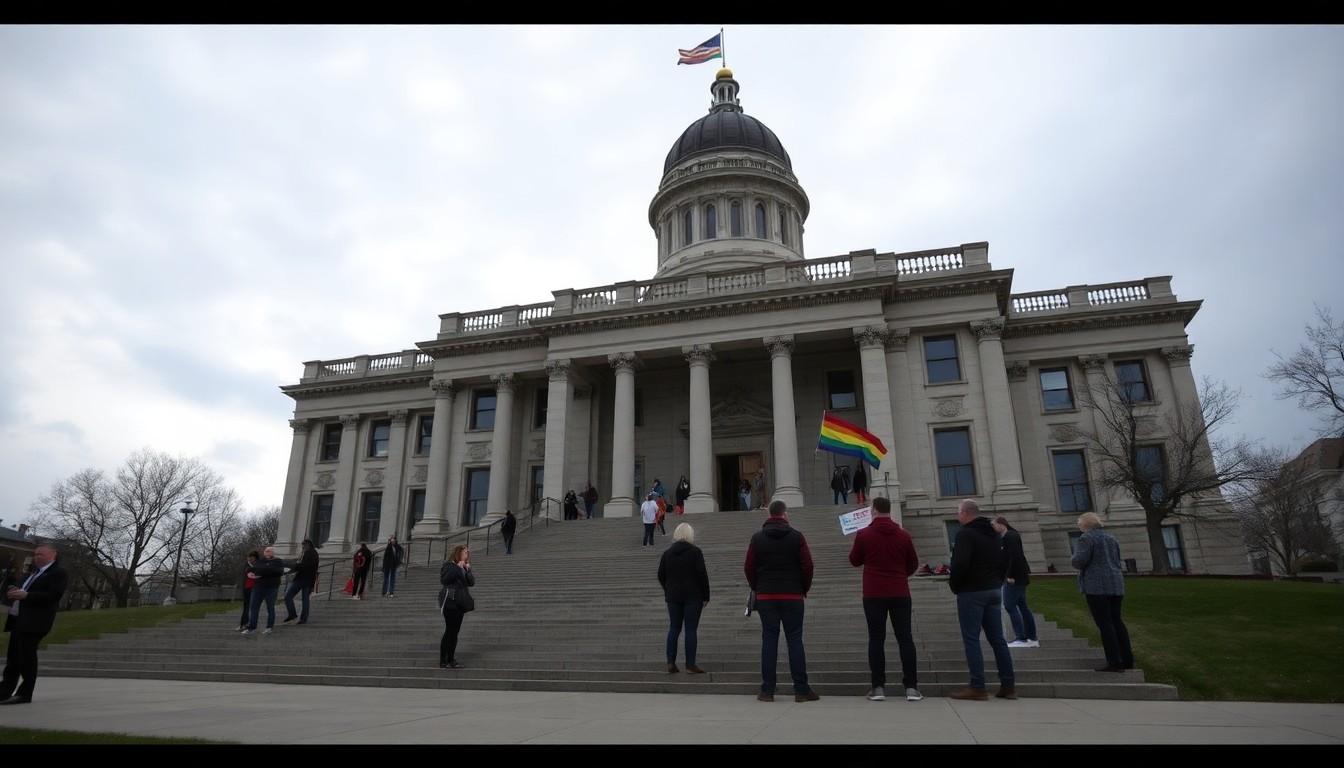
Colorado’s closely watched ballot measures on transgender students and youth healthcare have left families and LGBTQ+ advocates facing an uncertain next chapter. Early results put both proposals ahead, prompting concern at a Denver election gathering, while questions remain about how any new rules would work and what legal or legislative challenges could follow.
Essential Takeaways
- Prop 134: Would restrict transgender students’ participation in school and college sports according to sex assigned at birth.
- Prop 135: Would limit gender-affirming medical care for people under 18, including certain surgeries.
- The result remains consequential: The proposals were narrowly ahead in preliminary counts, with their final status needing confirmation.
- There may be further steps: Legal challenges and legislative action could affect how the measures are implemented.
Colorado’s trans youth ballot measures bring a tense election night
The mood at a Denver election gathering shifted from celebration to apprehension as early returns showed Colorado’s Props 134 and 135 ahead. The evening had music, balloons and cheers for Democratic gains, but the close results left transgender advocates and their supporters watching the count with growing concern.
Colorado Public Radio reported that Prop 134 concerns transgender students’ participation in school sports, while Prop 135 would restrict gender-affirming care for minors. The measures address different parts of young people’s lives, but both have become focal points in a wider debate over transgender rights and the role of government. [2], [3]
What Props 134 and 135 would change
The Colorado ballot information describes the proposals’ intended restrictions, including rules around sports participation and medical care for minors. For families, the practical consequences could depend on how the measures are interpreted and applied in schools and healthcare settings. [4]
That uncertainty matters. A ballot result can set a policy direction, but it doesn't necessarily answer every question about implementation, oversight or individual circumstances. Colorado Newsline’s coverage also places the measures in the context of wider arguments over transgender rights and protections. [3], [4]
A familiar fight, with a different history
Colorado has a complicated record on LGBTQ+ rights. The state’s 1992 Amendment 2 sought to prevent government bodies from protecting people against discrimination based on sexual orientation. The US Supreme Court later struck it down, finding that it violated the Constitution’s equal protection guarantee. [5]
That history offers context, not a guarantee of what happens next. Colorado’s current proposals concern transgender people and take a different legal form, so any comparison has limits. Still, past disputes show how ballot measures can lead to years of political and legal argument rather than settle an issue overnight. [3], [5]
The vote fits a wider national trend
Colorado’s proposals arrived amid similar debates elsewhere. Stateline reported that voters in several states backed measures restricting transgender students’ participation in school sports, while election outcomes varied on other questions concerning transgender rights and healthcare. [6]
The pattern shows how local ballot campaigns can become part of a much larger national conversation. But voters aren't making identical choices everywhere, and the legal details differ by state. That makes it worth looking beyond a single headline and checking what a measure actually says before drawing broad conclusions. [2], [6]
What families should watch next
For families, school communities and healthcare providers, the next useful step is to follow official updates on the results and any guidance about implementation. Colorado’s ballot information sets out what voters were asked to decide; legal and political developments may determine how those decisions are applied in practice. [4], [7]
Court challenges and legislative debate could also shape the road ahead. The history of Amendment 2 is a reminder that a vote is not always the final chapter, although no past case can predict the outcome of a new one. For young people affected by the debate, clear, reliable information and supportive adults matter especially when the public conversation feels loud. [5], [7]
Keep an eye on official updates as Colorado’s next steps become clearer.
Source Reference Map
Story idea inspired by: [1]
Sources by paragraph: