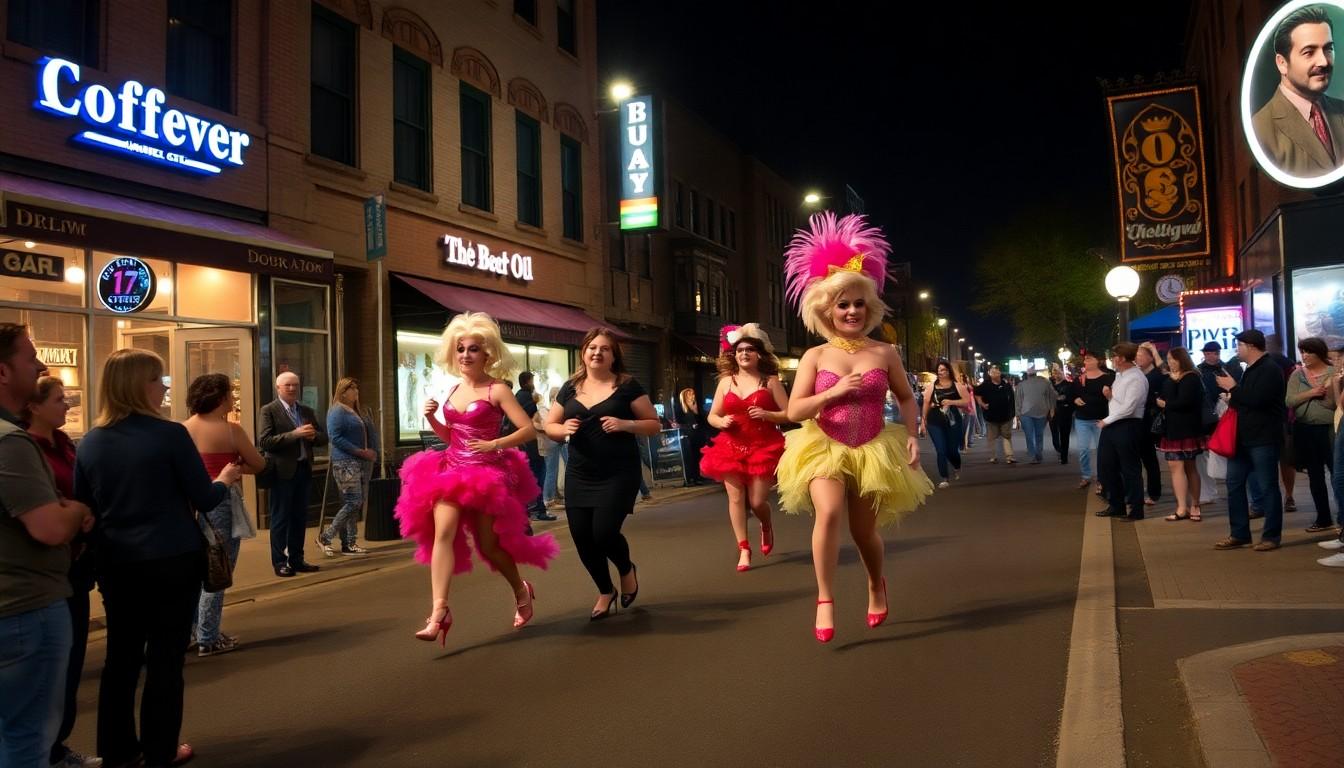
Washington DC’s High Heel Race brings drag, daring footwear and a remarkable LGBTQ+ history to 17th Street each Halloween season. What began as a spontaneous dash between two local bars has grown into a major community celebration, shaped by protest, perseverance and the people who kept it running.
Essential Takeaways
- A local tradition since 1986: The first race ran between JR.’s Bar and Annie’s Upstairs Bar.
- A difficult chapter: Police violence in 1991 prompted renewed organising and a larger, permitted event the following year.
- A changing celebration: The race later moved dates and venues before returning to its roots on 17th Street.
- More than a spectacle: The event has supported local causes and celebrates LGBTQ+ community history.
A dash in heels became a DC institution
There’s something wonderfully improbable about the High Heel Race: a crowd lining the street to watch contestants sprint in elaborate outfits and towering shoes. But Washington’s annual event is more than a lively Halloween spectacle. It’s a tradition with deep roots in the city’s LGBTQ+ community.
The first race took place at midnight on Halloween in 1986. Managers at JR.’s Bar invited drag queens to run to Annie’s Upstairs Bar, take a schnapps, then race back. According to Annie’s Paramount Steakhouse, the business has served the community from its 17th Street location since 1948. A playful night out had found the perfect neighbourhood setting. [2], [3]
From a small crowd to a packed 17th Street
The race grew quickly. By 1991, hundreds of spectators had gathered, and a Washington Blade report noted a shortage of larger-size high-heeled shoes in the area. That’s a vivid sign of just how enthusiastically the city had taken to the event. [5], [7]
That year, however, the race was cancelled after complaints from nearby residents and businesses. Around 500 people still turned up, and a large police response left several attendees injured and others arrested. The episode became a painful part of the event’s history, as documented in the Washington LGBTQ+ Historic Context Statement and local archival records. [4], [7]
A painful moment changed the way the race returned
In 1992, organisers brought the race back as a permitted street celebration, with a stage show, food, games and a costume contest. More than 60 drag queens competed, while thousands came to watch. The event also raised funds for Whitman-Walker Clinic, making the night both a celebration and a community fundraiser. [4], [7]
The years that followed brought further changes. The race moved indoors for a benefit event in 1993, and in 1997 it shifted to the Tuesday before Halloween. Organisers adapted to practical concerns, including traffic and the impact on nearby homes, while keeping the tradition alive. [4], [5]
Why the race still matters to DC
Washington’s LGBTQ+ history is written not only in formal institutions, but also in the bars, restaurants and streets where people have gathered. The High Heel Race reflects that everyday history: a community making space to celebrate, even when the conditions haven’t always been easy. [4], [6]
The event has continued to draw large crowds, and the city officially recognised it as a mayoral event in 2018. In 2026, organisers also announced plans for a mural at JR.’s Bar & Grill honouring the race. It’s a fitting tribute to a tradition whose most memorable feature may be its ability to keep moving. [2], [6]
How to enjoy the High Heel Race
If you’re planning to go, expect a busy street, a lively crowd and plenty of extravagant looks. Arrive early for a good viewing spot, check the latest event details before travelling, and give yourself time to walk around the area. High heels may be the stars of the show, but comfortable shoes are a sensible choice for spectators.
And remember, this isn’t simply a race to watch and photograph. It’s a community tradition with a complicated past, so a little curiosity about its history adds meaning to the fun. [2], [4]
It’s a joyful street party, but also a living piece of Washington’s LGBTQ+ story. [4], [6]
Source Reference Map
Story idea inspired by: [1]
Sources by paragraph: