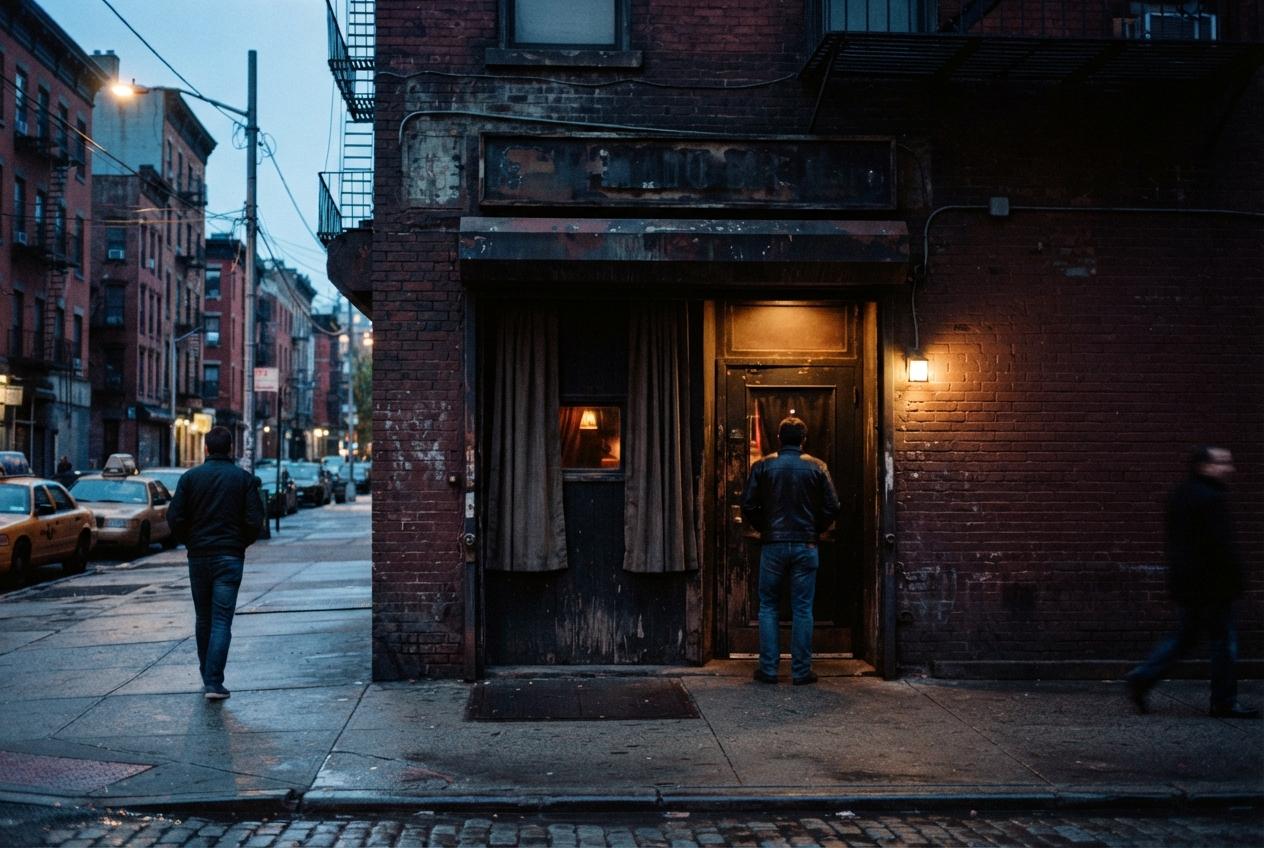
Gay bars have long welcomed plenty of women, but a debate over straight visitors at New York’s Eagle raises a more specific question: what happens when a venue includes cruising space? The answer isn’t simply that women are welcome or unwelcome. It depends on the bar, the room and whether visitors respect the people who came there to feel at ease.
A leather bar is not just another night out
A Reddit discussion among New York gay men has reopened a familiar debate: should straight women visit The Eagle, the city’s long-running leather bar? The original post asked women to stop bringing their friends, arguing that the venue offers gay men a rare place to relax without feeling observed. Queerty reported that the discussion prompted a range of responses, including support for protecting the bar’s distinct atmosphere. ([2], [3])
That concern isn’t hard to understand. A cruising venue with a dark room has a different purpose from a dance bar where everyone’s there for the music, drinks and a bit of people-watching. The setting matters, and so does the feeling that visitors know how to behave in it. ([2], [3])
The room matters as much as the guest list
The debate isn’t really about whether all women should be kept out of gay bars. Queerty’s account describes women socialising in the front area of Chicago leather bar Cell Block, while leaving its more intimate back room to the men using it. The venue has spaces including a pool table and games as well as a sling, making the distinction between a social area and a cruising area especially clear. ([2], [5], [6])
That’s a useful distinction for any visitor. Being welcome in one part of a venue doesn’t automatically mean every space is open to everyone, just as an invitation to a party doesn’t mean you can wander into the host’s bedroom. A little awareness goes a long way. ([5], [6])
Respectful company is different from treating a bar like a spectacle
Some women have close queer friends, identify as queer themselves, or simply want to enjoy the social side of a bar. Queerty’s report notes that visitors can add customers for businesses facing a challenging climate, while also recalling a separate incident in which a straight woman complained online about not receiving enough attention at a gay bar. ([2], [7])
The difference is less about who someone is than how they act. Turning up to support a friend, chatting and enjoying the front room is one thing; treating patrons as entertainment or disrupting the night is another. Nobody wants to feel like they’ve been turned into a sightseeing stop. ([2], [7])
A quick guide to visiting a cruising bar
If you’re planning a visit, check the venue’s rules and event details first. Stay in the areas open to you, follow staff instructions and don’t photograph or film people without permission. If a room is clearly being used for cruising, respect that boundary rather than wandering in out of curiosity. ([4], [5], [6])
It’s also worth asking the friend who invited you what the night will be like. A leather bar can be welcoming and sociable, but it may not be the right fit for every group or every evening. And if the atmosphere feels intimate, the best move is often to give people space. ([2], [4], [5])
Can gay bars welcome everyone and still protect their purpose?
The Eagle has been part of New York’s leather scene for decades, and its long history helps explain why some patrons see it as more than just another bar. Theatres Downtown lists The Eagle NYC as a venue, while Queerty’s account traces its roots back to 1970 and describes the dark room as part of its identity. ([2], [4])
There probably isn’t a universal rule for every gay bar. But the fairest approach is simple: venues can welcome a broad crowd while setting boundaries around spaces designed for particular uses. A night out works better when everyone understands the difference between being included and being entitled to every room. ([2], [3], [4])
A little respect for the room can help keep the night comfortable for everyone.
Source Reference Map
Story idea inspired by: [1]
Sources by paragraph: