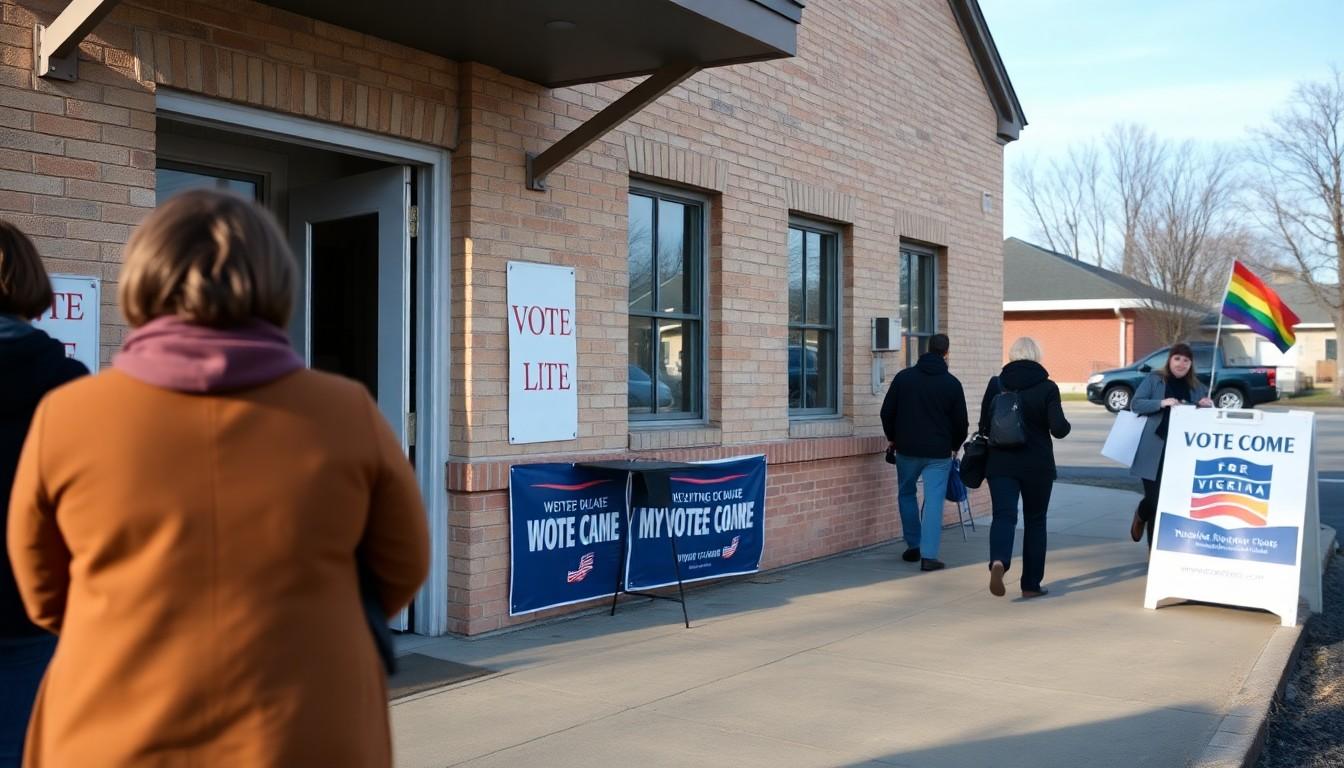
Virginia voters have approved a constitutional amendment removing a ban on same-sex marriage, with 57% backing the change. The result makes Virginia the first Southern state to put legal recognition and equal treatment for same-sex couples into its constitution, while a legal challenge means the measure’s next steps are still being watched closely.
Essential Takeaways
- The amendment passed: 57% of voters supported removing Virginia’s same-sex marriage ban.
- Equal treatment is written into the constitution: The new language requires legally valid marriages to be treated equally under the law.
- Support varied sharply by region: Charlottesville, Arlington, Alexandria and Richmond recorded especially strong backing, while Buchanan County voted heavily against the measure.
- A court challenge remains: A pastor has asked a court to invalidate the result, arguing that ballot procedures weren’t properly followed.
- Other rights measures were on the ballot: Voters also considered amendments concerning abortion access and voting rights after felony convictions.
Virginia voters approve a landmark marriage equality amendment
The result is both decisive and historic: 57% of Virginia voters backed removing the Marshall-Newman Amendment, which had barred the state from recognising same-sex marriages and other legal recognition of same-sex relationships. The new constitutional language says legally valid marriages must receive equal treatment, regardless of the spouses’ identities. (Axios; Virginia Mercury)
Support was especially strong in several cities and university communities. Charlottesville recorded 87% support, Arlington 85%, and Alexandria and Richmond 83% each, while opposition was strongest in parts of rural southwestern Virginia. Buchanan County recorded the highest rejection rate, at 85%. (Axios; 567 Politics)
A ban that outlasted its practical effect
The amendment’s defeat in 2026 comes years after the state’s marriage restrictions became unenforceable in the wake of the US Supreme Court’s 2015 ruling in Obergefell v. Hodges. Yet Virginia’s constitutional ban remained on the books, and Republican lawmakers repeatedly blocked repeal efforts from advancing. (Metro Weekly; Virginia Mercury)
Getting the question before voters also required a multi-stage legislative process. Proposed constitutional amendments must pass the General Assembly in two sessions, with a House of Delegates election in between; the wording must remain the same or the process has to begin again. (Virginia Department of Elections; Metro Weekly)
What the result says about Virginia’s political map
The vote revealed a familiar but striking divide. Urban areas, college towns and several independent cities strongly backed marriage equality, while the Shenandoah Valley, Blue Ridge region, Appalachian Plateau and Southside were more resistant. Some swing counties and cities also supported the amendment, showing that the result wasn’t confined to Virginia’s most liberal strongholds. (Axios; 567 Politics)
The marriage measure appeared alongside proposals on abortion access and voting rights for people convicted of felonies after they complete their prison sentences. Together, the questions put several significant constitutional changes before voters on the same day. (Catholic Herald; Williamsburg Yorktown Daily)
A legal challenge could shape what happens next
The result faces a court challenge from a Northern Virginia pastor, who argues that supporters didn’t follow the proper procedures to put the measure on the ballot. A ruling was expected in the weeks after the vote, leaving a question mark over the next stage even as supporters celebrated the outcome. (Metro Weekly; Catholic Herald)
For campaigners, the vote also marks a change in public attitudes since 2006, when even some of Virginia’s most liberal areas supported restricting marriage to opposite-sex couples. Del. R. Kirk McPike, co-chair of Virginians for Marriage Equality, said in a statement reported by Metro Weekly that voters had affirmed the constitution should reflect the Commonwealth as it is today. (Metro Weekly; Virginia Mercury)
What the constitutional change means for couples
If the amendment withstands the legal challenge, Virginia’s constitution will explicitly require equal treatment for all legally valid marriages. That gives marriage equality a clear place in the state’s foundational document, rather than leaving the old ban sitting there as a relic of a different political moment. (Metro Weekly; Virginia Mercury)
Virginia is the first Southern state to enshrine protections and legal recognition for same-sex couples in its constitution. The vote is a milestone, then, but the pending court case means it’s worth watching for the final legal word as well as the electoral one. (Metro Weekly; Catholic Herald)
A historic vote has shifted Virginia’s constitution; the court challenge will determine how firmly that change takes hold.
Source Reference Map
Story idea inspired by: [1]
Sources by paragraph: