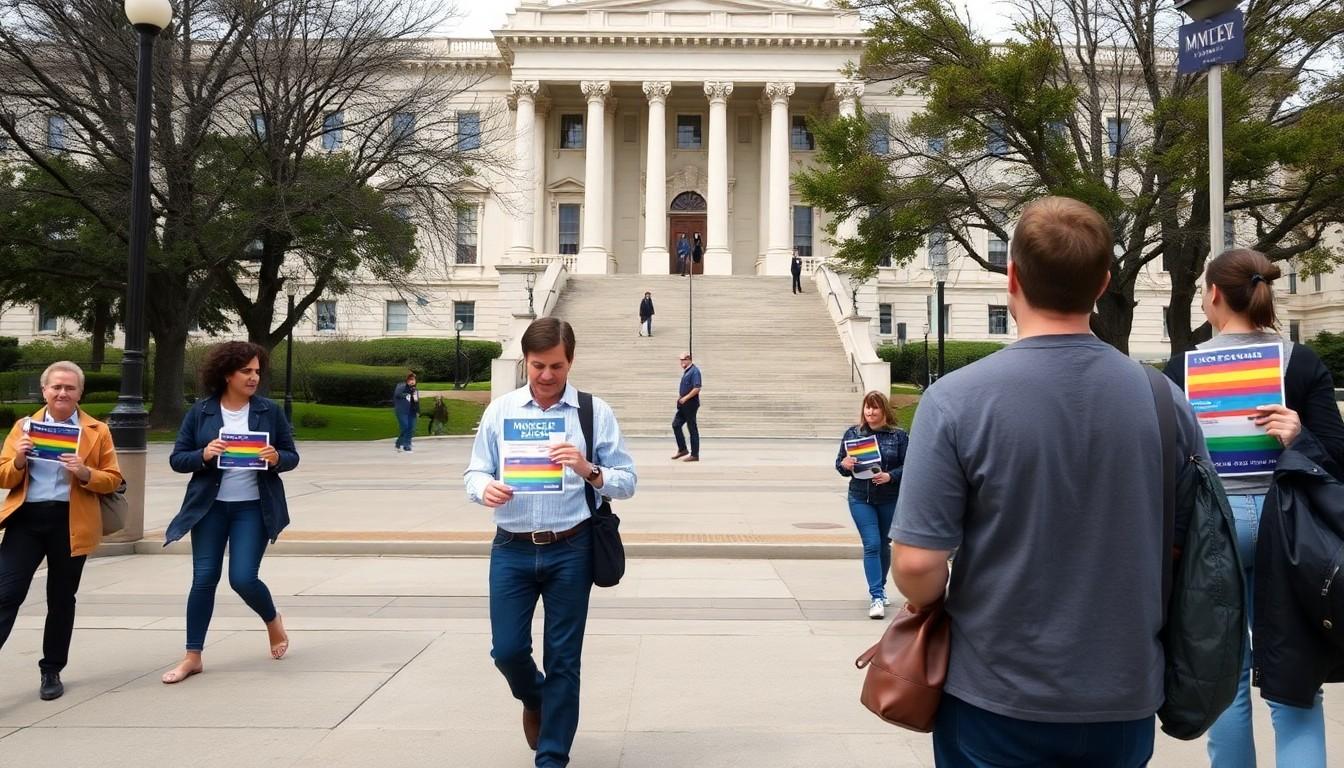
Voters delivered mixed signals on transgender issues in the US midterms: LGBTQ candidates won notable races, while measures on women’s sports also drew strong support. The Human Rights Campaign celebrated its preferred candidates’ performances, but the wider picture is more complicated, with some Democrats taking positions that depart from the party’s usual approach. [2] [3] [5]
Essential Takeaways
- HRC’s candidates had a strong night: The organisation said its preferred candidates won key races and described the results as a victory for equality. [2] [3]
- Some Democrats drew lines on sports and gender: James Talarico said he opposed trans athletes competing in girls’ sports where safety or fairness was at stake. [4]
- Ballot measures also mattered: Voters in Arizona and Nebraska backed restrictions on transgender athletes in women’s sports. [5] [7]
- Washington’s result remained unsettled: The measure there was still too close to call in early reporting. [6]
The midterm results tell two stories
The midterms produced a political picture that resists an easy slogan. LGBTQ candidates made historic gains, while voters in several states also supported ballot measures on transgender participation in women’s sports. Both developments matter, and neither cancels out the other. [2] [3] [5] [7]
The Human Rights Campaign said it had invested heavily in the election, supporting candidates and providing campaigns with research and advice. It framed the wins as evidence that candidates can advocate for equality and succeed at the ballot box. [2] [3]
That is a meaningful claim about campaign strategy, but it doesn't prove voters endorsed every position associated with the organisation. Elections bundle together candidates, local concerns and many policy questions; a win rarely comes with a neat instruction manual. [2] [3] [7]
Democrats found room to differ
James Talarico, who won a Texas Senate race, said he would oppose trans athletes playing in girls’ sports when he believed safety or fairness could be affected. The Texas Tribune reported that his position marked a shift from earlier comments, highlighting the political sensitivity of the issue. [4]
That kind of distinction suggests some Democrats saw value in setting out a more specific position rather than simply adopting the party's broader rhetoric. It may also reflect a practical campaign calculation: voters can respond differently to questions about rights, competition and safeguarding. [4] [5]
Still, one candidate's stance can't stand in for every Democrat or every voter. The more useful takeaway is that candidates can win while taking positions that don't fit neatly into the labels their opponents or supporters might prefer. [3] [4]
Ballot measures add another layer
Arizona voters approved a measure covering transgender participation in women’s sports and privacy in bathrooms and locker rooms, according to the election account in the lead report. Nebraska voters also backed a sports-related measure, while early results in Washington remained too close to call. [5] [6] [7]
Those results deserve attention alongside candidate victories, not as a footnote to them. Ballot questions give voters a direct choice on a particular policy, whereas a candidate's victory reflects a much wider mix of priorities. [5] [7]
For readers trying to make sense of the headlines, check both the final vote count and the precise wording of each measure. Early returns can change, and similarly themed proposals may cover different rules or circumstances. [5] [6] [7]
What the HRC results can - and can't - show
The HRC's election report gives a useful view of the candidates and campaigns it backed, while its post-election statement sets out the organisation's interpretation of the results. Those are valuable perspectives, but they're not the same thing as a nationwide poll on transgender policy. [2] [3]
Taken together, the results point to a more complicated political landscape than either side's victory lap suggests. LGBTQ candidates won elections, and voters in some states supported restrictions on transgender athletes; both facts can be true at once. [2] [3] [5] [7]
The next test will be whether campaign positions harden into policy, or continue to shift as candidates respond to local concerns. For now, the midterms look less like a sweeping mandate than a reminder that voters can hold several views at once. [3] [4] [7]
It's worth reading the candidate results and ballot measures separately before drawing a bigger conclusion.
Source Reference Map
Story idea inspired by: [1]
Sources by paragraph:
- Paragraph 1: [2], [3], [5]
- Paragraph 2: [2], [3]
- Paragraph 3: [2], [3], [7]
- Paragraph 4: [2], [3], [5], [7]
- Paragraph 5: [2], [3]
- Paragraph 6: [2], [3], [7]
- Paragraph 7: [4]
- Paragraph 8: [4], [5]
- Paragraph 9: [3], [4]
- Paragraph 10: [5], [6], [7]
- Paragraph 11: [5], [7]
- Paragraph 12: [5], [6], [7]
- Paragraph 13: [2], [3]
- Paragraph 14: [2], [3], [5], [7]
- Paragraph 15: [3], [4], [7]