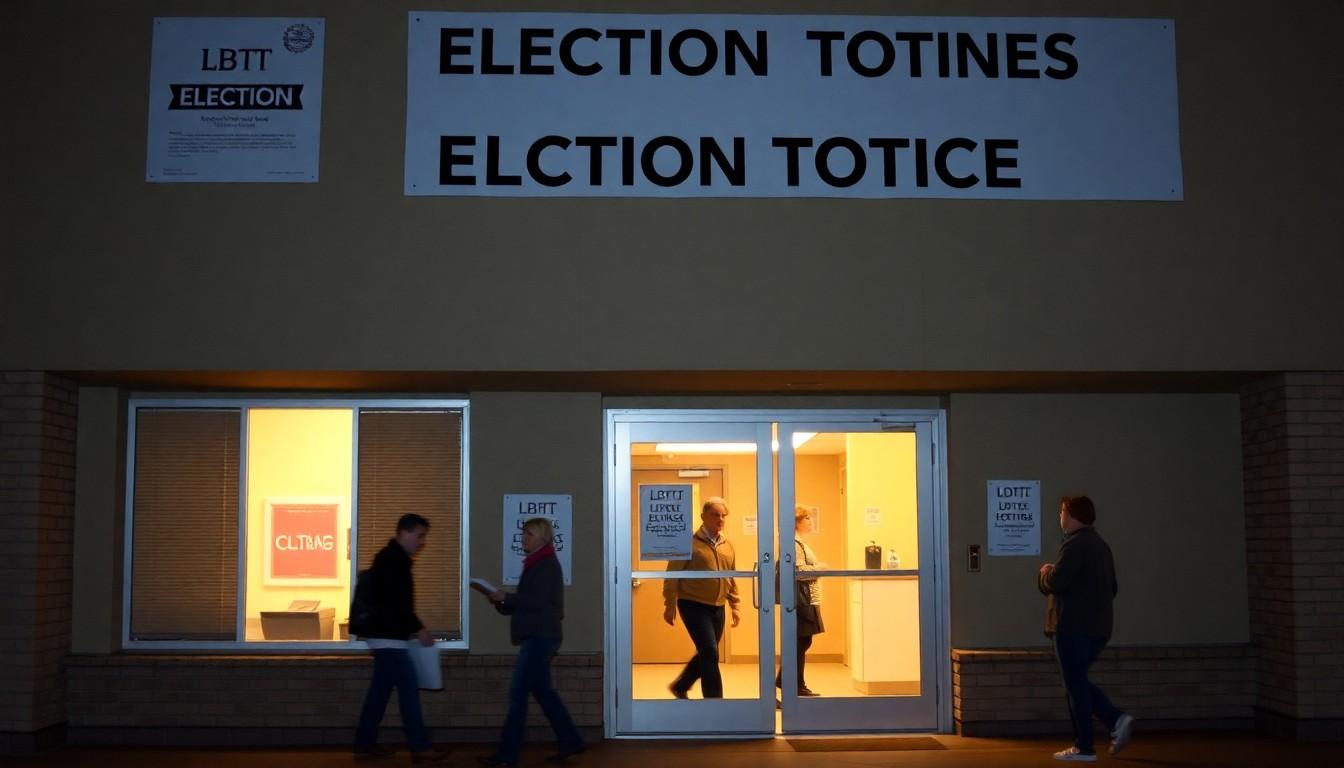
Voters in the US midterm elections sent a more diverse group of LGBTQ+ politicians to Congress, while state ballot measures delivered a more complicated picture of rights. From a historic Senate first to contentious votes on trans students and abortion access, the results show how much can turn on state-level decisions.
LGBTQ+ candidates make historic gains
The latest US midterm election results include a landmark first: New Hampshire’s Chris Pappas is set to become the first openly gay man in the Senate. Sharice Davids and Sarah McBride also won re-election to the House, adding to a broader group of queer politicians elected across the country. It’s a striking sign of growing representation, even as policy outcomes remain mixed. (AP News; Axios)
For many voters, seeing people from LGBTQ+ communities win office matters in its own right. But representation doesn’t automatically translate into stronger protections, particularly when state ballot questions and legislatures can shape daily life just as directly as Congress. (AP News)
Trans students face a tougher fight in state ballots
The clearest contrast came in measures concerning trans young people. Results pointed towards restrictions on trans girls’ participation in school sports in several states, including Washington, where the proposal also drew scrutiny for its approach to verifying students’ sex. (AP News; Axios)
These proposals were often presented by supporters as a matter of fairness and safety for girls. Critics, meanwhile, have raised concerns about excluding trans pupils and subjecting students to invasive checks. For families, that debate is more than abstract politics: it can determine whether a child feels welcome on a school team. (AP News; Axios)
Colorado voters also considered measures affecting gender-affirming care for minors and public or insurance funding for procedures. A similar proposal in Missouri was rejected, underlining how sharply outcomes can differ from state to state. (AP News)
Abortion rights advance, but not everywhere
Abortion rights also featured prominently on state ballots, with voters in three of the four states holding relevant measures backing constitutional protections or broader access. Nevada and Virginia were among the states where voters supported expanding reproductive protections. (AP News; Guttmacher Institute)
That matters because the 2022 Supreme Court decision overturning Roe v Wade shifted much of the power over abortion policy to the states. Since then, access has varied dramatically by location, leaving ballot measures as a direct route for voters to shape local law. (Guttmacher Institute)
The picture was not uniformly favourable to access. In Idaho, voters rejected a measure intended to protect abortion access up to foetal viability and shield medical professionals from penalties. These results are a reminder that a national election can produce very different realities across state lines. (Guttmacher Institute; AP News)
What the results mean for LGBTQ+ rights
Taken together, the election delivered a genuine milestone in political representation, but not a simple story of progress. Queer candidates won prominent races while voters also backed, or considered, policies that could limit the rights and opportunities of trans people. (AP News; Axios)
That tension is worth keeping in view when weighing election headlines. Who gets elected matters, but so do ballot questions, state constitutions and the rules that shape access to healthcare and school life. The next chapter will depend on how those results are implemented and challenged. (AP News; Guttmacher Institute)
Keep an eye on state-level decisions: that’s where many of these rights will be defined next. (AP News; Guttmacher Institute)
Source Reference Map
Story idea inspired by: [1]
Sources by paragraph: