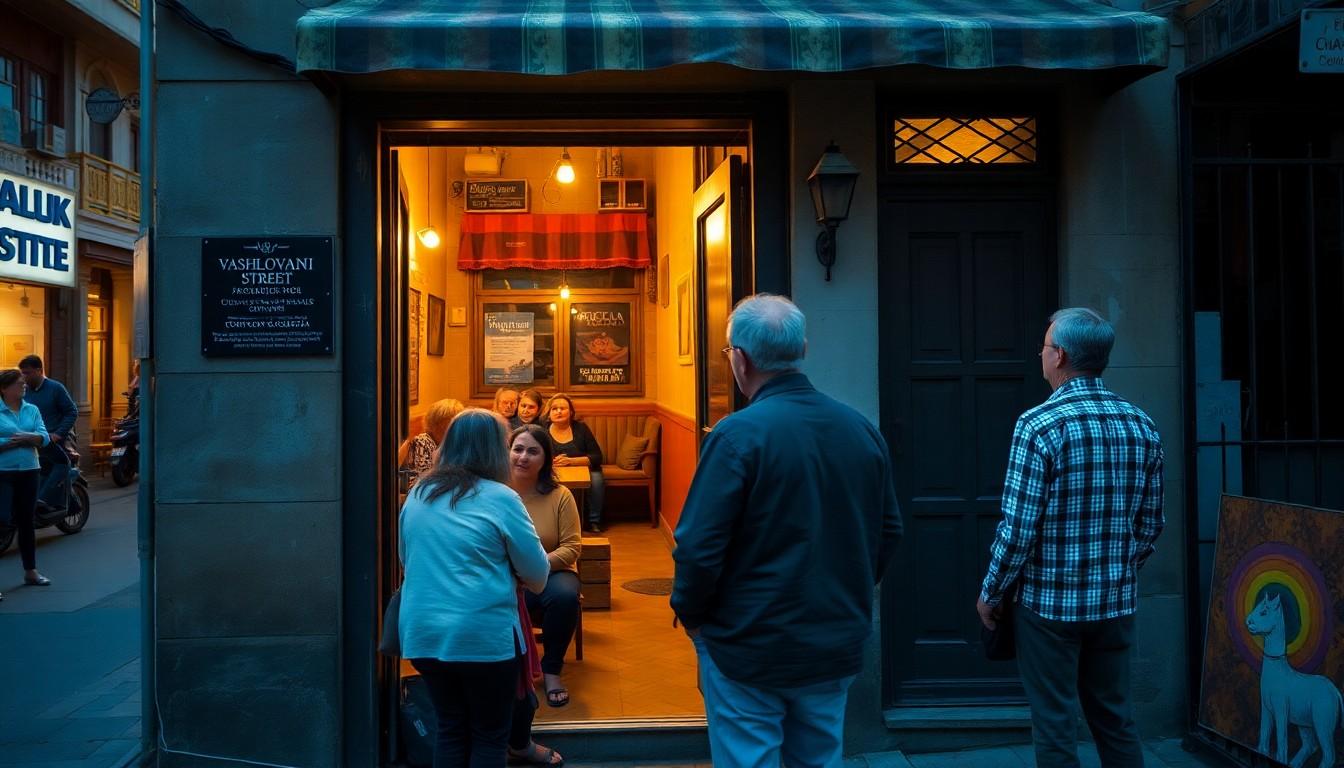
On one short stretch of Vashlovani Street, Tbilisi’s queer community is making room for dancing, friendship and a sense of belonging. The bars and grassroots events matter all the more as LGBTQ+ people face growing restrictions and threats in Georgia, and as community groups work to keep vital support going.
A small street with a big sense of freedom
Music spills from Success Bar as people gather outside, sharing conversation and taking a breather from the crowded dance floor. On Vashlovani Street, a cluster of bars, restaurants and second-hand shops has become a rare place where Tbilisi’s LGBTQ+ community can meet and feel at home. [2]
Locals call the block “100 Meters of Freedom”. It’s a compact, vivid counterpoint to a national climate in which public LGBTQ+ events have faced threats and attacks. Pride organisers in Tbilisi have previously cancelled a march after their office was attacked by far-right groups, Front Line Defenders reported. [2], [3]
The nightlife is joyful, but the risks are real
Success Bar, founded in 2000, is described as Tbilisi’s oldest LGBTQ+ bar. Its programme has included karaoke, drag, lip-sync performances and tarot readings, while neighbouring venues Mozaika and Mi Moza offer other places to gather. A fundraising night at Success Bar paired dancing with donations for Palestine, showing how community events can make space for more than one cause. [2]
But the joy has a difficult backdrop. The lead report describes attacks on Pride events and rising pressure on LGBTQ+ groups, while Freedom House and Human Rights Watch have also documented concerns about rights and civic freedoms in Georgia. For people attending, a night out can be both a welcome escape and an act of quiet defiance. [2], [4], [5]
Laws and funding pressures are reshaping community life
Georgia’s “Law on Family Values and Protection of Minors” was adopted in 2024. The law’s text is published by Georgia’s legislative herald, Matsne, and the lead report says its restrictions have added to the risks around LGBTQ+ visibility and public events. [2], [7]
Pressure on civil society has also made it harder for organisations to keep services running. The Equality Movement continues to provide HIV testing, counselling and PrEP, according to the lead report, even as staff work with reduced resources. That practical support matters: safe spaces aren’t only about nightlife, but also about health, advice and people who’ll pick up the phone. [2], [4], [5]
Heritage, art and friendship keep the community connected
There’s more to Vashlovani Street than bars. Activists have organised tours of LGBTQ+ heritage sites in Tbilisi, while groups such as GrlzWave have held film and book clubs focused on women’s and LGBTQ+ rights. These gatherings help make history visible, especially when public discussion is increasingly constrained. [2], [5]
Community organisers have also found ways to meet beyond the city. The lead report describes a weekend camp featuring yoga and workshops on queer art and history, followed by a “Queer Corner” at a Tbilisi music festival. It’s a reminder that belonging can be built in a room, on a street or around a shared playlist. [2]
What visitors should know before they go
Georgia’s travel picture calls for care as well as curiosity. The US State Department maintains a travel advisory for the country, so visitors should check its current guidance before making plans and keep an eye on local developments. [6]
For anyone visiting LGBTQ+ venues, it’s sensible to follow local organisers’ advice, check event details directly and avoid assuming that a public listing means an event is risk-free. The street’s welcome is real, but so are the challenges its community is navigating. [2], [3], [6]
Vashlovani Street’s story is ultimately about people making space for one another, even when that space is hard-won. [2]
Source Reference Map
Story idea inspired by: [1]
Sources by paragraph: