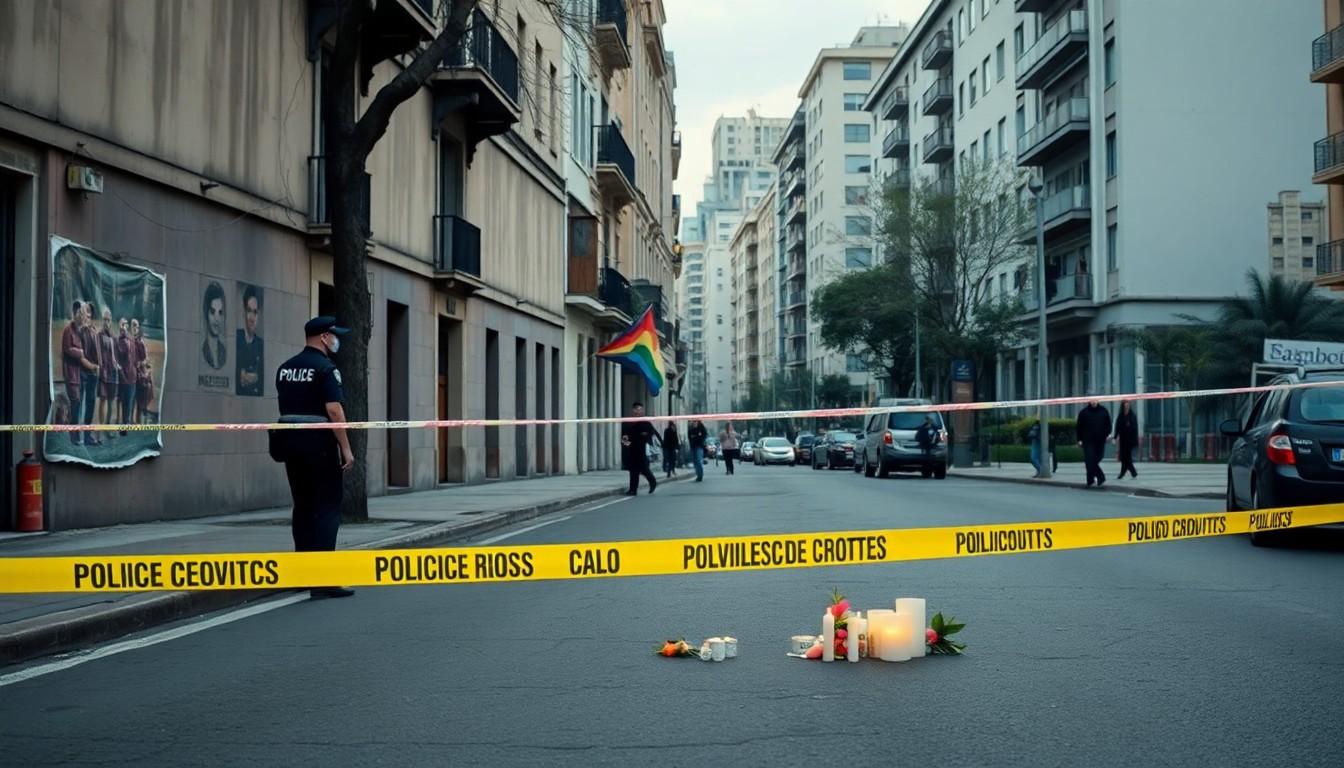
A filmed attack on six trans women in Buenos Aires has renewed concern about violence, impunity and the loss of protections across Argentina. Activists say the incident reflects a wider pattern, not an isolated clash, while the country’s gender identity law and Pride movement remain important parts of the fight for safety and equal treatment.
A filmed attack has sparked fresh outrage
The reported assault on six trans women in Palermo has drawn public attention after footage of the attack circulated online. La Nación and the Buenos Aires Herald reported on the incident, which María Belén Correa, founder of the Trans Memory Archive, described as an organised attack rather than a fight between two groups. [2], [3]
Correa said the women received private medical care and had not initially reported the assault themselves. She also said they were frightened and not ready to speak publicly. That response is a reminder that seeking help or making a formal complaint can feel daunting after a traumatic attack. [1], [3]
Activists say the violence reaches beyond Buenos Aires
Correa warned against treating the Palermo incident as an isolated case or focusing only on the capital. She pointed to reports of similar violence and police persecution in northern provinces, including Salta, Formosa and Jujuy. [1]
Her account connects current fears with a longer history of violence against travesti and trans people. The Trans Memory Archive preserves records of that history, helping explain why activists see the attack as part of a continuing pattern rather than a sudden exception. [1], [4]
Legal recognition matters, but protection must work in practice
Argentina’s Gender Identity Law, Law 26,743, recognises the right to gender identity and to be treated accordingly. The legislation provides an important legal foundation, but Correa argued that protections mean little if discrimination goes unchallenged or people cannot access safety and justice. [1], [6]
She also raised concern about how crimes motivated by gender identity are classified in court. The Supreme Court’s Office of Women publishes resources on gender-related violence and justice, while Correa’s comments underline why accurate recognition and investigation matter to victims and their communities. [1], [4]
Why the wider climate is part of the story
Correa linked the attacks to a climate of impunity and the weakening of public inclusion policies. She said the average life expectancy for trans people, which she recalled reaching 46 after the 2012 law, was falling again; she estimated it could be as low as 30 to 37. That figure was her warning, not a new official statistic. [1], [5], [6]
The distinction matters: a law can establish rights, but it cannot by itself guarantee people’s safety, healthcare or fair treatment. Argentina’s legal framework remains relevant, yet Correa’s account raises a harder question about whether those rights are being upheld in everyday life. [1], [5], [6]
Pride remains a call to defend rights
Correa described the Pride March as political from its earliest days, and said it continues to be a way to defend rights and demand change. The official Pride March website offers information about the movement and its activities. [1], [7]
She also found a measure of hope in the public response to the attack, saying it suggested the community was not as alone as it had once felt. That solidarity matters, though it cannot replace protection, accountability or the justice survivors deserve. [1], [3], [7]
Safety and equal treatment depend on turning public concern into lasting action.
Source Reference Map
Story idea inspired by: [1]
Sources by paragraph: