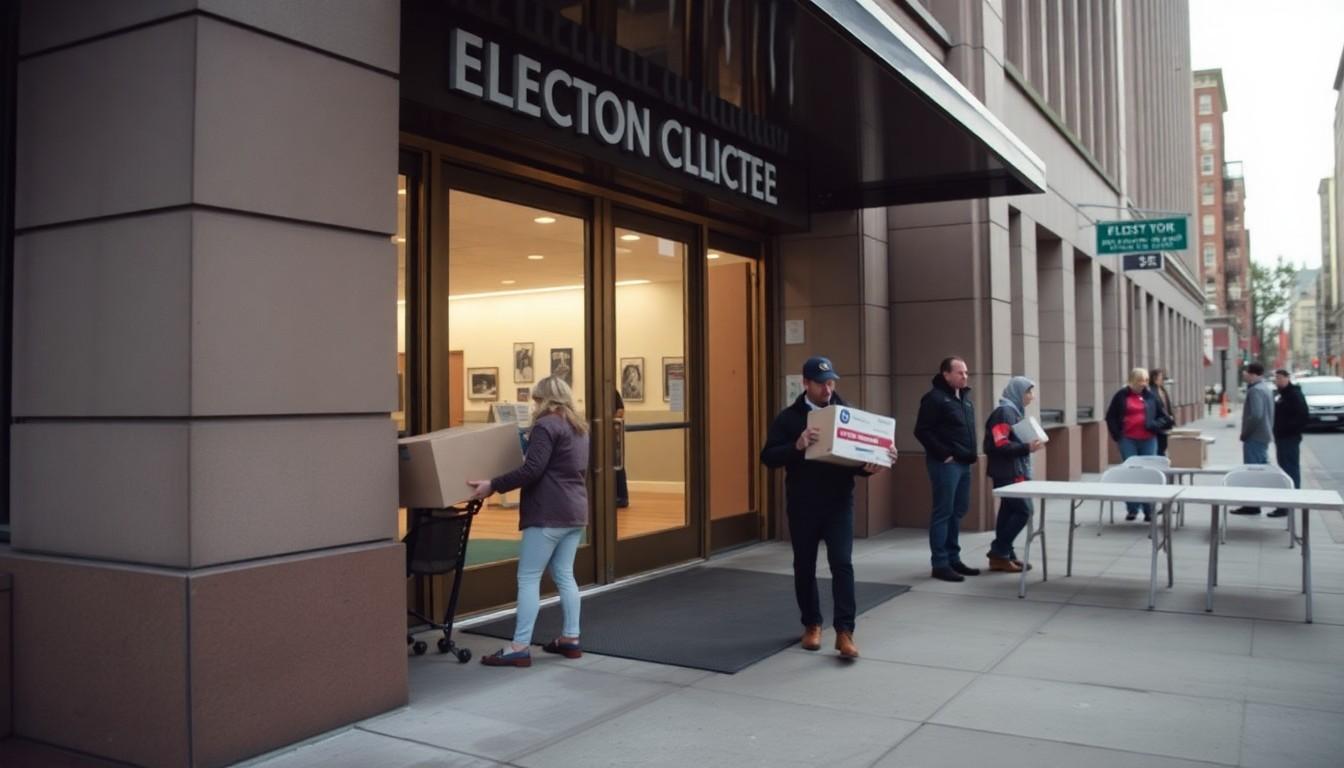
LGBTQ candidates across New York City and the surrounding region made strong gains in the 2026 elections, as Democrats took control of both houses of Congress. From a closely watched Hudson Valley contest to decisive Assembly victories, the results matter for representation and the shape of state politics. Here are the races and results to know.
A close contest puts LGBTQ representation in focus
The tightest spotlight fell on out lesbian candidate Cait Conley, who led Republican incumbent Mike Lawler by four percentage points in New York's 17th Congressional District the morning after election night. The district stretches across both sides of the Hudson River north of New York City, making it a closely watched contest in the region. Spectrum News followed the race as votes were counted. [3]
Lawler said in a late-night address that it would become clear his campaign had fallen short, and called Conley to concede. The result added to a wider Democratic surge, although the Associated Press had not called the race by the morning after the election. [2], [3]
Queens sees a decisive Senate win
In Queens' 13th State Senate District, Assemblymember Jessica González-Rojas beat Republican John Patrick Healy by a commanding margin, winning more than three-quarters of the vote. Her general-election victory followed a Democratic primary win over incumbent Jessica Ramos. [2], [4]
González-Rojas' move to the Senate also opened her Assembly seat in the 34th District. Brian Romero, her former chief of staff, won that race unopposed, preserving LGBTQ representation in the district. They celebrated on election night at Viva Bar in Jackson Heights, alongside Assemblymember Catalina Cruz, who won re-election in the 39th District. [2], [5]
Newcomers add to LGBTQ representation in the Assembly
Several other out candidates won Assembly seats, including Illapa Sairitupac in Queens' 65th District and David Siffert in Manhattan's 66th District. David Orkin, who had defeated incumbent Jenifer Rajkumar in the Democratic primary, went on to beat Republican Ruben D. Cruz II in Queens' 38th District. [2], [6]
In Brooklyn's 54th District, Christian Celeste Tate won unopposed after beating incumbent Erik Dilan in the primary. The results point to a mix of new faces and familiar names, with primary contests proving pivotal in several districts. [2], [6]
Incumbents hold their ground across New York
Out Assemblymembers Tony Simone, Diana Moreno and Harry Bronson also secured re-election. Simone and Moreno won comfortably, while Bronson held off Republican challenger Tracy Difloria in western New York by 68% to 32%. [2], [6]
In the State Senate, Jabari Brisport won re-election without opposition. Erik Bottcher, who joined the chamber earlier in the year after replacing Brad Hoylman-Sigal, defeated Republican Charlotte Friedman by 85% to 15%. [2], [4]
What the results mean for voters
The election delivered both continuity and change: incumbents kept their seats, while new candidates won representation in districts across the city. New York's official election results and district-level race listings offer voters a way to check candidate totals as results are confirmed. [4], [5], [7]
For LGBTQ voters and allies, the outcomes are a reminder that representation is built across many different races, not just the headline contests. And for anyone following local politics, those Assembly and Senate seats can shape decisions much closer to home. [2], [6]
It's worth keeping an eye on the final certified totals as the election count is completed. [4], [7]
Source Reference Map
Story idea inspired by: [1]
Sources by paragraph: