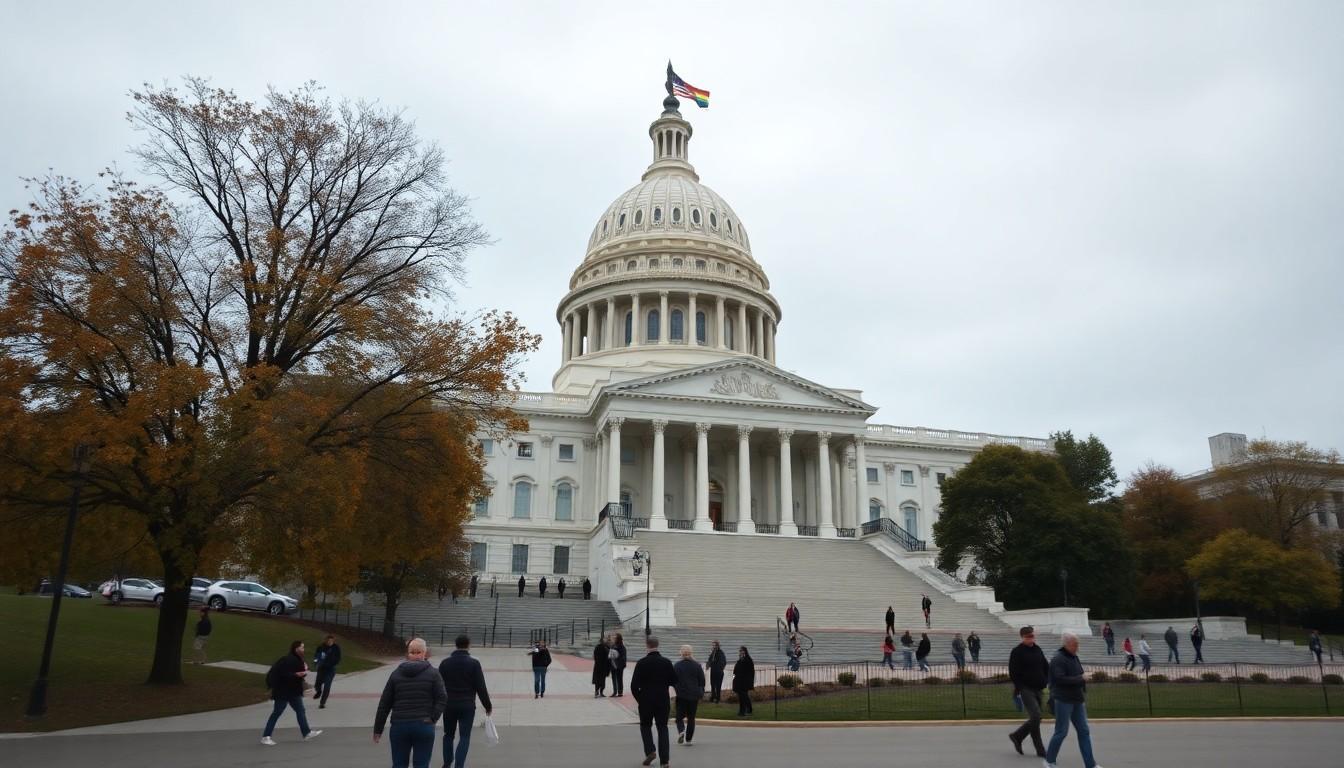
Voters delivered major Democratic gains and historic LGBTQ+ representation, but also backed some restrictions affecting transgender people. Human Rights Campaign president Kelley Robinson says the results are a mandate to govern, not a reason to relax: the next test is whether elected officials protect the communities who helped put them in office.
Essential Takeaways
- A major political shift: Democrats won control of both chambers of Congress and made gains in several states.
- More LGBTQ+ representation: Chris Pappas won a Senate seat, Sarah McBride returned to Congress and Georgia elected Bentley Hudgins, its first out transgender and nonbinary state lawmaker.
- A mixed result for trans rights: Voters rejected some restrictions but approved measures limiting transgender students’ participation in sports and access to facilities.
- Robinson’s message: The Human Rights Campaign plans to press elected officials on equality protections, healthcare, housing and HIV services.
A sweeping win, with a complicated aftertaste
The election delivered a striking shift in power, along with a more complicated result for LGBTQ+ Americans. Democrats captured both chambers of Congress and won contests in states where their prospects had long looked slim. Yet some voters also approved restrictions affecting transgender people, a reminder that political momentum and protections for individual rights don’t always move in step.
Human Rights Campaign president Kelley Robinson welcomed the Democratic victories but made clear that celebration comes with a job list. In an interview with The Advocate, she argued that the incoming majority must act for LGBTQ+ people, including those whose rights were treated cautiously by some winning candidates. The organisation’s position, as set out in its election response, is that electoral gains should translate into practical progress. [7]
More LGBTQ+ lawmakers are heading to office
The wins brought new visibility to LGBTQ+ representation across the country. New Hampshire elected Chris Pappas as the first out gay man to win a Senate seat, while Delaware returned Sarah McBride, the first out transgender member of Congress, for a second term. Georgia also elected Bentley Hudgins, its first out transgender and nonbinary state lawmaker.
Those milestones sit alongside a broader Democratic surge into Republican-held territory. The Advocate reported breakthroughs in states including Texas and Kansas, where Gina Hinojosa won the governorship and James Talarico secured a Senate seat in Texas. Representation matters, but it’s not a guarantee of agreement on every issue; advocates will be watching what lawmakers do as closely as who they are. [3]
Transgender rights faced a mixed verdict
The election’s results for transgender people were far from straightforward. Voters in Arizona approved restrictions on transgender students’ sports participation and access to facilities, while Nebraska added sports restrictions to its constitution. In Missouri, by contrast, voters rejected a proposal that paired an abortion-rights rollback with restrictions on healthcare for transgender minors.
That Missouri result prevented those measures from being written into the state constitution, but existing statutory restrictions remain. The contrast is sobering: a national political victory can arrive alongside losses at state level, and the consequences are often felt most sharply in schools, clinics and family life. The Advocate’s account also noted that Virginia approved marriage-equality protections and Vermont backed constitutional equal-protection language that explicitly covers sexual orientation, gender identity and gender expression. [4]
What elected Democrats will be asked to do
Robinson’s message to the new majority is direct: winning is only the beginning. She said the Human Rights Campaign plans to mobilise constituents and press officials to defend LGBTQ+ rights, with particular attention to states where candidates’ campaign positions drew criticism from advocates.
That scrutiny matters because some victorious Democrats took positions that LGBTQ+ groups opposed, including on transgender girls’ participation in girls’ sports and gender-affirming care for minors. Their wins don’t settle those disagreements. Instead, they sharpen the question of whether officials will listen to constituents after the campaign signs come down. [6]
The next fight is about policy, not just symbolism
The Human Rights Campaign has also identified concrete priorities for the new Congress. Robinson called for restoring funding for HIV prevention and medication, housing and Medicaid, and for advancing the Equality Act, which would establish explicit federal protections against discrimination in areas including employment, education and public services.
The organisation has also said it expects the Senate to reject anti-LGBTQ+ judicial nominees. That agenda is ambitious, and delivering it will depend on political will as much as electoral arithmetic. Still, the growth in LGBTQ+ representation gives advocates more potential allies in the rooms where decisions are made. The Human Rights Campaign’s election statement framed the results as a gain for equality, while Robinson’s warning was that rights remain fragile and need sustained protection. [5]
The celebration is real, but the work carries on
There’s genuine cause to celebrate historic wins and a stronger presence in public office. But election night is a snapshot, not a guarantee. For transgender Americans in particular, the mixed state-level results show why progress can feel uneven, even when the national mood appears to be shifting.
Robinson wants supporters to remember the feeling of victory and turn it into lasting pressure on elected officials. That’s a practical test of political power: not simply who gets elected, but whether people’s everyday safety and equality improve once the cheering fades. [7]
The gains are worth celebrating, and the next measure is what lawmakers do with them.
Source Reference Map
Story idea inspired by: [1]
Sources by paragraph: