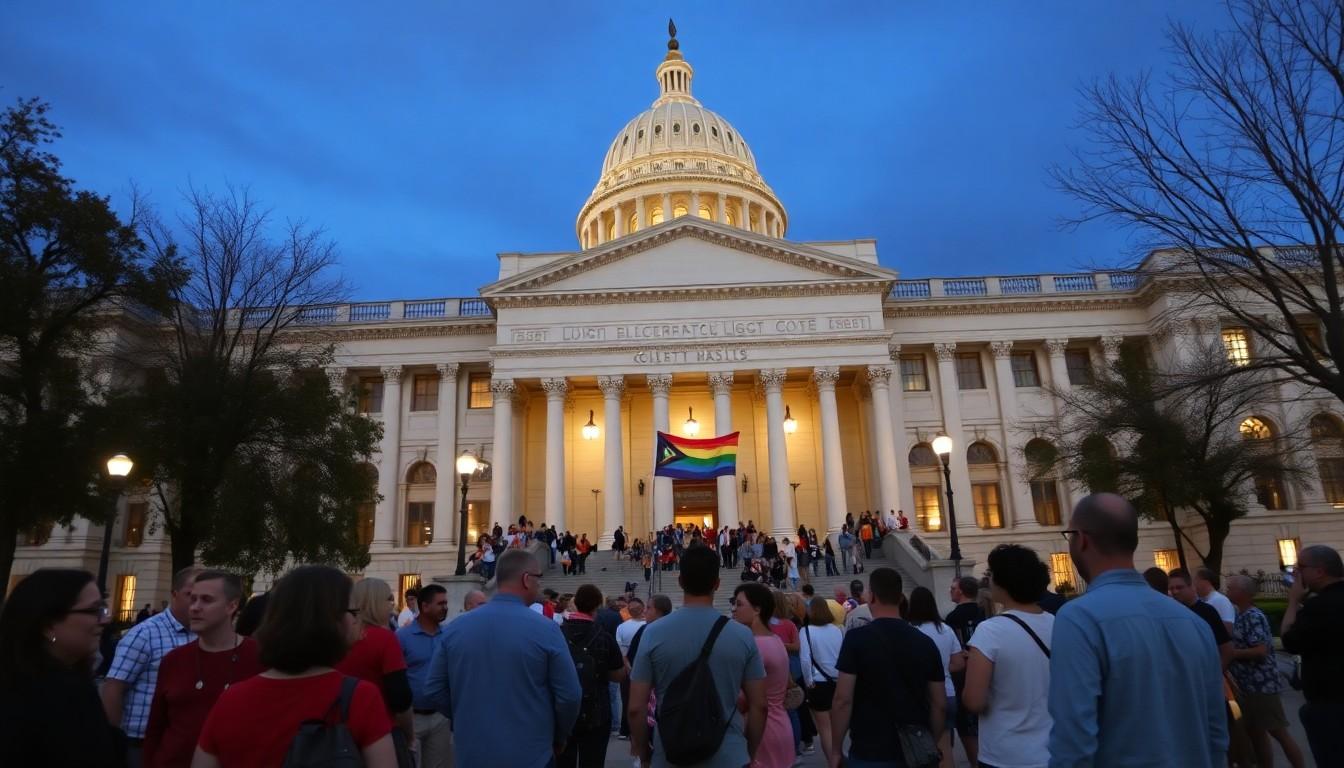
LGBTQ+ candidates played a prominent role in a projected Democratic wave across the United States, with historic wins from Texas to New Hampshire. Their victories could bring more representation to Congress and state government, while giving voters a fresh test of whether campaign promises on everyday issues can travel beyond election night.
LGBTQ+ election wins helped reshape Congress
The striking story of this US midterm election is not just a change in party control. LGBTQ+ candidates helped Democrats win seats in Republican-held districts, adding to a broader shift in Congress. The projected outcome sets up a fresh contest with President Donald Trump over legislation, investigations and judicial confirmations. (AP News; Axios)
In Indiana, state senator JD Ford became the first out gay person elected to Congress from the state. Queer Marine veteran JoAnna Mendoza won in Arizona, while bisexual San Diego city councillor Marni von Wilpert secured a California seat. (The Advocate)
New Hampshire voters sent Chris Pappas to the Senate, making him the first out gay man elected to the chamber. Meanwhile, California Representative Robert Garcia won a third term and is positioned to lead the House Oversight Committee if Democrats take control. (The Advocate)
Texas voters deliver a sharp political rebuke
Texas saw a dramatic break with its recent statewide voting pattern. Democrat Gina Hinojosa defeated Republican governor Greg Abbott, becoming the state's first Latina governor, while James Talarico beat Attorney General Ken Paxton in the Senate race. Democrats' twin victories came after Republicans spent heavily on anti-trans advertising. (AP News; Axios)
The results suggest that a high-profile campaign message doesn't necessarily settle the vote. Voters weigh a mix of local concerns and national politics, and the Texas contests showed that anti-trans messaging alone wasn't enough to protect Republican incumbents. (AP News; Axios)
That distinction matters: a candidate's identity can make a race more visible, but it doesn't explain every vote. Hinojosa's historic win and the wider Democratic gains sit alongside a complicated electorate, not a single-issue verdict. (AP News)
Historic representation reaches beyond Washington
The gains extended to state government. In Georgia, Bentley Hudgins became the state's first out transgender and nonbinary lawmaker, with a campaign centred on housing, wages, public transport and neighbourhood investment. That's a reminder that representation is not only about landmark firsts; it's also about what candidates put on the agenda. (The Advocate)
Congress also returns Sarah McBride, the first out transgender member of the House, for a second term. Kansas voters re-elected lesbian and Ho-Chunk Nation citizen Sharice Davids, while governors Maura Healey of Massachusetts and Tina Kotek of Oregon won second terms. (The Advocate)
In Virginia, voters approved a constitutional amendment protecting marriage equality, replacing an unenforceable ban adopted two decades earlier. It gives the election night a policy dimension as well as a symbolic one. (The Advocate)
What these results could mean next
A projected Democratic majority in both chambers would give LGBTQ+ lawmakers a larger platform, but it won't guarantee agreement on every priority. Oversight, legislation and judicial confirmations are likely to become central battlegrounds, with each demanding votes as well as headlines. (Axios; The Advocate)
For voters tracking what comes next, watch the committee assignments, bills introduced and the local issues lawmakers choose to pursue. Housing, wages and transport may sound less dramatic than election-night milestones, but they're the everyday measures by which representatives are judged. (The Advocate)
And there is a human note in all those firsts: for someone watching a person like them take office, representation can make politics feel a little less distant. What follows will matter just as much as the milestone itself. (The Advocate)
It's a landmark night; the real test is what these newly elected leaders do with their mandate.
Source Reference Map
Story idea inspired by: [1]
Sources by paragraph: