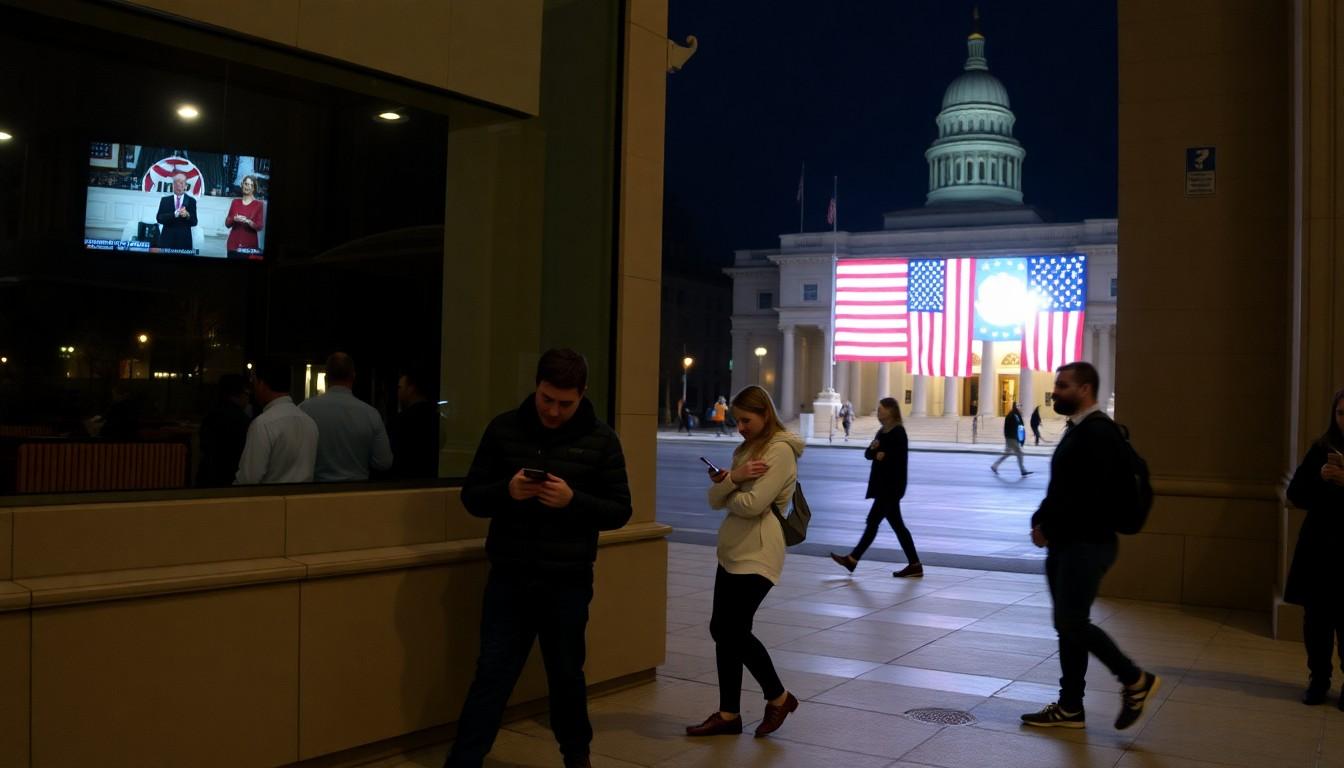
Voters and candidates turned to social media throughout the 2026 US midterms, using posts, memes and short videos to celebrate historic election results and draw attention to key races. The online reaction offered a fast, vivid running commentary on a consequential night, while one conspicuous silence raised questions about how political leaders use their platforms.
Essential Takeaways
- Historic milestones: The election brought notable firsts in Senate, gubernatorial and state legislative races.
- Campaigning went vertical: Short-form video helped candidates including Jon Ossoff and Abdul El-Sayed attract attention online.
- Memes joined the conversation: Social posts gave younger voters an easy-to-share way into races and results.
- Online reaction was mixed: Users celebrated, mourned or questioned the outcome as results emerged.
- A notable quiet patch: The lead account describes President Donald Trump as unusually quiet online after the reported Democratic gains.
The election night unfolded on social media
The 2026 midterms produced a string of historic firsts, and social media turned the results into a public, fast-moving conversation. The Associated Press reported election developments including new milestones for elected officials, while Georgia coverage had already documented the possibility of the state's first openly transgender and nonbinary lawmaker. [2], [7]
That conversation wasn't just about vote totals. Users mixed celebration and disbelief with jokes, music references and rapid-fire commentary, capturing the strange emotional whiplash of election night better than any tidy results graphic could. [2], [3]
Short videos helped candidates reach voters
Social media had a role well before polling day, too. Axios reported that Democrats were using online platforms to promote candidates such as Jon Ossoff and Abdul El-Sayed, with short-form video helping campaign messages travel beyond the usual political audience. [5]
The format is an obvious fit for a crowded feed: a quick clip can feel more immediate than a long speech, while a familiar song or meme makes a political message easier to recognise and pass along. It doesn't guarantee votes, of course, but it gives candidates another way to get noticed. [5]
Memes made politics feel personal
For younger voters especially, a meme can be an entry point rather than a substitute for political news. A short post about a close race is easy to share with friends, and it can turn a distant contest into something that feels local and immediate. [5]
But social posts aren't a reliable scoreboard. The Associated Press and Axios' election coverage offer a useful counterweight to the fast-moving claims and jokes online: check reported results and credible updates before treating a viral post as fact. [2], [4]
Historic wins brought the human story into focus
The races also carried significance beyond the party balance. The lead-up to the midterms included national attention on candidates who could make history, while Georgia reporting explored the prospect of electing its first openly transgender and nonbinary lawmaker. [6], [7]
That context matters when the online conversation gets noisy. Milestones aren't just social-media talking points; they represent changes in who gets to hold office and whose experiences are reflected in public life. [6], [7]
What the online reaction can and can't tell us
Social media can show how people are reacting, but it isn't a representative poll of the country. The loudest accounts and most shareable posts can dominate a feed, so it's worth separating the mood online from the verified outcome of a race. [2], [3]
And when prominent politicians go quiet, that silence can become part of the story in its own right. Still, the bigger lesson from these midterms is that campaigns now have to compete in the same scrolling space where voters get news, share jokes and decide what deserves their attention. [4], [5]
Social media made election night feel immediate, but reliable reporting is still the best guide to what happened.
Source Reference Map
Story idea inspired by: [1]
Sources by paragraph: