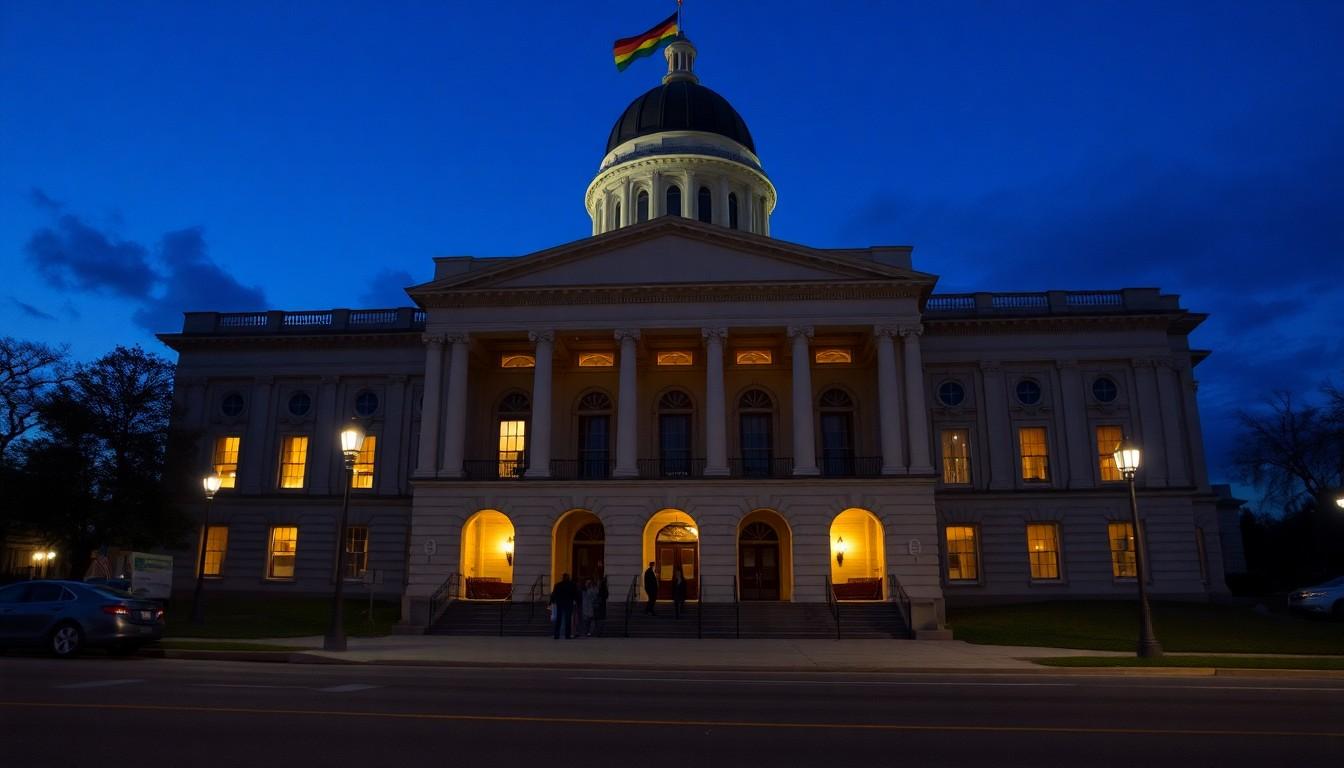
Voters in Georgia, Alabama and Montana have elected their first openly transgender state legislators, despite a reported $183 million spent on anti-trans campaign advertising. The results offer a striking snapshot of an election shaped by household costs as well as culture-war messaging, and mark a milestone for representation across the South and Mountain West.
Three states make history at the ballot box
Alabama, Georgia and Montana have each elected their first openly transgender state lawmakers, a landmark result in a cycle where anti-trans advertising was highly visible. Alison Montgomery won Alabama House District 25, flipping the seat from Republican to Democratic, according to TransVitae. (6)
Georgia’s Bentley Huggins also made history, becoming the state’s first transgender lawmaker and its first Japanese-American state senator, The Advocate reported. In Montana, Zooey Zephyr, a prominent transgender rights advocate, became the state’s first openly trans legislator, according to The Advocate. (5), (7)
Anti-trans advertising met voters’ cost-of-living concerns
Republican campaigns made transgender issues a prominent part of their messaging, with an estimated $183 million spent on anti-trans ads, ABC News reported. The ads included claims about gender-affirming care for young people, while campaign debate unfolded against concerns about the cost of living and the economy. (2)
That contrast may have mattered. Former Texas House Speaker Dade Phelan said in October that the issues Republicans were emphasising weren’t necessarily those engaging swing voters, PinkNews reported. It’s a reminder that campaign spending can amplify a message, but it can’t guarantee voters will put it first. (3)
More LGBTQ+ candidates won beyond the South
The historic firsts were part of a wider set of victories for transgender and LGBTQ+ candidates. Trans candidates also won in Washington, Michigan, Minnesota and Wisconsin, while Delaware’s Sarah McBride secured re-election, according to the lead report. (4)
Human Rights Campaign president Kelley Robinson described the results as a rebuke to anti-LGBTQ+ campaigning and said voters had elected a historic number of LGBTQ+ officials. The organisation’s election statement presented the wins as evidence that equality remained an important issue for voters. (4)
What the results say about campaign priorities
The election doesn’t prove that every voter rejected anti-trans messaging, or that campaign ads had no effect. But the victories in these states show that transgender candidates could win races even as their identities became a focus of political attacks. (2), (4)
For voters, the broader lesson may be familiar: local races are often decided by a mix of practical concerns and personal values. Candidates can be pulled into national culture-war debates, but people still weigh what matters in their own communities. (2), (3)
A milestone, not the end of the story
Firsts matter because they change who gets to take part in public decision-making, and who can picture themselves doing the same. These wins also come with the ordinary work of governing, where representation has to translate into attention to constituents’ everyday concerns. (5), (6), (7)
The results offer a notable counterpoint to the millions spent on attack advertising. Whether that shift lasts will depend on what elected officials do next, and on the priorities voters bring to future elections. (2), (4)
It's a landmark moment for representation, with plenty of work still ahead.
Source Reference Map
Story idea inspired by: [1]
Sources by paragraph: