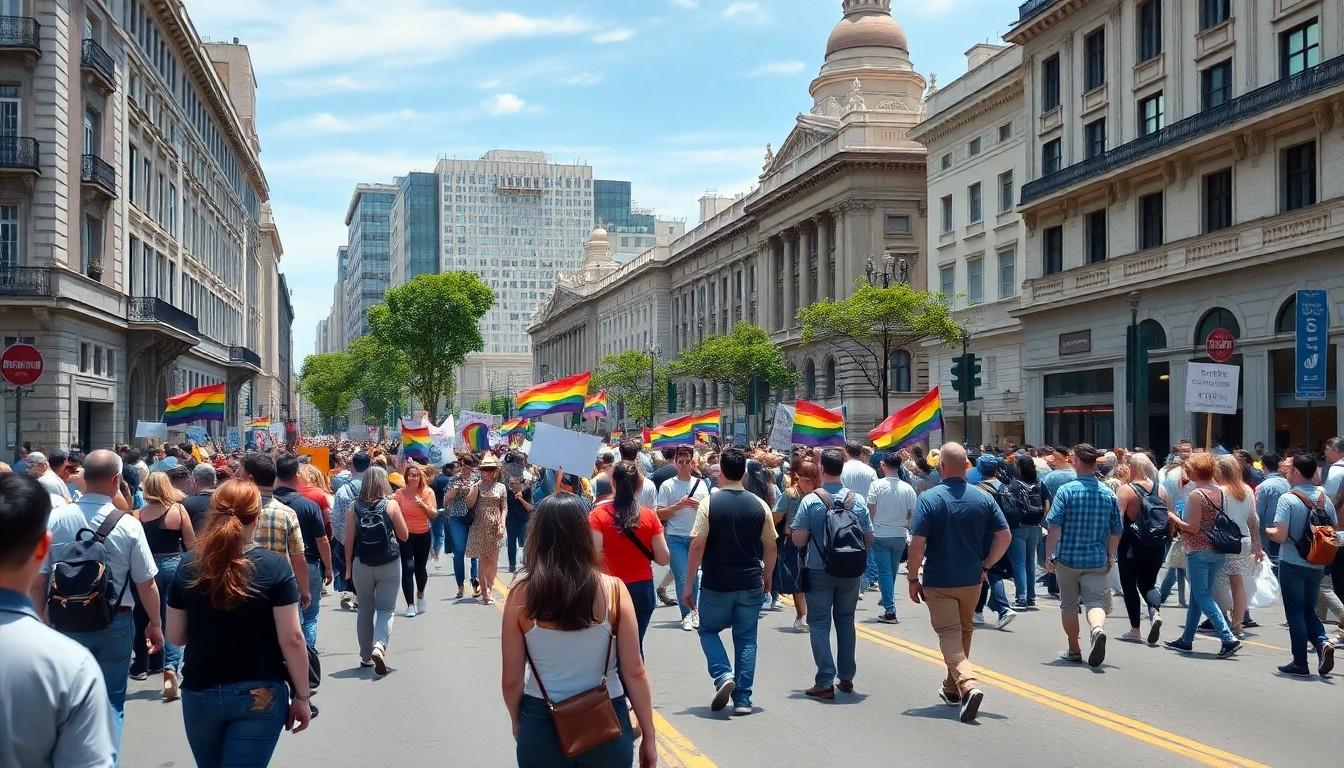
Buenos Aires is preparing for its 35th Pride March on Saturday 7 November, with the rally shaped by outrage over an attack on trans women in Palermo. More than 70 organisations are calling people into the streets to demand accountability, while a free programme of performances and events will bring the city together.
Pride takes to the streets amid calls for justice
The attack on trans women sex workers in the Bosques de Palermo has given this year’s Buenos Aires Pride March a sharper edge. Organisers have condemned the violence and called for those responsible to be identified, as videos of the incident circulated online. La Nación and Infobae reported on the assault and the investigation that followed.
The march’s call to action, “When hate advances, pride in the streets is resistance”, sets out the mood: this is both a celebration and a public show of solidarity. More than 70 organisations are involved in the organising committee, according to Página/12.
When and where is the 2026 Pride March?
The day’s programme is due to start at 10am, with a stage at the junction of Avenida 9 de Julio and Avenida de Mayo. Plaza de los Dos Congresos will also host a fair featuring small businesses, community groups and independent projects, C5N reported.
The main march is scheduled to set off from Congress at 4pm and head towards Plaza de Mayo. Organisers will read the event’s official statement there, followed by a free festival, according to C5N.
The date was confirmed after discussions between the organising groups and the Buenos Aires city government. A possible clash with Pope Leo XIV’s planned visit on Sunday 8 November had prompted discussion about when to hold the march, Río Negro reported.
What’s on the Pride March line-up?
María Becerra is set to headline the closing performances in Plaza de Mayo, with La Joaqui, Six Sex, K4OS, Roze and Tita Print also on the bill. The programme includes 18 artistic projects in total, according to Vía País.
The wider line-up features performers including Alan Fabulous, Fabián Jara, Aimel, Aquafinna, Juana Ruda and Missy Copper, as well as streamer and comedian Martín Cirio. DJs and artists selected through the “Tocá en la Marcha” initiative will add electronic, pop and urban music sets, Vía País reported.
The demands behind this year’s march
Alongside calls for justice over the Palermo attack, organisers are highlighting proposals for a comprehensive trans law, stronger anti-discrimination legislation and historic reparations for older travestis and trans people. These demands give the march a policy focus as well as its festival atmosphere, Página/12 reported.
The incident in Palermo is under investigation by the Northern Flagrancy Unit of the Buenos Aires City Public Prosecutor’s Office, according to Infobae. Organisers have urged authorities to move quickly, while coverage by La Nación has examined the people involved and the course of the inquiry.
For anyone planning to attend, the useful detail is simple: daytime activities begin at 10am, while the main procession starts at 4pm. Arriving early gives you time to explore the fair before the march heads towards Plaza de Mayo, C5N reported.
A day of celebration, solidarity and public demands
Pride marches are joyful by nature, but this year’s gathering also carries a clear message about safety, equality and accountability. Bringing the march and the Palermo attack into the same public conversation makes the day feel especially significant, Río Negro and Página/12 reported.
The free festival and broad line-up offer plenty to draw people in; the community’s demands explain why the march matters beyond the music. For many, showing up is part of the point, Vía País reported.
Buenos Aires Pride 2026 promises a full day in the streets, with celebration and solidarity side by side.
Source Reference Map
Story idea inspired by: [1]
Sources by paragraph: