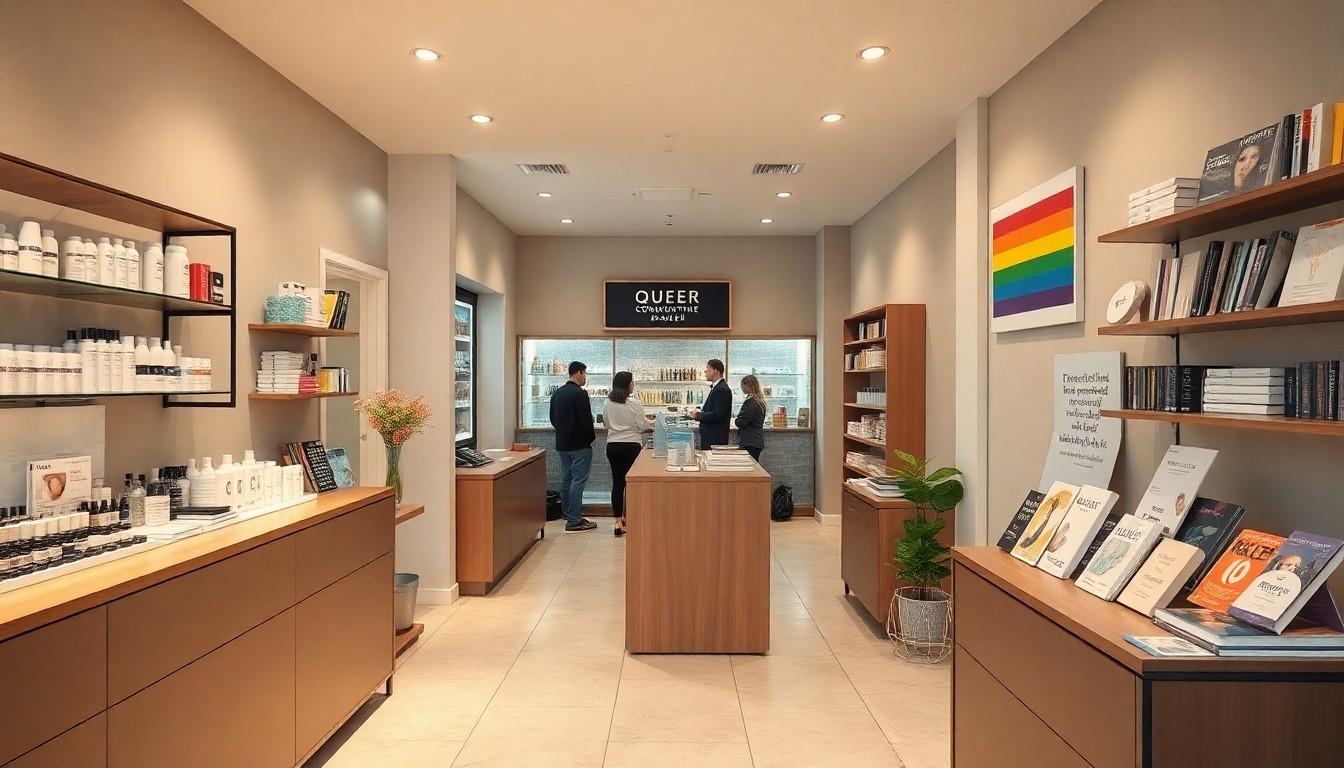
Beauty brands are marking Pride with more than rainbow packaging, from MAC’s fundraising lipsticks to Deciem’s community donations and Aesop’s queer book collection. The initiatives arrive in a season rooted in LGBTQ+ history and culture, and offer a useful way to look beyond the campaign visuals: who’s involved, what’s being given back and how support reaches the community.
Pride beauty campaigns put action in focus
A striking lipstick can catch the eye, but what a Pride campaign gives back matters more. MAC’s VIVA GLAM collection features three limited-edition lip shades, with 100 per cent of the selling price going to support its causes. The brand has also pledged $300,000 to Chappell Roan’s Midwest Princess Project and partner trans-led charities. (MAC Cosmetics)
That focus on giving is especially relevant in an industry shaped by queer creatives, artists and communities. Pride Month has been observed in June in remembrance of the Stonewall uprising and as a celebration of LGBTQ+ lives and rights. (Library of Congress)
MAC’s VIVA GLAM puts its proceeds to work
MAC has made fundraising central to VIVA GLAM, rather than treating it as a seasonal flourish. The brand says the initiative supports organisations working towards healthy futures and equal rights for all. (MAC Cosmetics)
For shoppers, the practical detail is simple: check how a product contributes before buying. Here, MAC says the full selling price of the limited-edition lip shades goes towards the campaign, making the offer clearer than a vague promise to “support” a cause. (MAC Cosmetics)
Deciem pairs storytelling with donations
Deciem, the company behind The Ordinary, NIOD and Loopha, has paired a queer storytelling campaign with ongoing support for 2SLGBTQIA+ organisations. The company reports that its donations to such organisations worldwide have totalled more than $2.7 million Canadian dollars since 2024. (Deciem)
The mix of storytelling and funding feels more meaningful than a polished campaign alone. It also gives shoppers two things to look for when comparing Pride beauty initiatives: whose experiences are represented, and whether the brand identifies a tangible contribution. (Deciem)
Oribe celebrates queer artists and community figures
Oribe’s Pride campaign turns the spotlight towards New York community leaders and artists, including Amanda Lepore, Ceyenne Doroshow, Maya Margarita and Ananina. The haircare brand presents the campaign as a celebration of LGBTQ+ voices and identity. (Oribe)
Representation matters in beauty, where makeup and hair can be tools for play, self-expression and confidence. That’s particularly clear in the work of queer makeup artists and performers, whose influence has helped shape the industry’s visual language. (BeautyMatter; Oribe)
Aesop’s Queer Library offers a quieter kind of celebration
Aesop’s Queer Library takes a different route from a limited-edition product drop. Its Soho store takeover invites visitors to choose a complimentary book by one of 33 LGBTQIA+ authors, turning a shop visit into a chance to discover new writing. (Broadsheet)
It’s a thoughtful reminder that Pride support doesn’t have to arrive in a bottle or lipstick case. A book can open up space for curiosity, recognition and conversation, which is its own kind of welcome. (Broadsheet)
What to look for in a Pride beauty launch
Before buying, check whether the brand names its partner organisations, explains how much money is being donated and makes clear when the initiative runs. Those details help distinguish a specific commitment from a seasonal design or slogan. (MAC Cosmetics; Deciem)
It’s also worth noticing who appears in the campaign and whether their stories are treated with care. No single product can sum up a community, but clear contributions and meaningful representation make a more convincing start. (Oribe; BeautyMatter)
A good Pride beauty campaign should leave more behind than a bright new shade.
Source Reference Map
Story idea inspired by: [1]
Sources by paragraph: