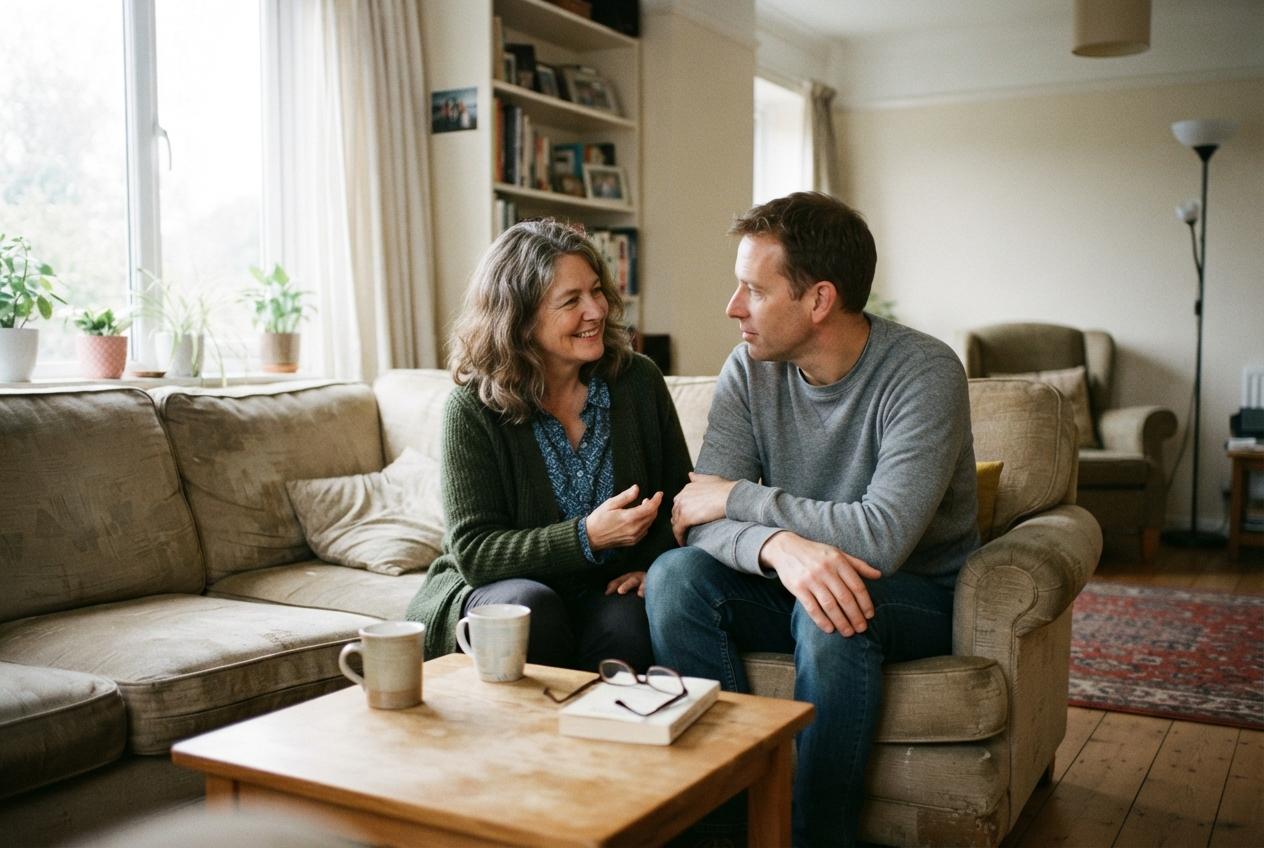
Stories from a documentary about gay men and their mothers show how acceptance can shape a son’s sense of belonging and help open difficult conversations. The film, Mom, I Have Something to Tell You, brings these relationships into view through interviews and audience responses, offering families a chance to reflect on what support can mean in practice.
Essential Takeaways
- Acceptance can matter deeply: Research on family support and LGBTQ+ young people links acceptance with better wellbeing.
- The film centres lived experience: It brings gay men and their mothers together to discuss their relationships, often revealing feelings that have gone unspoken.
- Support takes many forms: Listening, defending a child and affirming who they are can all help create a sense of safety.
- Community can help parents, too: Mama Dragons offers connection and resources for mothers of LGBTQ+ children.
- There’s no single coming-out script: Families can make room for honest conversation without demanding that it happen on anyone else’s timetable.
A documentary makes room for long-overdue conversations
A room full of people laughing, crying and murmuring is an unusual response to a film screening, but it captures what can happen when family stories strike a nerve. In Mom, I Have Something to Tell You, filmmaker and clinician Michelle-Maria focuses on gay men and their mothers, inviting both to speak about love, identity and the moments that shape their relationship.
The film grew out of years of interviews and clinical work. Its premise is simple but affecting: when sons tell their mothers what their support has meant, both can see the relationship in a new light. The result is less a neat lesson than a series of intimate conversations that may prompt viewers to revisit their own family histories.
Psychology Today’s account of the project says the documentary has attracted tens of thousands of YouTube views and a stream of personal responses. That kind of reaction suggests people aren’t only watching someone else’s story; they’re recognising their own.
Why a mother’s support can make a difference
For a child facing rejection, bullying or pressure to hide who they are, feeling accepted at home can be a powerful counterweight. Research on family acceptance and rejection among LGBTQ+ young people has examined the links between those experiences and wellbeing, underlining why supportive relationships deserve attention.
The clinician behind the film says many of the gay men she interviewed credited their mothers with helping them feel valued and find their voice. Some mothers defended their sons in the face of family or community disapproval; others made acceptance clear through everyday acts. Those gestures may look small from the outside, but they can tell a child: you belong here.
Support doesn’t have to arrive as a perfect speech. A parent can start by listening, asking what their child needs and showing that affection isn’t conditional. And if a conversation feels daunting, there’s no need to force it into one dramatic moment.
Parents can find support and community, too
Acceptance can involve a learning curve, especially when a parent is balancing love for a child with expectations from a religious or social community. Mama Dragons, a group for mothers of LGBTQ+ children with roots in the Latter-day Saint community, offers connection for women navigating that tension.
That community aspect matters. Parents may need space to ask questions, work through complicated feelings and hear from people who’ve faced similar challenges. Finding support for themselves doesn’t take anything away from a child; it can help parents show up with greater understanding.
The film also highlights mothers whose advocacy has reached beyond their own families. Among the people featured in the wider project is Judy Shepard, who helped establish the Matthew Shepard Foundation after her son Matthew was murdered. Her work is a reminder that family love can become a public commitment to protecting others.
Small, steady conversations can open doors
One story in the documentary project involves a man who had assumed his mother already knew he was gay. He’d avoided raising the subject for years, worried that naming it might change their relationship. Watching the film gave him the courage to speak with her directly after two decades of silence.
There’s no guarantee every conversation will unfold as hoped, and not everyone has a safe family situation. But for those who want to talk, a gentle opening can help: ask whether it’s a good time, share only what feels comfortable and make clear that the relationship matters regardless of the response.
Parents can take a similar approach by making acceptance visible before a child has to ask for it. A kind comment, an open question or a willingness to learn can all help. Sometimes the most reassuring message is also the simplest: “You can talk to me when you’re ready.”
The value of being seen
Stories like these can make a private family relationship feel less isolated. The Cornell research resource on LGBTQ+ youth acceptance and rejection brings together scholarship on the subject, while the documentary gives audiences something more immediate: people describing what support felt like in their own lives.
That combination of evidence and personal experience is useful because families aren’t abstract categories. They’re made up of specific people, histories and conversations, some tender and some difficult. Listening to others can offer a starting point, but each family still gets to find its own words.
And for mothers who’ve quietly stood by their sons, recognition matters. Their support may not have looked dramatic at the time, yet it can become one of the memories a child carries forward.
Make space for the conversation, and let it happen at a pace that feels safe.
Source Reference Map
Story idea inspired by: [1]
Sources by paragraph: