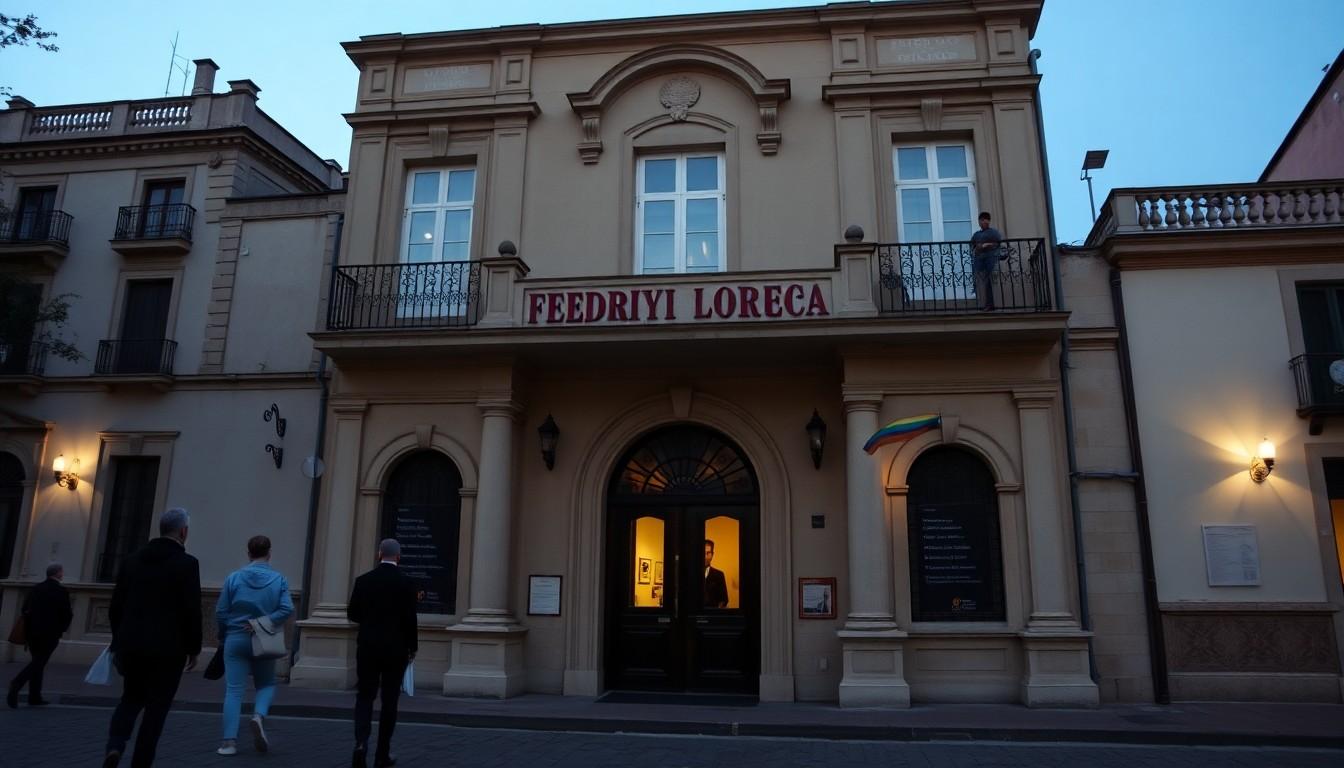
Audiences in Spain are finding new ways into Federico García Lorca’s poetry and plays, from a hit film to drag tributes and renewed interest in his biography. The renewed attention matters because Lorca’s sexuality was long kept out of public discussion, while his work still speaks to people who have felt pushed to the margins.
Lorca’s work is finding a new audience
A drag cabaret, a bestselling play and tearful cinema-goers might seem an unlikely route back to a 20th-century poet. But they’re helping bring Lorca’s writing to a new generation, with art that feels intimate, vivid and defiantly alive.
The Spanish film La Bola Negra has helped spark that interest. Inspired by Lorca’s life and work, it draws on his unfinished play of the same name, which centred on a gay protagonist. The film’s release has also helped renew attention on Lorca’s work and the stories that were left untold. (2, 3, 6)
Why was Lorca’s sexuality kept quiet?
Born near Granada in 1898, Lorca became one of Spain’s most celebrated writers. He was never openly gay, and discussion of his sexuality was suppressed for decades, shaped by the violence of the Franco era and the reluctance of literary circles to challenge the silence. (2, 4, 7)
That omission mattered. Biographer Ian Gibson put Lorca’s sexuality at the centre of his work in a book published in 1985, challenging a culture in which, as he later recalled, raising the subject could close doors. The history is a reminder that an archive can preserve a writer’s work while still leaving out part of the person. (2, 4, 7)
The film connects private stories to public history
La Bola Negra moves across three timelines and links Lorca’s life and writing to later experiences of queer identity and inherited silence. Its story includes his relationship with Rafael Rodríguez Rapún, while the wider film explores what happens when people are denied the freedom to tell their own stories. (2, 3, 6)
The movie has also helped bring Lorca-related books and theatre back into the conversation. That renewed interest isn’t only about filling in biographical details; it gives viewers and readers another way to understand the emotional stakes in his work. (2, 3, 7)
Spain’s changing rights landscape gives Lorca fresh meaning
Spain has become a leader on LGBTQ+ rights, including legalising same-sex marriage in 2005. But progress doesn’t make the past disappear, and renewed debate over queer visibility has given Lorca’s story a sharper present-day edge. (2, 5, 7)
His public image has also become part of political discussion. For many people, celebrating Lorca as a queer icon is a way to recognise both his artistry and the experiences that were pushed into silence. It’s a powerful combination, even if no single label can contain a writer as complex as Lorca. (2, 7)
How to explore Lorca beyond the headlines
Start with the work itself: The House of Bernarda Alba offers a compelling entry point, while Lorca’s poetry reveals a more intimate register. Then consider a biography or adaptation alongside the original writing, rather than treating one film as the whole story. (2, 4, 7)
For a fuller picture, look for editions and criticism that address his sexuality as part of his life and art. The point isn’t to reduce every poem to a single reading; it’s to make room for the context that earlier generations often left out. (2, 4, 7)
Lorca’s legacy keeps growing when readers make space for the stories once left untold.
Source Reference Map
Story idea inspired by: [1]
Sources by paragraph: