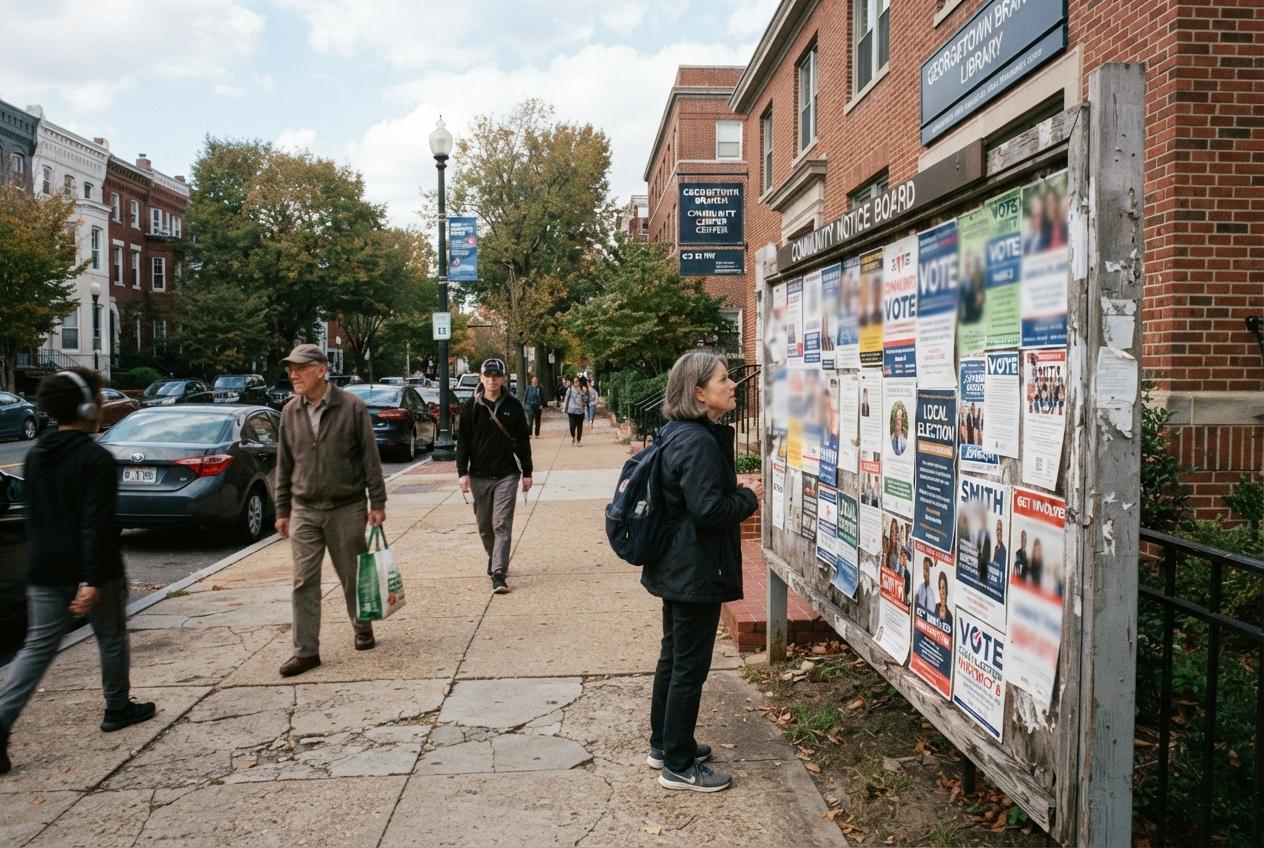
Voters in Washington, DC, face a ballot packed with races that could shape the city's LGBTQ protections, neighbourhood services and relationship with the federal government. With local candidates promising support for LGBTQ residents and home rule under political scrutiny, here's what to watch as the election approaches.
LGBTQ rights are part of a much wider ballot
This is more than a mayoral contest. DC voters will also choose council members, the city's non-voting delegate to Congress, local school board members and representatives for neighbourhood Advisory Neighborhood Commissions.
Democratic mayoral nominee Janeese Lewis George is considered the favourite and has received Capital Stonewall Democrats' endorsement and the highest rating from GLAA DC. She says her record includes backing gender-affirming care, LGBTQ relationships and access to HIV/AIDS-related healthcare. Meanwhile, President Donald Trump has threatened DC's home-rule status, prompting concern among some activists about possible consequences for local protections.
Home rule is the big question behind the campaign
The dispute matters because DC's local autonomy and its human rights law sit close to the heart of the city's political debate. The law prohibits discrimination based on sexual orientation and gender identity, and LGBTQ advocates have voiced concern that federal intervention could put protections at risk.
There are, however, differing views on how likely such a move is. Some observers doubt Congress would revoke home rule, particularly if Democrats make gains in the midterm elections. For voters, the issue is a reminder that local elections can carry consequences well beyond city hall.
Council races could bring new LGBTQ voices
Several council contests feature candidates who have expressed support for LGBTQ rights. In Ward 1, bisexual Democratic nominee Aparna Raj is considered the favourite to succeed Brianne Nadeau, while Ward 5 incumbent Zachary Parker is seeking re-election with endorsements from LGBTQ political advocates.
The at-large contest is notable for another reason: one of the two seats must go to a candidate who isn't a member of the majority party. Democrat Oye Owolewa and independent incumbent Elissa Silverman have both expressed support for LGBTQ issues, while voters will also choose a new DC delegate, with council member Robert White among the leading contenders.
Ratings and endorsements offer clues, not guarantees
GLAA DC and Capital Stonewall Democrats have published ratings and endorsements for some candidates, giving voters a quick way to compare stated positions. But the picture isn't complete: some candidates didn't return GLAA's questionnaire, while endorsements in several races were withheld because no contender reached the group's required 60 per cent threshold.
So it's worth treating these guides as a starting point rather than a full verdict. Check each candidate's own platform, especially in races where no rating or endorsement is available.
Neighbourhood elections add a grassroots layer
At least 45 known LGBTQ candidates are running for Advisory Neighborhood Commission seats across the city. These unpaid commissioners deal with practical local matters such as parking, traffic, street improvements, zoning and liquor licences, making the positions a direct route into neighbourhood decision-making.
That scale is striking: DC's 46 commissions cover 345 single-member districts. For residents, a local candidate can sometimes feel closer to everyday life than a high-profile citywide campaign, whether the issue is a busy junction or a new development nearby.
A busy ballot calls for a little homework
Before voting, compare candidate statements with the endorsements and ratings available, and pay attention to the specific office. A school board candidate, a council member and a neighbourhood commissioner influence very different parts of civic life.
The wider question is whether DC's next elected team can defend local rights while dealing with pressure from Washington's federal power. That's a high-stakes backdrop for even the most down-to-earth neighbourhood race.
A little ballot research can help make every vote count, from mayor to neighbourhood commissioner.
Source Reference Map
Story idea inspired by: [1]
Sources by paragraph: