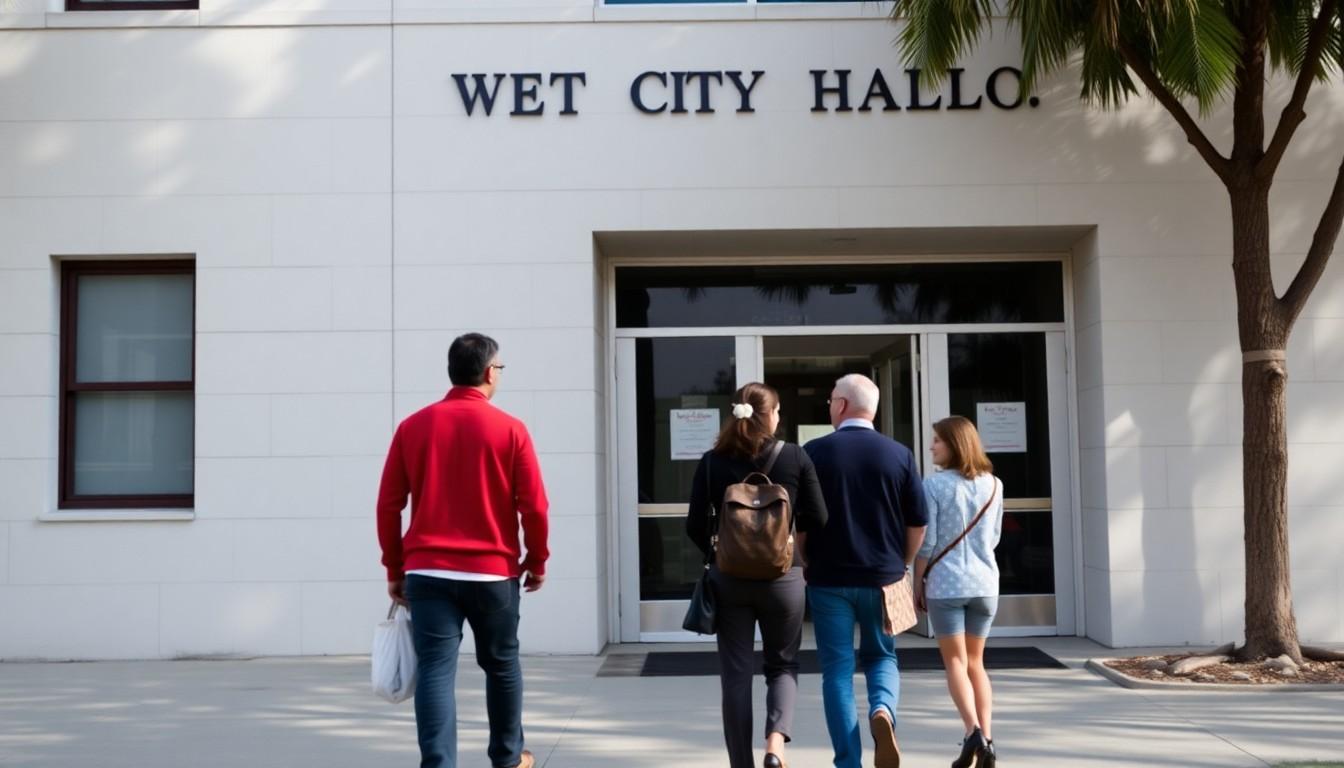
West Hollywood has approved a dedicated registry for people in polyamorous relationships, marking a notable step in how local government recognises families. The unanimous council vote creates a route to register multi-partner households and access certain local protections, including in rent-stabilised housing and hospital visits. It’s a practical change, as well as a symbolic one.
A unanimous vote brings local recognition
The West Hollywood City Council voted 5 to 0 to establish the registry, making the California city the first in the United States to create a dedicated process for recognising polyamorous relationships, according to the city’s council materials and local reporting. For households that include more than two partners, formal recognition could matter in situations where local rules and everyday life meet. [4] [3]
The change is a local measure, not a sweeping rewrite of family law. Its protections include rights connected with rent-stabilised housing and hospital visitation, offering multi-partner families a clearer foothold in those settings. [3] [4]
How the registry came about
Christina Fialho, founder and president of Rewrite the BiLine, brought the initiative to the city in March 2025. Mayor John Heilman introduced the legislation, framing it around the reality of households where three partners may be raising children together. [2] [5]
The registry builds on earlier West Hollywood legislation against discrimination based on family or relationship structure, championed by Councilmember Chelsea Lee Byers. That context matters: the new measure didn’t appear in isolation, but follows a wider local effort to make room for families that don’t fit the traditional two-parent template. [2] [7]
What the new recognition can, and can’t, do
For people in non-monogamous relationships, registration can provide recognition in specific local situations. It doesn’t, by itself, mean that every state or federal rule now treats multi-partner relationships like marriage, so the distinction between local protections and broader legal status remains important. [3] [4]
That may sound like a small-print distinction, but it’s the one that shapes what the registry can actually deliver. A city can make local services and rules more responsive; wider legal reform would require action beyond city hall. [2] [4]
A local step with a longer history
Fialho welcomed the decision as a practical example of equality in action, while noting that comprehensive reform would need to happen at state level. Brett Chamberlin, executive director of OPEN, also praised the move, arguing that families have often been broader than the law recognises. [2]
West Hollywood has form here. In 1985, it became the first US city to introduce a domestic partnership registry for same-sex couples, a reminder that local policy can sometimes test ideas before they travel further. Whether this registry has a similar ripple effect remains to be seen, but the city has once again made its position clear. [2] [7]
What the decision says about changing families
Non-monogamy isn’t a fringe talking point: a 2019 study cited by CBS estimated that around 5 per cent of people in the US were in non-monogamous relationships. That figure offers context for why local recognition may matter to more households than some might expect. [6]
For residents, the practical next step is to check the city’s official guidance on registration and eligibility, particularly before relying on the measure in a housing or hospital situation. A registry can make a difference, but knowing exactly where its protections apply is just as useful as having them. [4] [7]
It's a local change with a clear message: families deserve to be seen in the places where policy affects daily life.
Source Reference Map
Story idea inspired by: [1]
Sources by paragraph: