School board candidates in Santa Cruz County are bringing LGBTQ+ issues into election debates, alongside questions about curriculum, parental choice and student wellbeing. Here’s what voters need to know about the positions emerging in three local races, and how state law shapes the discussion.
LGBTQ+ questions are shaping local school board campaigns
In three Santa Cruz County school board races, candidates are debating how schools should approach LGBTQ+ inclusion, what parents should be told and where the line falls between education and family choice. The discussions touch on curriculum, support for students and access to school facilities, making them more than abstract campaign talking points.
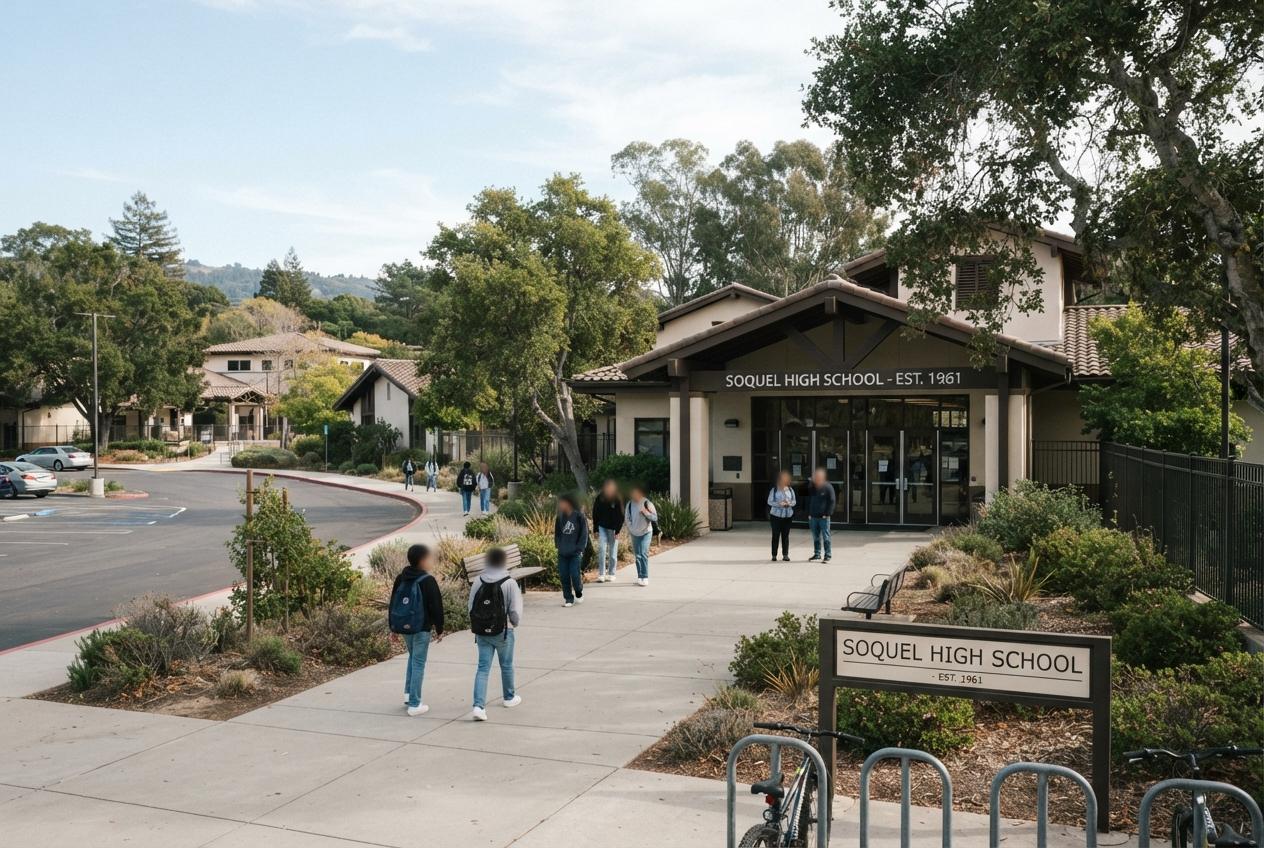
The issues are surfacing in campaigns for San Lorenzo Valley Unified, Pajaro Valley Unified and Soquel Union Elementary school districts. Local candidates’ views differ, while district policies and state law set boundaries that school boards can’t simply disregard. [2], [3], [4], [6], [7]
In San Lorenzo Valley, candidates disagree on inclusion
Ashleigh Hopkins, a candidate for San Lorenzo Valley Unified’s board, says she supports her transgender child, but believes the school environment may have influenced the child’s identity. She says rainbow flags and student support groups contributed to her decision to homeschool, and argues that parents should know when they can opt their children out of LGBTQ+ topics.
Hopkins also says the district should prioritise core academics and college preparation. However, Superintendent Christopher Schiermeyer has disputed some of her claims: he says the district doesn’t have a state-mandated LGBTQ+ studies course, and that the gender-neutral bathroom arrangement at the high school complies with state law. He has also said students have access to Advanced Placement classes and college-credit courses. [2], [3], [5], [6]
Incumbent Gail Levine, who has held her seat for a decade, has a different record on LGBTQ+ inclusion. She helped students establish Santa Cruz High School’s first LGBTQ+ club in the 1990s and has described providing strong college and career programmes for all students as a priority. [2], [3]
Pajaro Valley candidate raises questions about sports
In the Pajaro Valley Unified race, candidate Robin Sukow says LGBTQ+ issues shouldn’t distract schools from teaching basic subjects. He says schools should protect children from bullying, while arguing that questions of sexuality belong outside the classroom.
Sukow has also called for girls’ sports to exclude transgender students, although California law allows transgender students to participate in school sports in line with their gender identity. That makes the debate a practical question about how local boards operate within state rules, not just a clash of campaign opinions. [2], [4], [6]
Soquel race adds another perspective
Andrea Locke, a candidate in the Soquel Union Elementary School District race, didn’t respond to requests for comment in the reporting. Lookout Santa Cruz has reported that she expressed concern about LGBTQ+ topics being taught to younger pupils.
An endorsement on Locke’s website says she believes parents have an important role in decisions involving their children, while also emphasising age-appropriate policies and children’s wellbeing. Those principles can sound straightforward, but voters may want to look closely at what candidates mean by them in practice. [2], [7]
What voters can check before casting a ballot
For parents and voters, it helps to separate campaign claims from district policy and state requirements. Check the relevant school district’s election information, review candidates’ questionnaires and ask how proposed changes would work for students, families and staff.
It’s also worth asking candidates how they’d balance parental involvement with a safe, welcoming school environment, and how they’d handle state rules on curriculum, facilities and sports. Clear answers matter: school boards oversee local priorities, but they don’t operate in a legal vacuum. [3], [4], [5], [6], [7]
The debate is about more than campaign slogans
These races show how quickly questions of student identity can become tests of trust between families and schools. Whatever a voter’s starting point, the most useful discussion is one grounded in accurate information, thoughtful policy and the day-to-day wellbeing of students. [2], [3], [4], [6], [7]
Look beyond the slogans and compare what each candidate would actually do.
Source Reference Map
Story idea inspired by: [1]
Sources by paragraph: