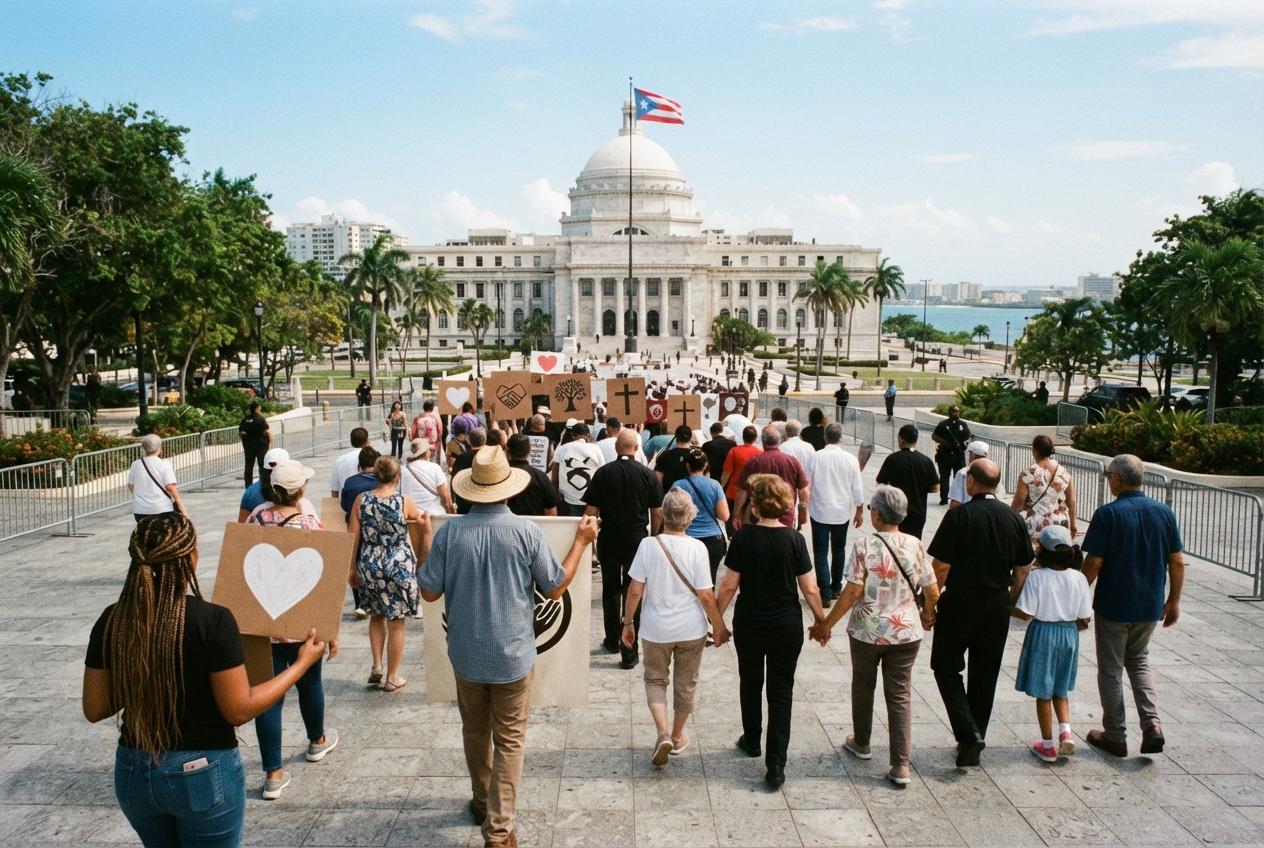
Faith leaders, advocates and transgender community members gathered in San Juan for the 2026 National Trans Visibility March, combining worship, policy discussions and public action. The four-day event offered solidarity amid concerns over healthcare access and legal protections, while making a wider point: being seen matters, but lasting safety and equality take sustained work.
Essential Takeaways
- Four days in San Juan: The gathering ran from 14 to 17 October 2026, bringing together participants from Puerto Rico, the mainland United States, the Caribbean and beyond.
- More than a march: The programme included a policy and wellness summit, faith and policy discussions, interfaith worship and an awards celebration.
- Healthcare was a central concern: Participants discussed access to affirming care, HIV prevention, sexual health services and community education.
- The march called for protections: Demonstrators in San Juan urged greater safeguards, equitable healthcare access and recognition of transgender people’s rights.
- Atlanta is next: The National Trans Visibility March is due to be held in Atlanta in July 2027.
A San Juan gathering made visibility part of the conversation
The National Trans Visibility March brought its message to the streets of San Juan on 17 October, with a march ending at Puerto Rico’s Capitol. The event joined public solidarity with calls for stronger protections and fairer access to healthcare. There was a clear distinction at its heart: visibility can draw attention, but it cannot do the work of policy or support on its own. (Washington Blade)
The march was the final day of a four-day gathering, held from 14 to 17 October. Organisers describe the event as a space for visibility and collective action, while coverage by the Washington Blade reported on the San Juan march itself. (National Trans Visibility March; Washington Blade)
The programme linked policy, health and everyday wellbeing
Before the march, a policy, safety and wellness summit brought advocates, organisational leaders and public health professionals together to discuss issues facing transgender and gender-expansive communities. Topics included healthcare access, personal safety and legal protections, alongside HIV prevention and sexual health. (United Church of Christ; Gaye Magazine)
That mix matters. Healthcare access isn't only about whether a service exists; it also depends on whether people can reach it and feel respected when they do. The programme's focus on prevention, education and affirming care connected public health to the practical conditions people face in daily life. (United Church of Christ)
Faith leaders offered a public welcome
Faith was woven into the gathering through a global faith and policy roundtable and an interfaith worship service. The United Church of Christ supported both, framing its participation as part of a broader commitment to dignity and justice. (United Church of Christ)
The service, held at Iglesia Evangélica Luterana de la Transfiguración, brought together spiritual reflection and community solidarity. That welcome carries particular weight for people who have experienced rejection in religious settings; a service can offer comfort, but sustained support also means showing up beyond the sanctuary. (United Church of Christ)
Puerto Rico gave the march added urgency
The location brought local concerns into sharper focus. The gathering took place amid debate over restrictions affecting gender-affirming healthcare in Puerto Rico; the Associated Press has reported on a ban involving hormone therapy and surgery for transgender people. (Associated Press)
That context helps explain why the march's route to the Capitol mattered. Demonstrating outside a seat of government made the call for protection visible in a place where laws and policy decisions shape people's access to care and safety. (Washington Blade; Associated Press)
What comes next for the movement?
The National Trans Visibility March began in Washington, DC, in 2019 and has grown to connect public advocacy with community organising and wellness. Its stated mission centres on bringing people together around transgender visibility and action. (National Trans Visibility March; National Trans Visibility March mission)
The United Church of Christ's account of the Puerto Rico gathering also highlights the importance of sustained resources for transgender-led organisations working in areas such as health, housing, education and advocacy. The next march is planned for Atlanta in July 2027, giving supporters another opportunity to turn solidarity into practical, ongoing commitment. (United Church of Christ; National Trans Visibility March)
Visibility can start a conversation. Justice is what gives it somewhere to go.
Source Reference Map
Story idea inspired by: [1]
Sources by paragraph: