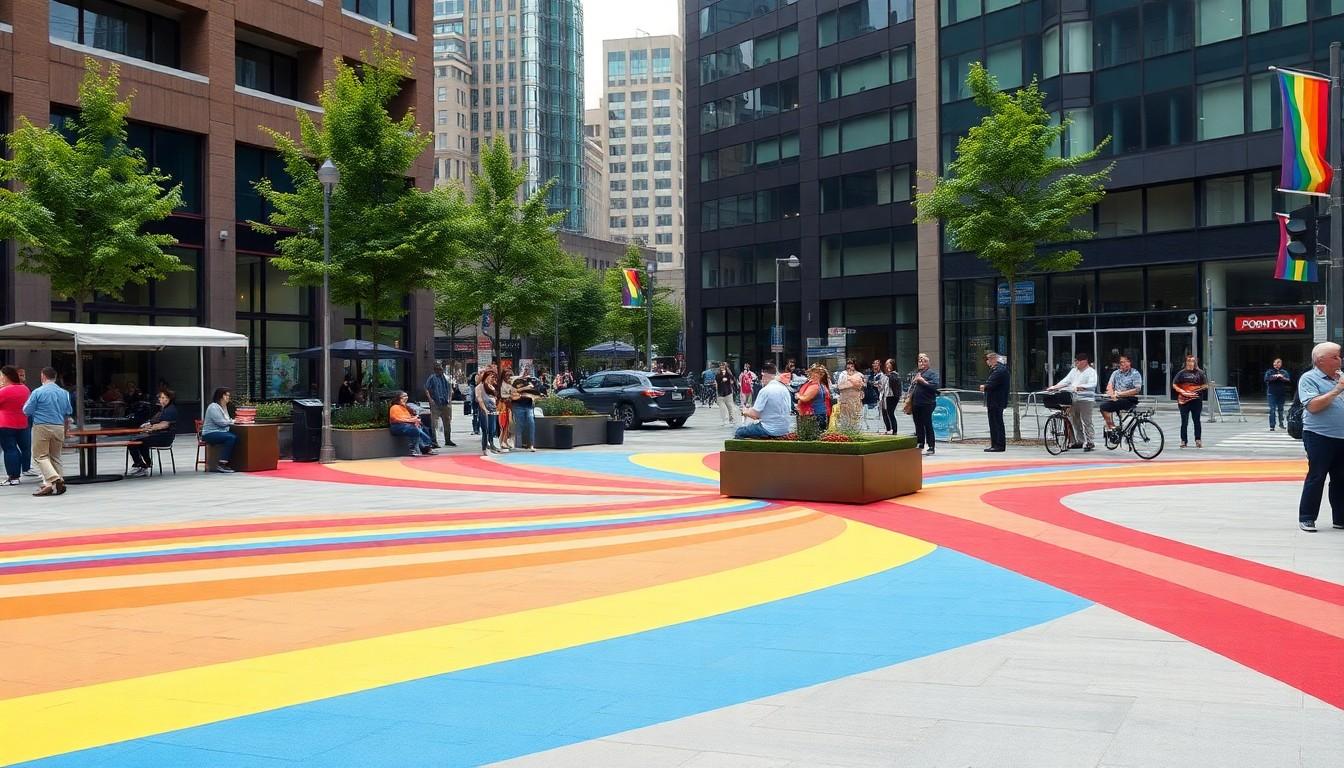
Portland’s Pride Plaza has reopened with a vibrant redesign that makes room for gathering, performance and everyday city life. At the downtown celebration, drag queens, musicians and neighbours marked the return of a much-loved public space, while the new layout reflects the area’s LGBTQ+ history and leaves space for its future.
Essential takeaways
- A community celebration: The reopening brought together local residents, performers and U.S. Senator Ron Wyden.
- A first for Portland: The redesign is the first project to put the city’s Street Plaza Design Toolkit into practice.
- A Pride-inspired ribbon: Colourful paving and patterns organise the plaza into social areas and provide a visual nod to the Pride flag.
- Made for access and activity: The plan includes accessible crossings, playful furnishings and a bike hub.
- Room to evolve: The design allows for future artwork, performances and other community activities.
Pride Plaza returns with colour and a crowd
The strongest impression at Pride Plaza is its confident burst of colour. A patterned ribbon, inspired by the Pride flag, winds through the downtown space, giving the plaza a lively feel while helping organise places to sit, meet and gather.
The reopening celebration brought the design’s purpose to life. Drag performers and musicians took the stage as neighbours came together, with U.S. Senator Ron Wyden also sharing remarks. It was more than a ribbon-cutting: the event connected a renewed public space with the community whose history it honours.
A street plaza shaped around people
Mayer/Reed led the redesign, drawing on community feedback to explore what Pride should look and feel like in Portland. The answer wasn’t a fixed monument, but a flexible setting for everyday encounters and public events.
The scheme is also the first implementation of Portland’s Street Plaza Design Toolkit, developed to help turn streets into welcoming places to spend time. That practical ambition matters: a plaza needs to work on an ordinary afternoon as well as during a celebration.
What the Pride ribbon adds to the layout
Rather than follow the street’s existing straight lines, the design introduces a more fluid pattern. That visual shift breaks up the space and helps define social zones, with playful furnishings adding a more relaxed, human scale.
The layout also includes accessible crossings and a bike hub, so the plaza can serve people moving through the area as well as those stopping to meet. It’s a useful reminder that good public space isn’t only about how it looks; the details of access and movement shape who can use it comfortably.
A public space designed to keep changing
Pride Plaza is rooted in Portland’s LGBTQ+ history, but the new design also looks ahead. Space for future layers of art, performance and community activity means the plaza can change with the people who use it, rather than feeling finished on opening day.
Portland’s public street plaza programme provides a wider framework for creating these places, while the city’s project information covers Pride Plaza and the nearby Darcelle XV plaza. The result is a design that balances a clear identity with room for local life to unfold.
Why the reopening matters beyond one celebration
Public spaces can make a city’s values visible in everyday life. Here, colour, access and flexible gathering areas work together to recognise LGBTQ+ history while inviting new stories and events.
And that may be the most appealing part: the plaza isn’t just a backdrop for special occasions. It’s a place built to welcome people on ordinary days, too.
Pride Plaza’s new chapter is already written in colour, but the community gets to keep adding to it.
Source Reference Map
Story idea inspired by: [1]
Sources by paragraph: