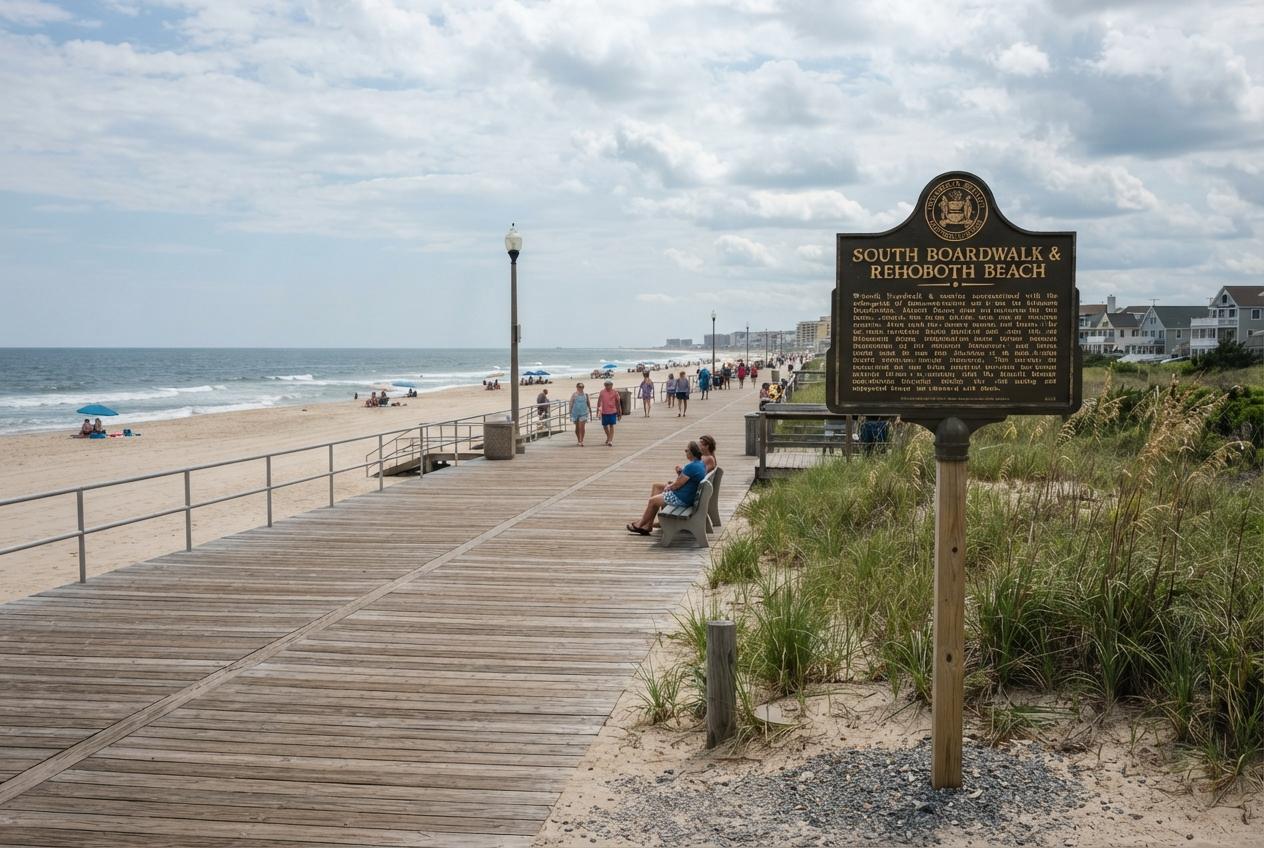
A new historical marker at Poodle Beach in Rehoboth Beach, Delaware, recognises generations of LGBTQ+ visitors who made the shoreline a place to meet, relax and find community. Unveiled in October 2026, it also points to an earlier chapter shaped by Louisa d’Andelot Carpenter, whose gatherings offered queer friends a welcome refuge decades before the beach became a well-known destination.
Essential Takeaways
- A public recognition: Delaware unveiled a state historical marker at Prospect Street and the South Boardwalk in Rehoboth Beach.
- An earlier gathering place: Louisa d’Andelot Carpenter welcomed queer friends to her family’s beachfront home from the 1930s.
- A beach with a later name: The section known as Poodle Beach became popular with LGBTQ+ visitors in the late 1970s.
- A lively tradition: The marker also recognises the Labor Day Drag Volleyball Game, held from 1988 to 2019 and drawing thousands.
Poodle Beach’s story is now part of the landscape
The marker gives a well-loved stretch of sand something more permanent than a summer memory. Unveiled at Prospect Street and the South Boardwalk, it formally recognises the LGBTQ+ history woven into Rehoboth Beach’s shoreline. The City of Rehoboth Beach listed the ceremony on its calendar, while local coverage reported the gathering of state and city officials.
For people who have returned year after year, the recognition may feel less like a discovery than a long-overdue acknowledgement. Beaches can be social landmarks as much as scenic ones: the familiar faces, the easy conversation and the relief of feeling at home all matter. Now visitors can read a little of that history right where it unfolded.
Louisa Carpenter’s gatherings began decades earlier
The story reaches back well before Poodle Beach became a name known to visitors. Delaware’s Division of Historical and Cultural Affairs says Louisa d’Andelot Carpenter, a du Pont descendant, hosted queer friends at her family’s beachfront home from the 1930s. At a time when many people could not live openly, a private gathering among friends offered precious breathing space.
The state’s account also records Carpenter’s long relationship with Broadway singer Libby Holman, linking the Delaware shore to a wider theatrical world. Later, the beach near Carpenter’s home drew more queer visitors, helped by its relative distance from the busiest parts of town. A welcoming home and a quieter patch of sand became part of a longer community story.
From a quieter shoreline to Poodle Beach
The marker distinguishes Carpenter’s earlier gathering place from the beach section that gained popularity in the late 1970s and became known as Poodle Beach. That distinction matters: the history wasn’t made in one moment, but built over time by people who kept returning, bringing friends and making the shoreline their own. The Washington Blade’s coverage of the marker traces both chapters.
Even the name has a little mystery about it. Its origin remains uncertain, which feels fitting for a place whose character was shaped less by official plans than by the people who showed up. The result was a recognisable meeting place, with a social life all its own.
Drag volleyball brought its own beach-day spectacle
The marker also honours Rehoboth’s Labor Day Drag Volleyball Game, a tradition that ran from 1988 to 2019. The Washington Blade reported that it attracted thousands, while its account of the event’s end documented the tradition’s final chapter. For many visitors, a beach day was clearly about more than sun and salt air.
There’s a lovely sense of local theatre in the idea: a volleyball game that became a regular date on the calendar, complete with drag and a crowd. It’s a reminder that LGBTQ+ history is made through ordinary pleasures, too: spending time together, making a spectacle and returning the next year.
A community-led marker preserves more than a view
Delaware’s historical marker programme is community-led, Metro Weekly reported, with residents and organisations able to apply to recognise significant places. The City of Rehoboth Beach identifies Frank Cooper as the applicant behind the Poodle Beach marker. That process suits a place whose importance grew through the people who kept choosing it.
For visitors, the marker offers a useful pause between the boardwalk and the water. Take a moment to read it, then look out at the beach with its layered history in mind. For anyone who once searched for a place to feel comfortable, that history may land especially close to home.
Poodle Beach is more than a seaside landmark; it’s a community story now set into the landscape.
Source Reference Map
Story idea inspired by: [1]
Sources by paragraph: