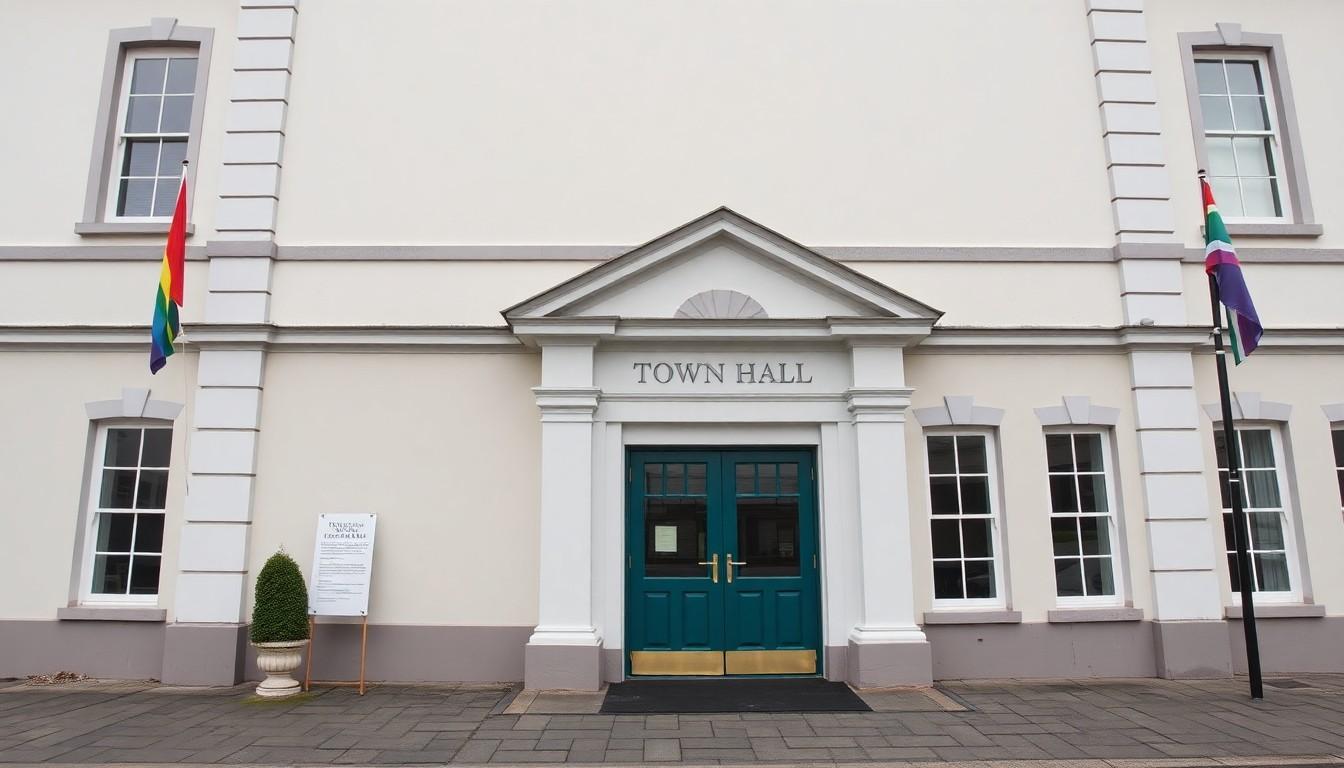
A proposed Mark Ashton plaque in Portrush Town Hall is now the focus of a public consultation, with residents and others invited to comment on its equality and good relations impact. Ashton grew up in the County Antrim seaside town before becoming a leading queer activist in London. The decision matters because it could bring a powerful story of solidarity and LGBTQ+ history into public view.
A Portrush plaque could honour a remarkable local story
The proposal would place a plaque commemorating Mark Ashton at a suitable location within Portrush Town Hall. Causeway Coast and Glens Borough Council has published a draft Equality Impact Assessment and is asking for feedback on the potential effects of the plan. The consultation is open until January 2027. (Council consultation)
Ashton was born in Oldham but grew up in Portrush. He moved to London at 18, where he became involved in left-wing politics and LGBTQ+ activism. For a young person leaving a coastal town for the capital, that journey became the start of a life spent challenging who gets heard and supported. (GCN; The Guardian)
How LGSM connected queer activists and striking miners
In 1984, Ashton and his friend Mike Jackson helped establish Lesbians and Gays Support the Miners, or LGSM. The group raised money for miners and their families during the year-long miners' strike, creating an alliance between communities that were often treated as unlikely partners. (People's History Museum; Oxford oral history)
LGSM's fundraising included the Pits and Perverts concert, while miners' representatives later joined London's 1985 Pride march. The relationship was more than a one-way donation: it helped build visible support for LGBTQ+ rights among mining communities and their union. (People's History Museum; Oxford oral history)
Why the proposed Mark Ashton memorial matters
Ashton died in 1987, aged 26, from AIDS-related pneumonia. His activism continued to resonate after his death, including through the Mark Ashton Trust, which supported people living with HIV. His story also helped inspire the film Pride, bringing the LGSM alliance to a wider audience. (GCN; The Guardian)
The Portrush proposal would add a local marker to an existing wider remembrance of Ashton, whose legacy has also been honoured in London, Wales and Paris. A plaque can't tell the whole story, of course, but it can give people a reason to stop, ask questions and discover the history behind a name. (GCN)
What the council wants to hear
The council is inviting comments on the draft assessment's findings about equality and good relations. It also wants to hear about impacts that may have been missed, relevant personal experiences, possible adverse effects, and ideas for strengthening the proposal's positive contribution. (Council consultation)
That makes the consultation about more than whether people like the idea. If you have a view, you can read the draft assessment and send feedback through the council's consultation page or by email to the address listed there. Specific, practical comments may help the council understand how the plaque could be meaningful and accessible to the wider community. (Council consultation)
A chance to bring history into public view
Ashton linked queer liberation with working-class solidarity at a time when both faced hostility. The proposed Portrush plaque would recognise that history in the town where his early life began, while giving visitors and residents a tangible prompt to learn more. (People's History Museum; GCN)
The consultation remains open until January 2027, so there's time to read the assessment and consider what the memorial should represent. Sometimes a small plaque can open a much bigger conversation. (Council consultation)
It's a chance to help shape how Portrush remembers Mark Ashton and the alliances he helped build.
Source Reference Map
Story idea inspired by: [1]
Sources by paragraph: