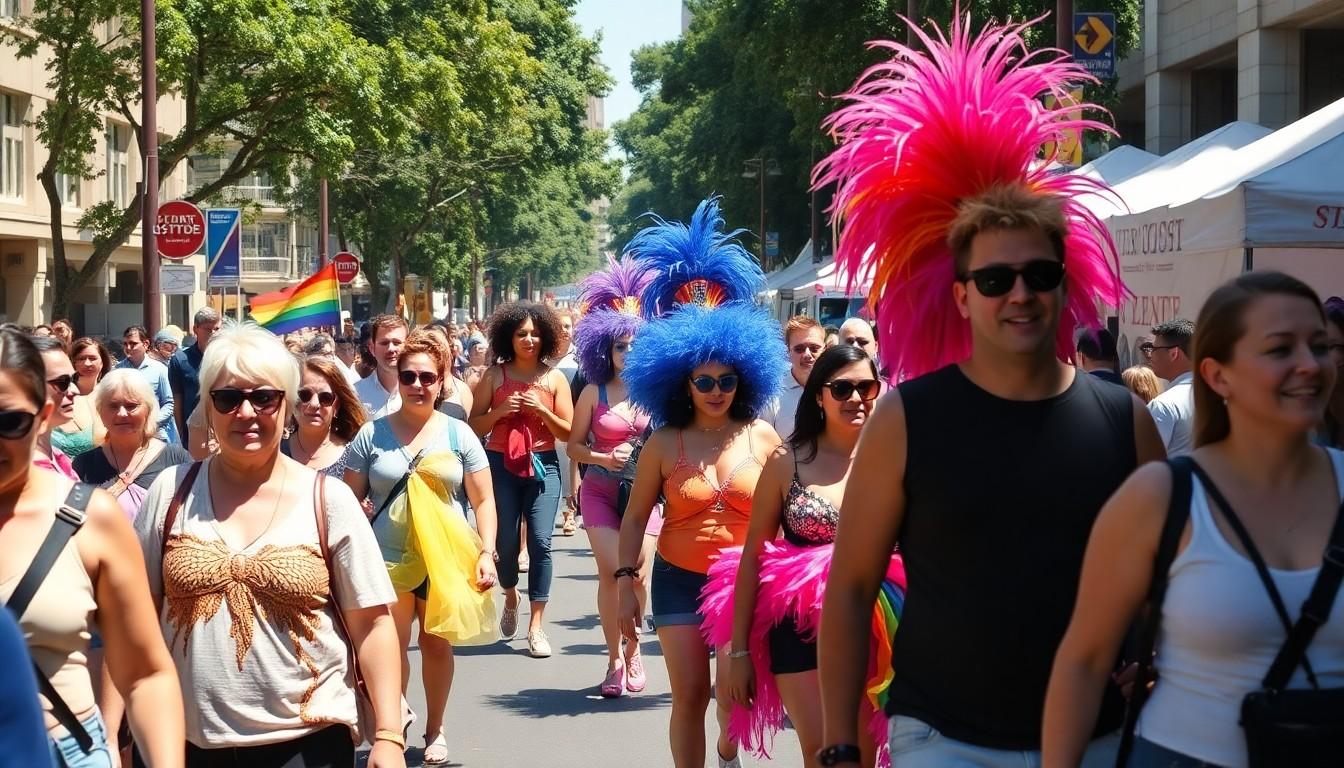
Rainbow flags, bold outfits and thousands of marchers brought Johannesburg Pride 2026 to life in Sandton on 31 October. Beyond the music and glitter, the celebration offered LGBTQ+ South Africans a space to be visible, connect and express themselves. The day also showed why Pride remains important, even where legal protections exist.
Essential Takeaways
- A major gathering: Thousands joined the annual Pride celebration in Sandton.
- More than a parade: Marchers celebrated self-expression, visibility and community, alongside the day’s entertainment.
- A lively festival village: Katherine Street hosted DJs, drag performances, food vendors and community stalls.
- Some practical snags: Time Out Johannesburg reported long entry queues in heat of about 33°C and complaints about food prices.
- A long history: South Africa’s first Pride march took place in Johannesburg in 1990.
Sandton turned rainbow-bright for Pride
Johannesburg Pride brought a vivid burst of colour to Sandton, where thousands gathered to march, dance and celebrate LGBTQ+ identity. Sequins, striking make-up and rainbow accessories filled the streets, but the mood was about more than a good outfit: participants came to be seen and to celebrate openly.
The Sandton Chronicle reported that the event drew a large crowd to the business district. For many, Pride offers a rare chance to express themselves freely and find connection with others. That sense of welcome can matter all the more when everyday life doesn't feel as open.
A parade led by performers and advocates
The procession wound through Sandton with singing, dancing and chants, bringing together performers, activists, community organisations and allies. Drag performer Adam served as grand marshal, while Deputy Minister for Women, Youth and Persons with Disabilities Mmapaseka Steve Letsike joined the parade.
MambaOnline's coverage captured the event's mix of celebration and advocacy, with familiar faces including transgender activist Yaya Mavundla and radio presenter SelBeyonce among those attending. The combination felt apt: Pride can be a joyful day out and a public reminder that LGBTQ+ people deserve dignity and equal treatment.
The Pride Village kept the celebration going
After the march, Katherine Street's Pride Village offered stages, DJs, drag acts, musicians, food vendors and stalls run by LGBTQ+-friendly businesses and organisations. It gave people room to linger, meet friends and explore the community groups behind the celebration.
There were practical frustrations, too. Time Out Johannesburg reported long entry queues in temperatures of roughly 33°C, as well as complaints from some attendees about delays and food prices. If you're planning a large outdoor festival, water, sun protection and a little patience can make the day more comfortable.
Why Johannesburg Pride still matters
The first Pride march in South Africa took place in Johannesburg in October 1990, during the country's transition away from apartheid, according to South African History Online. That history gives today's gathering added weight: Pride has long been a platform for visibility, including for Black queer South Africans facing overlapping forms of discrimination.
South Africa's Constitution explicitly protects against discrimination on the grounds of sexual orientation, as set out in its Bill of Rights. The government also records that the country became the first in Africa to legalise same-sex marriage in 2006. Yet laws alone can't guarantee that everyone feels safe or accepted, which is one reason community events remain meaningful.
A celebration with a message beyond Sandton
Johannesburg Pride brought local experiences to the fore, while sharing a familiar message with Pride celebrations around the world: people should be able to live openly and find community. For attendees who can't always share their identities freely elsewhere, a crowd of thousands can offer something simple but powerful: the reassurance that they aren't alone.
The day wasn't without its snags, but its colour, music and togetherness made a strong impression. Pride's most lasting image may be less about any one costume than the many people standing side by side.
It's a celebration of freedom, and a reminder that visibility still matters.
Source Reference Map
Story idea inspired by: [1]
Sources by paragraph: