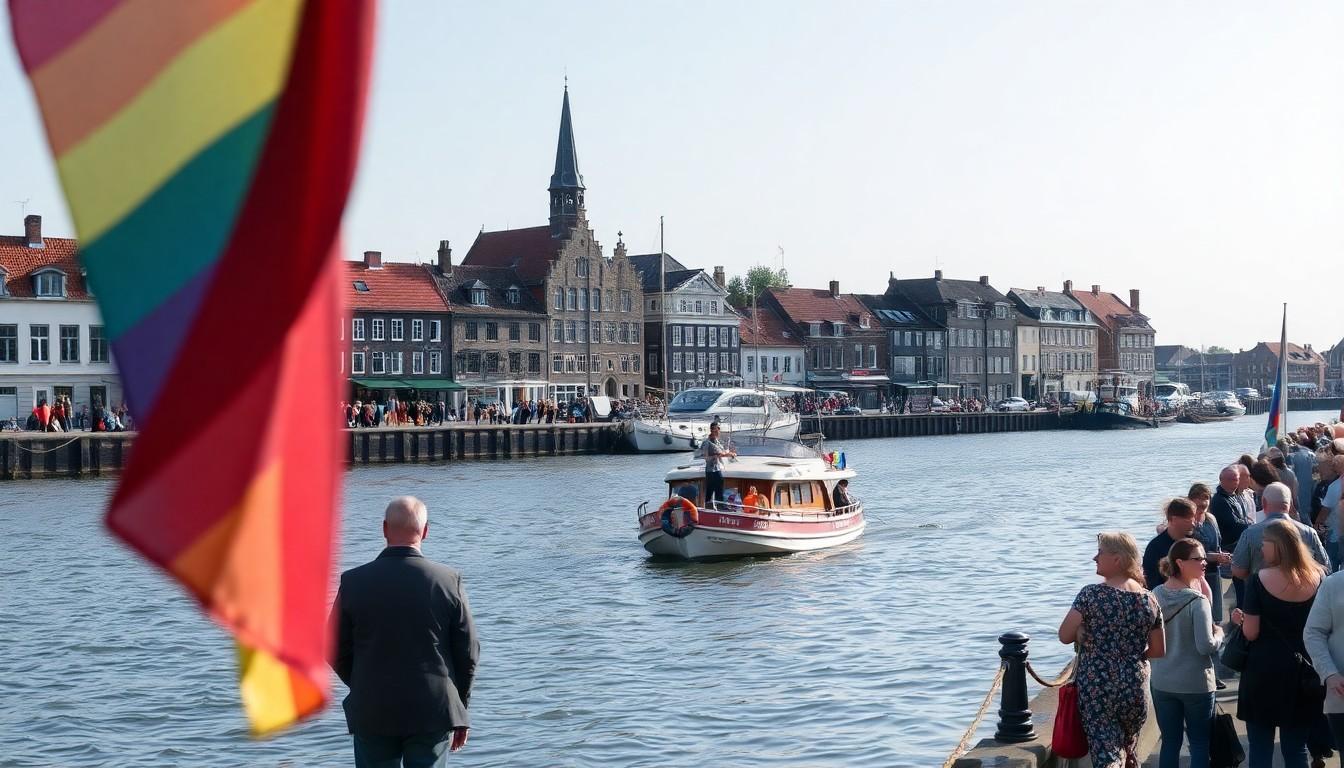
For years, Cor de Jonge dreaded visiting Zierikzee, convinced he was the only gay person there and unable to speak openly about his life. At 64, after sharing his story and joining a local Pride boat, he says the city no longer makes him feel ill. His experience shows why visibility can matter in small communities.
A familiar town, and an old knot of dread
For Cor de Jonge, the journey to Zierikzee used to begin with a sick feeling. He was visiting his mother, but the town also brought back years of hiding his sexuality and believing he had no one like him nearby. The strain stayed with him long after he left. [2]
He grew up in a Christian family where difficult subjects were rarely discussed. De Jonge says he never knew whether his parents accepted his sexuality, and even a long-term partner could be present without anyone talking about the relationship. Silence, as he later came to understand, had become its own kind of burden. [2]
Coming out can take more than one conversation
As a teenager, De Jonge thought he was Zierikzee's only gay person. He kept that fear to himself for a decade, adapting to what he thought others expected. Years later, he described how that isolation shaped his visits home and his ability to be open with people he loved. [2]
He eventually told his siblings he needed to stop visiting for a while, and they understood. But he says the deeper pain remained, even after years of speaking with psychologists. His story is a reminder that coming out isn't always one dramatic moment; sometimes it's a long process of finding words and feeling safe enough to use them. [2]
The Pride boat made visibility impossible to miss
A call for people to share their experiences ahead of a Pride boat at Zierikzee's Havendagen prompted De Jonge to write about his life. He agreed to take part, bought a rainbow shirt and spoke publicly, even though he says he would once have turned down the opportunity. [2][3]
The boat became a vivid public show of support, decorated with Zeeuwse rainbow flags and welcomed by cheers, according to coverage of the event. De Jonge sailed with his brother Krijn, who had travelled from the United States. For him, the moment was emotional: he stepped ashore in Zierikzee wearing glitter and, as he put it, gradually lifted his head. [5][6]
Support and backlash arrived together
After sharing his story, De Jonge heard from strangers who wished him well, an old fellow student who recognised how hard his past must have been, and his younger brother, who told him he was proud. He said that last message moved him deeply. [2]
There were hostile reactions too, including complaints that Pride was being forced on people. De Jonge's response was that LGBTQ+ people have always been part of society, even when they weren't openly discussed. Pride events and local reporting have also drawn attention to resistance around the boat's place in the harbour celebrations. [2][6][7]
A different relationship with Zierikzee
Since taking part, De Jonge has returned to Zierikzee with more confidence. He later raised a rainbow flag there with the mayor on Coming Out Day and spoke in public, something he says would once have felt unthinkable. He reports that he is sleeping again and no longer feels ill before visiting the town. [2]
His change isn't a neat ending to years of difficulty, and he doesn't suggest that one event can undo everything. Still, the contrast is striking: a town once tied to fear has become a place where he can show up as himself. Sometimes being seen doesn't solve the past, but it can make the next visit feel lighter. [2][4]
It's never too late to feel more at home in the place you came from.
Source Reference Map
Story idea inspired by: [1]
Sources by paragraph: